










What Sean Ellis’s book recommendations tell you about the person who coined growth hacking
Sean Ellis had no marketing background when he got his first marketing job. He was hired at a gaming company called Uproar in 1996, figured things out as he went, and helped take the company public. Then he did the same thing at LogMeIn, which eventually sold for $4.3 billion. Then he became the first marketer at Dropbox, where he helped build the referral program that became one of the most studied growth strategies in startup history. Somewhere in the middle of all that, in 2010, he wrote a blog post looking for someone to replace himself at a startup and described the role as needing a “growth hacker” instead of a traditional marketer. The term stuck. It became an industry, a job title, a conference circuit, and a book: Hacking Growth, co-written with Morgan Brown, which has sold over 750,000 copies.
Ellis also created the Sean Ellis test for product-market fit, the survey question that asks users “How would you feel if you could no longer use this product?” If more than 40 percent say “very disappointed,” you have product-market fit. If not, you do not. A huge number of startups use this test today. It is simple, which is why it works. Ellis figured it out by noticing that the companies where his growth tactics worked all had one thing in common: people genuinely loved the product. When they did not, no amount of hacking made a difference.
His reading list is interesting because it is not what you would expect from someone synonymous with data-driven experimentation. Yes, there are growth books. But the list is also full of philosophy, fiction, and books about human fragility. The person who invented growth hacking reads Stoic philosophy and Kundera novels. That tension tells you something about how he actually thinks.
Sean Ellis’s books on growth, startups, and product-market fit
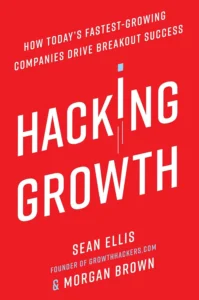
Hacking Growth is Ellis’s own book, co-written with Morgan Brown. It walks through the process of building a growth team, running experiments, and optimizing the user journey from acquisition through retention. The book is based on what Ellis did at Dropbox, LogMeIn, Eventbrite, and the dozens of startups he advised. It is practical in a way that most business books are not: specific frameworks, real examples, and step-by-step processes you can actually implement. The reason it sold three-quarters of a million copies is that it treats growth as a discipline with repeatable methods rather than a series of clever tricks.
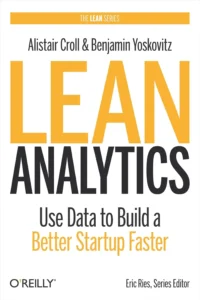
Lean Analytics by Alistair Croll and Benjamin Yoskovitz is the companion piece. It is about choosing the right metrics at each stage of a startup’s life and using data to make decisions rather than guessing. Ellis has talked about how one of the biggest mistakes startups make is measuring the wrong things, tracking vanity metrics like total signups instead of actionable ones like activation rate or retention by cohort. Lean Analytics provides the framework for figuring out which number actually matters at any given moment.
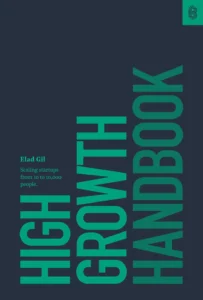
High Growth Handbook by Elad Gil covers the problems that come after product-market fit: scaling the team, managing a board, handling acquisitions, and navigating the transition from startup to real company. Ellis has been the first marketer at multiple companies and has watched each of them go through this transition. Gil’s book addresses the phase that most growth content ignores: what happens when the growth tactics work and suddenly you have a thousand employees and a billion-dollar valuation and no idea how to manage either one.
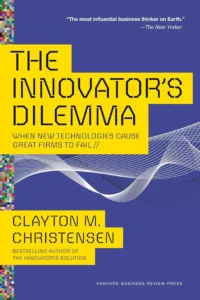
The Innovator’s Dilemma by Clayton Christensen explains why successful companies fail by doing exactly what made them successful: serving existing customers with incremental improvements while a disruptive competitor enters from below. Ellis lived this dynamic at LogMeIn, which was a disruptive product competing against expensive enterprise remote access tools by offering a free version. The freemium model that Ellis helped pioneer is essentially Christensen’s disruption theory applied to pricing strategy.
Books on thinking and uncertainty Sean Ellis recommends
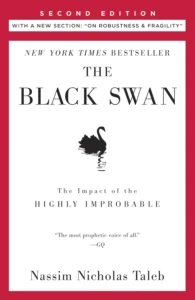
The Black Swan by Nassim Nicholas Taleb argues that the most consequential events in the world are the ones nobody predicted. Taleb’s point is that we systematically underestimate the role of randomness and overestimate our ability to forecast. Ellis’s entire career is built on experimentation, which is fundamentally an admission that you do not know what will work until you test it. Growth hacking at its best is not about being clever. It is about running enough experiments to find the one that produces an outsized, unpredictable result. Taleb calls those black swans. Ellis calls them winning experiments.
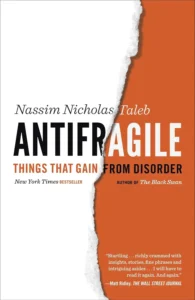
Antifragile, also by Taleb, takes the idea further. Some systems do not just survive randomness. They get stronger from it. A startup that runs rapid experiments and learns from failures becomes more resilient over time. A startup that follows a fixed plan and ignores signals becomes more fragile. Ellis has said that one of the most important things a growth team does is build a culture of learning, where failed experiments are valued for the information they provide rather than punished as wasted resources. That is antifragility applied to marketing.
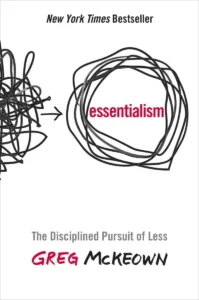
Essentialism by Greg McKeown argues that the highest-performing people do fewer things and do them better. Ellis has been vocal about the importance of focus at every stage of a startup. He recommends that companies put roughly 50 percent of their product development resources into onboarding alone, which is a shocking allocation until you hear his reasoning: if the first experience is bad, there is no second experience. Everything else you build is irrelevant if users do not activate. McKeown’s framework of doing less but better is exactly how Ellis thinks about where to spend growth resources.
Sean Ellis’s books on philosophy, mindset, and inner life
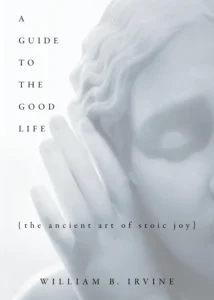
A Guide to the Good Life by William Irvine is an introduction to Stoic philosophy written for a modern audience. Irvine takes the ideas of Seneca, Epictetus, and Marcus Aurelius and translates them into practical advice about managing desire, handling setbacks, and finding contentment. Ellis has spent his career in an industry defined by anxiety: startup culture, where every quarter is existential and every metric either proves you are winning or proves you are dying. A book about finding tranquility by focusing on what you can control and releasing attachment to outcomes is the kind of counterbalance that keeps a growth-obsessed person sane.
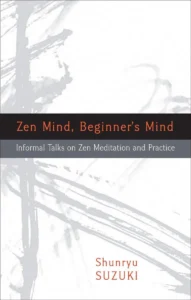
Zen Mind, Beginner’s Mind by Shunryu Suzuki is about approaching everything with the openness of someone encountering it for the first time. Ellis has said that one of the biggest dangers in growth is assuming you already know what works. The tactics that grew Dropbox will not grow your company. The experiment that worked last quarter might not work this quarter. A beginner’s mind, the willingness to test assumptions that everyone else takes for granted, is what separates growth teams that keep finding new levers from ones that plateau.
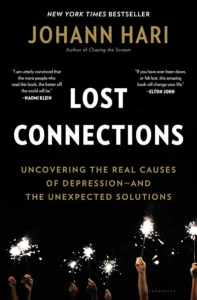
Lost Connections by Johann Hari argues that depression is not just a chemical imbalance but a response to disconnection from meaningful work, relationships, status, and nature. Ellis recommending this book suggests he has thought about the darker side of startup culture, the burnout, the isolation, the treadmill of optimization that can leave people productive but empty. Growth hacking is about getting more people to use your product. Lost Connections asks whether that product actually makes their lives better.
The fiction and unexpected picks on Sean Ellis’s reading list
The Unbearable Lightness of Being by Milan Kundera is the most unexpected book on this list. It is a philosophical novel set during the Soviet invasion of Prague, exploring whether meaning comes from weight and repetition or from the freedom of living only once. For someone whose professional life is defined by measurement, experiments, and repeatable processes, a novel arguing that some of the most important things in life cannot be repeated or measured is a striking counterpoint. It suggests that Ellis knows his framework has limits.
Just Kids by Patti Smith is a memoir about being young, broke, and committed to art in New York before anyone cared. Ellis was not an artist, but he was a marketer who had no marketing background figuring things out at startups before “growth” was a recognized function. Smith’s book is about the period before validation arrives, when all you have is the belief that what you are doing matters. That feeling is familiar to anyone who has been the first hire in a function that the company is not even sure it needs.
Tiny Beautiful Things by Cheryl Strayed is a collection of advice columns that deal with grief, failure, love, and the messiness of being alive. It is the most emotionally raw book on this list and the furthest from anything related to growth metrics. Ellis including it is a quiet statement that there are dimensions of human experience that no experiment can optimize and no framework can capture.
The Little Prince by Antoine de Saint-Exupéry is here too, and it rhymes with everything else on the unexpected side of this list. It is a children’s book about what adults forget when they stop paying attention to what matters. A man who spent his career teaching startups to measure everything recommends a book whose most famous line is about how the essential things are invisible to the eye. That is not a contradiction. It is the full picture.
How Sean Ellis’s reading list connects to his approach to growth
The split in this reading list is the most interesting thing about it. Half the books are about systems, data, experimentation, and building repeatable growth engines. The other half are about philosophy, uncertainty, depression, and the things in life that resist measurement. Ellis is the person who taught an entire generation of startups to test everything and trust only what the data supports. And his own bookshelf says that data is not enough.
That duality is what separates Ellis from the growth hacking caricature. He did not coin the term to describe a bag of tricks. He coined it to describe a discipline, a rigorous, experiment-driven approach to understanding why people use a product and how to help more of them discover it. But his reading list makes clear that he also understands the limits of that discipline. Some things cannot be hacked. Some connections cannot be optimized. And the person who figured out the product-market fit test also reads Kundera and Strayed and Patti Smith, because knowing what people want from a product is not the same as knowing what people want from life.
