
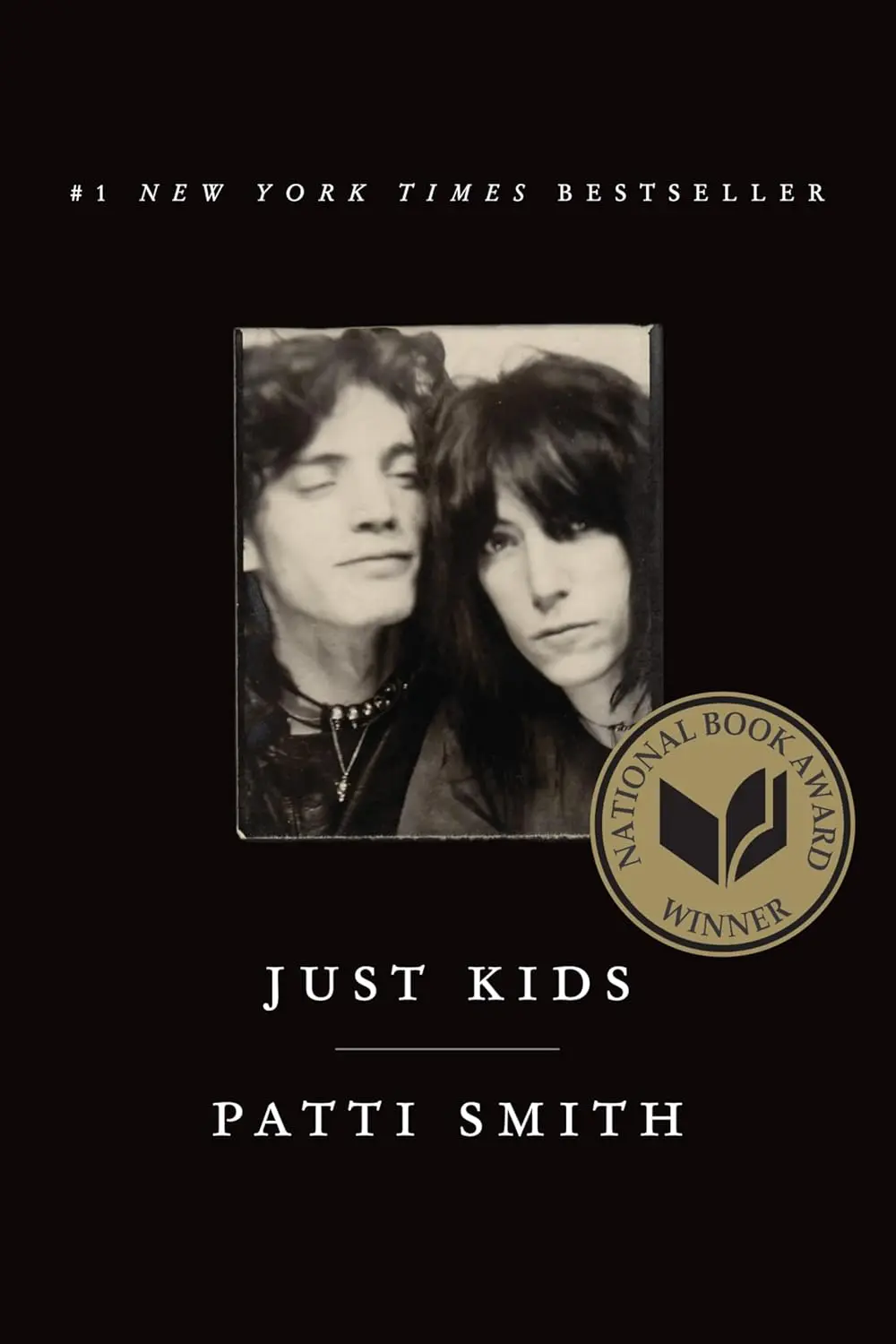
Patti Smith arrived in New York City in 1967 with almost nothing. She was twenty years old. She slept in doorways and on park benches. She got a job at a bookstore. She met Robert Mapplethorpe by accident, and they spent the next several years living together, making art, going hungry, and pushing each other to become who they were supposed to be.
The book covers roughly a decade, from the late sixties through the mid-seventies, when Smith emerged as a punk poet and rock musician and Mapplethorpe became one of the most provocative photographers of his generation. The New York they inhabited was cheap, dangerous, and full of creative people who had not yet become famous. They lived at the Chelsea Hotel, surrounded by musicians, writers, drag queens, and various species of beautiful disaster.
Smith writes about all of this with a tenderness that never tips into nostalgia. She describes poverty without romanticizing it, love without sentimentalizing it, and ambition without making it sound glamorous. The early years were genuinely hard. They could not always afford to eat. Mapplethorpe hustled on the street to pay rent. Smith shoplifted art books. The creative work happened in whatever time and space was left over.
What makes the book unusual among artist memoirs is Smith’s clarity about the work itself. She describes the slow process of finding her own voice, the years of reading and writing and experimenting that preceded any recognition. She was not an overnight success. She was a person who showed up every day, made things, threw most of them away, and kept going. Mapplethorpe went through a similar process with photography, moving from assemblage and collage to the stark, confrontational portraits that made him famous.
Their relationship was romantic, then platonic, then something harder to name. Smith traces this evolution without trying to label it. They remained central to each other’s lives until Mapplethorpe’s death from AIDS-related complications in 1989. She promised him she would write their story. It took her more than twenty years to do it.
Just Kids won the 2010 National Book Award for Nonfiction. Smith’s prose is clean and precise, with a poet’s attention to rhythm and image. The book has been widely recommended among people who build things, not because it is about startups or business, but because it captures something true about the years of unglamorous work that precede any kind of creative breakthrough.
