
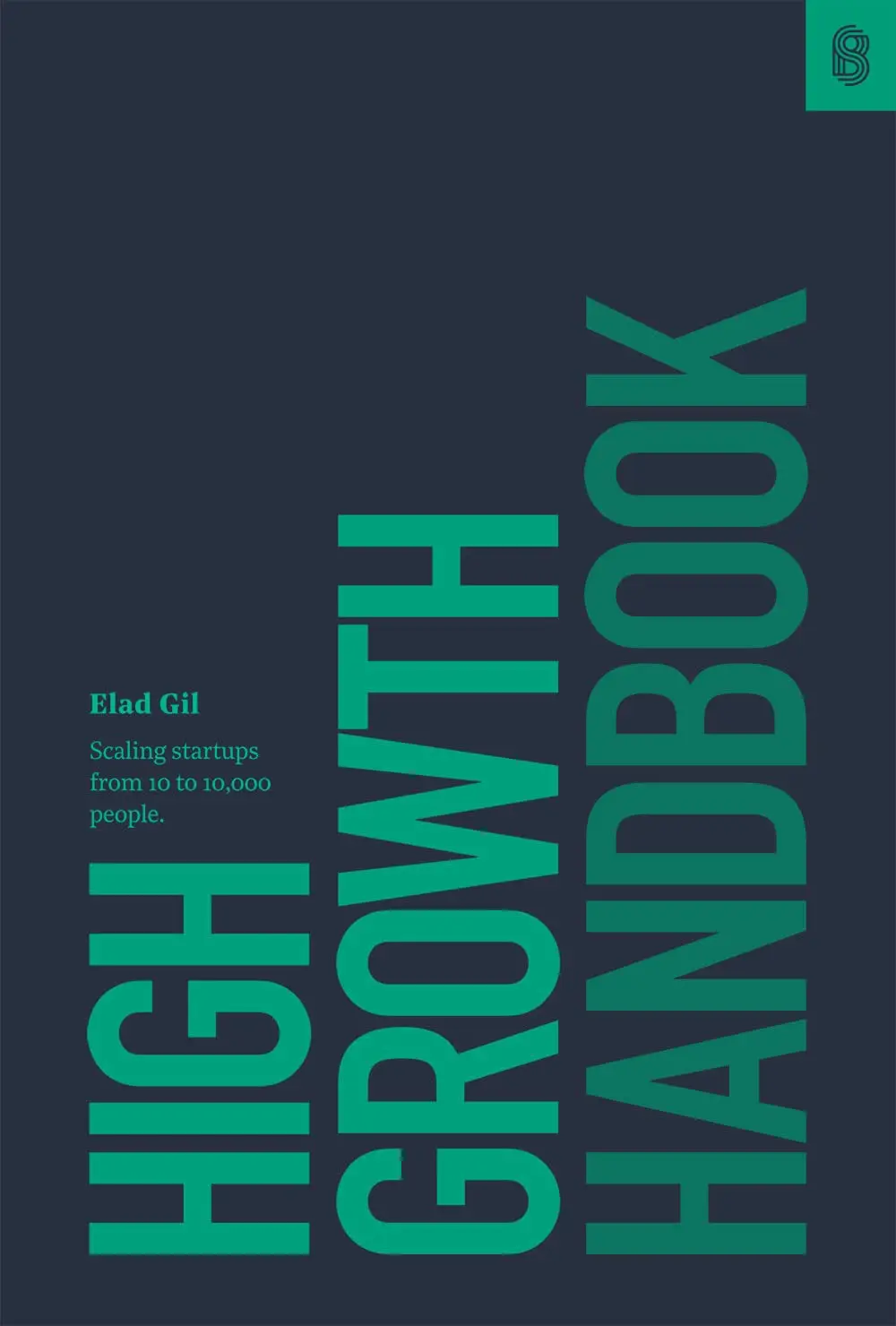
Most startup books focus on the early days: finding an idea, building a product, getting first customers. High Growth Handbook picks up where those books leave off. It is specifically about what happens after product-market fit, when a company grows from 10 or 20 people to thousands and the problems shift from survival to scaling.
Elad Gil has been inside these transitions multiple times. He was VP of Corporate Strategy at Twitter, ran product teams at Google (including being the original product manager for Google Mobile Maps), and has invested in or advised companies like Airbnb, Coinbase, Stripe, Pinterest, and Square during their high-growth phases. He has a PhD from MIT and co-founded Color Genomics.
The book is organized around the specific operational challenges that hit fast-growing companies. How does the CEO’s role change as headcount triples? When should you hire a COO, and what should they actually do? How do you manage a board of directors? When does M&A make sense, and how do you avoid overpaying? What does the path to an IPO actually look like from the inside?
Each chapter includes interviews with people who have faced these exact problems. Reid Hoffman talks about board management. Marc Andreessen discusses late-stage fundraising and when companies should go public. Aaron Levie from Box talks about enterprise sales and navigating competition. These interviews give the book a grounded, first-person quality that keeps it from reading like abstract strategy.
Gil writes in a direct, no-nonsense style. He avoids the motivational platitudes that fill most business books and instead delivers specific, opinionated guidance. For example, he is blunt about when to fire executives who are not working out, how to handle co-founder dynamics as companies scale, and why most startups botch their first few executive hires.
The book will be most useful to founders who have raised a seed round or Series A and are starting to think about what comes next. But even earlier-stage founders will benefit from understanding what scaling actually requires, because the decisions you make at 10 people shape what is possible at 1,000. Anyone working at a growth-stage startup who wants to understand the bigger picture of what is happening around them will also find it worth reading.
