
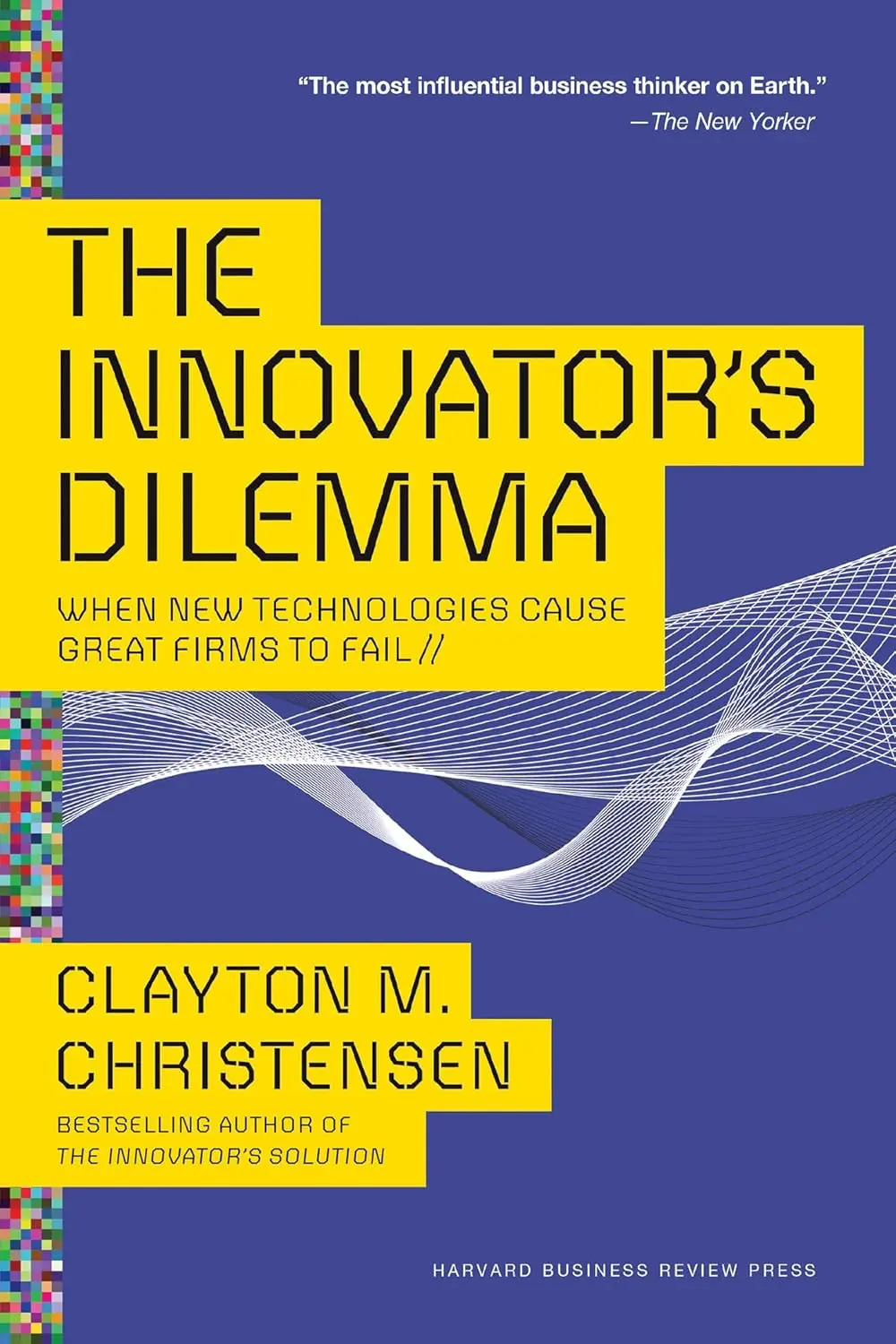
Christensen’s core question is: why do successful, well-managed companies fail when new technologies emerge? His answer is counterintuitive. These companies fail not because they ignore innovation, but because they listen too closely to their current customers.
The argument goes like this: disruptive technologies initially serve a different, usually smaller and less profitable market. They are worse than existing products by most conventional measures. Established companies look at them, see that their best customers do not want them, and rationally decide to invest elsewhere. The problem is that disruptive technologies improve over time, and eventually they are good enough for the mainstream market. By that point, the incumbents have fallen too far behind to catch up.
Christensen demonstrates this pattern with detailed case studies, most extensively from the disk drive industry, which went through several waves of disruption in the 1980s and 1990s. He also examines excavators, steel minimills, and discount retailers. Each case follows the same pattern: the leading companies in one generation lose their position to smaller competitors who started in markets the leaders considered unimportant.
For founders, the lesson cuts two ways. If you are building a startup, the book helps you identify markets where incumbents will ignore you, giving you time to improve before they notice. If you are running a growing company, it warns you about the blind spots that come with success.
The book was first published in 1997 and has been widely read in Silicon Valley ever since. Steve Jobs, Jeff Bezos, and many other tech leaders have cited it as influential. The concept of “disruptive innovation” has since been overused to the point where almost every startup claims to be disruptive, but Christensen’s original definition is specific and the case studies are rigorous.
One criticism is that the theory is better at explaining the past than predicting the future. Not every technology that starts in a low-end market ends up disrupting the mainstream. But as a mental model for understanding competitive dynamics, the dilemma Christensen describes is hard to unsee once you have read it.
