










What Marissa Mayer’s book recommendations tell you about Google’s first female engineer
Marissa Mayer almost deleted the email that changed her life. In 1999, finishing her master’s degree in computer science at Stanford, she had fourteen job offers sitting in her inbox. She was clearing out recruiter messages when she hit the wrong key and accidentally opened one from a company she had barely heard of called Google. Her mentor at Stanford had told her she should meet the founders. She asked for an interview instead of deleting the message. She became Google’s twentieth employee and its first female software engineer.
Over the next thirteen years, Mayer designed Google’s homepage, managed Google Search as it grew from a few hundred thousand queries a day to over a billion, contributed to Gmail, Google Maps, Google Images, and Google Earth, and created Google’s Associate Product Manager program, which trained a generation of tech leaders. In 2012, she left Google to become CEO of Yahoo while twenty-eight weeks pregnant. Yahoo was struggling. Most people expected her to fail. She tripled the stock price but could not reverse the company’s decline, and Yahoo was eventually sold to Verizon in 2017. She resigned and later co-founded Sunshine, an AI startup focused on consumer applications.
Mayer grew up in Wausau, Wisconsin. Her mother was an art teacher. Her father was an environmental engineer. She described herself as “painfully shy” as a child and managed that shyness by never having fewer than one after-school activity per day: ballet, ice-skating, piano, swimming, debate, Brownies. She studied symbolic systems at Stanford, a program that sits at the intersection of computer science, linguistics, philosophy, and psychology. That combination of analytical rigor and human-centered thinking runs through everything she has done, and through every book on this list.
Marissa Mayer’s books on design, products, and user experience
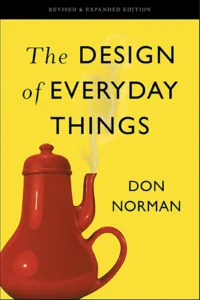
The Design of Everyday Things by Don Norman is the most important book on this list for understanding how Mayer thinks. Norman’s argument is that when people struggle with a product, the problem is not the user. It is the design. Doors that need “push” and “pull” signs are badly designed doors. The sign is the symptom, not the solution. Mayer spent over a decade designing how billions of people interacted with Google’s products. She famously tested forty-one shades of blue to determine which one users clicked on most. That level of attention to user behavior is Norman’s philosophy applied at Google scale.
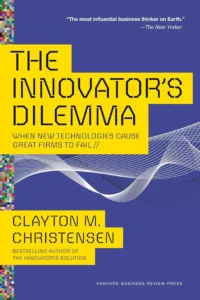
The Innovator’s Dilemma by Clayton Christensen explains why successful companies fail by continuing to serve existing customers while a disruptive competitor enters from below. Mayer lived this from both sides. At Google, she helped build the disruptor that overtook Yahoo’s search business. At Yahoo, she was on the receiving end, trying to turn around a company that had been disrupted. Christensen’s book is about the structural forces that make this pattern almost inevitable, which is useful context for understanding why Mayer’s turnaround at Yahoo was so difficult. The problem was not that she lacked talent or strategy. The problem was that the underlying dynamics of disruption are extremely hard to reverse once they are in motion.
Hooked by Nir Eyal is not on this list, but its absence is interesting given that Atomic Habits by James Clear is here. Mayer’s approach to product design was always more about clarity and utility than about building addictive loops. Clear’s framework for habit formation, making behaviors obvious, attractive, easy, and satisfying, is closer to how Mayer thought about user experience. She wanted people to use Google’s products because they worked well, not because they were engineered to be hard to stop using. Atomic Habits provides the behavioral science for that kind of design.
Books on leadership and decision-making Marissa Mayer recommends
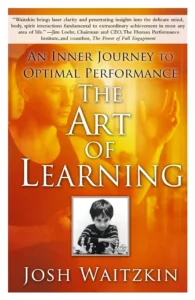
The Art of Learning by Josh Waitzkin is about how a chess prodigy who became the subject of the movie Searching for Bobby Fischer later became a world champion in Tai Chi Push Hands. Waitzkin’s argument is that the principles of learning transfer across domains: deep focus, comfort with being wrong, and the ability to find patterns in chaos. Mayer moved from computer science to product management to design to executive leadership to running a Fortune 500 company. Each transition required learning a new discipline while applying the meta-skills developed in the previous one. Waitzkin’s book describes that process at a neurological level.
The Charisma Myth by Olivia Fox Cabane argues that charisma is not an innate trait but a set of learnable behaviors: presence, power, and warmth. Mayer described herself as painfully shy as a child. She became one of the most prominent public faces in technology. That transformation did not happen naturally. It was developed through practice, the same way she developed her technical skills. Cabane’s book provides the framework for understanding charisma as a skill rather than a personality type, which is relevant for anyone who started shy and ended up speaking to crowds of thousands.
Mastery by Robert Greene traces the paths of historical masters across fields and identifies the common elements: a long apprenticeship, immersion in the fundamentals, and eventual creative synthesis. Mayer spent thirteen years at Google before taking on the CEO role at Yahoo. Those thirteen years were her apprenticeship. She learned product design, user behavior, data-driven decision-making, and organizational management at the company that was defining how all of those things worked. Greene’s framework explains why that long runway of learning matters, and why the skills developed during it are transferable even when the context changes.
The War of Art by Steven Pressfield is about creative resistance, the force that keeps you from doing the work you know you should be doing. Mayer’s leadership philosophy, as she learned it from Eric Schmidt, was that the CEO’s job is not to create things directly. It is to clear obstacles so the team can create. Pressfield calls those obstacles Resistance. Schmidt called them bureaucracy and process. Mayer’s job at Yahoo was essentially fighting Resistance at an organizational level: removing the barriers that kept talented people from doing their best work.
Marissa Mayer’s books on psychology and human behavior
Influence by Robert Cialdini maps six principles of persuasion: reciprocity, commitment, social proof, authority, liking, and scarcity. Mayer spent her Google years understanding what made people click, sign up, come back, and recommend products to friends. Cialdini provides the psychological framework for all of those behaviors. Understanding influence is not optional for someone who managed a product used by a billion people daily.
Drive by Daniel Pink argues that intrinsic motivation, autonomy, mastery, and purpose, produces better work than external rewards. Mayer created the APM program at Google in 2002, which rotated young product managers through different teams and gave them substantial responsibility early. The program was built on the assumption that talented people perform best when given challenging work and the freedom to figure it out, which is exactly what Pink describes.
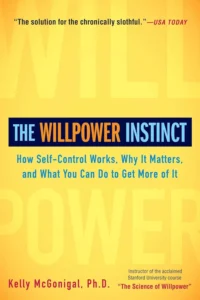
The Willpower Instinct by Kelly McGonigal is about the science of self-control: why it fails, what depletes it, and how to build it. Mayer’s work schedule during her Google and Yahoo years was legendary. She regularly worked 130-hour weeks in Google’s early days and was known for reviewing every product decision personally. Sustained performance at that level requires a specific relationship with willpower and energy management. McGonigal’s book explains the neuroscience behind why some people sustain intensity longer than others and what practices support that capacity.
The unexpected picks on Marissa Mayer’s reading list
The Stranger by Albert Camus is the darkest book on this list. It is a short novel about a man who feels nothing at his mother’s funeral and later kills someone for no clear reason. Camus wrote it as an exploration of absurdism, the idea that life has no inherent meaning and that the search for meaning is itself futile. For someone who spent her career designing products to organize information and make the world more navigable, a novel that questions whether any of that organizing matters is a provocative choice. It suggests Mayer has thought about the limits of rationality, not just its applications.
The Autobiography of Malcolm X is about a man who reinvented himself repeatedly: from street hustler to prisoner to religious leader to global human rights advocate. Malcolm X educated himself by reading the dictionary cover to cover while in prison. Mayer reinvented herself from shy midwestern kid to Stanford engineer to Google executive to Fortune 500 CEO to AI startup founder. The specifics are completely different, but the capacity for repeated self-transformation is the same.
Digital Minimalism by Cal Newport argues for using technology intentionally rather than reflexively, choosing the tools that support your values and ignoring everything else. This is an interesting recommendation from someone who spent her career building the tools that other people now struggle to use in moderation. Mayer built products designed to be as useful and accessible as possible. Newport argues that accessibility without intention leads to distraction. Recommending both perspectives suggests Mayer understands the full picture: build great products, and also think carefully about how they fit into a life worth living.
How Marissa Mayer’s reading list connects to her career in tech
Mayer studied symbolic systems at Stanford, a discipline built on the idea that understanding human cognition and understanding computation are the same project approached from different angles. Her reading list reflects that synthesis. The design books are about how humans interact with objects and interfaces. The psychology books are about why humans behave the way they do. The leadership books are about translating understanding into organizational action. And the unexpected picks, Camus and Malcolm X and Cal Newport, are about the questions that engineering cannot answer.
She accidentally opened an email and it changed the trajectory of technology. She became CEO of a Fortune 500 company while twenty-eight weeks pregnant. She tested forty-one shades of blue because the right shade would generate millions of dollars more in ad revenue than the wrong one. Her reading list is the library of someone who believes that details matter, that design is a form of empathy, and that the best decisions come from understanding people at a level deeper than what the data alone can show.
