
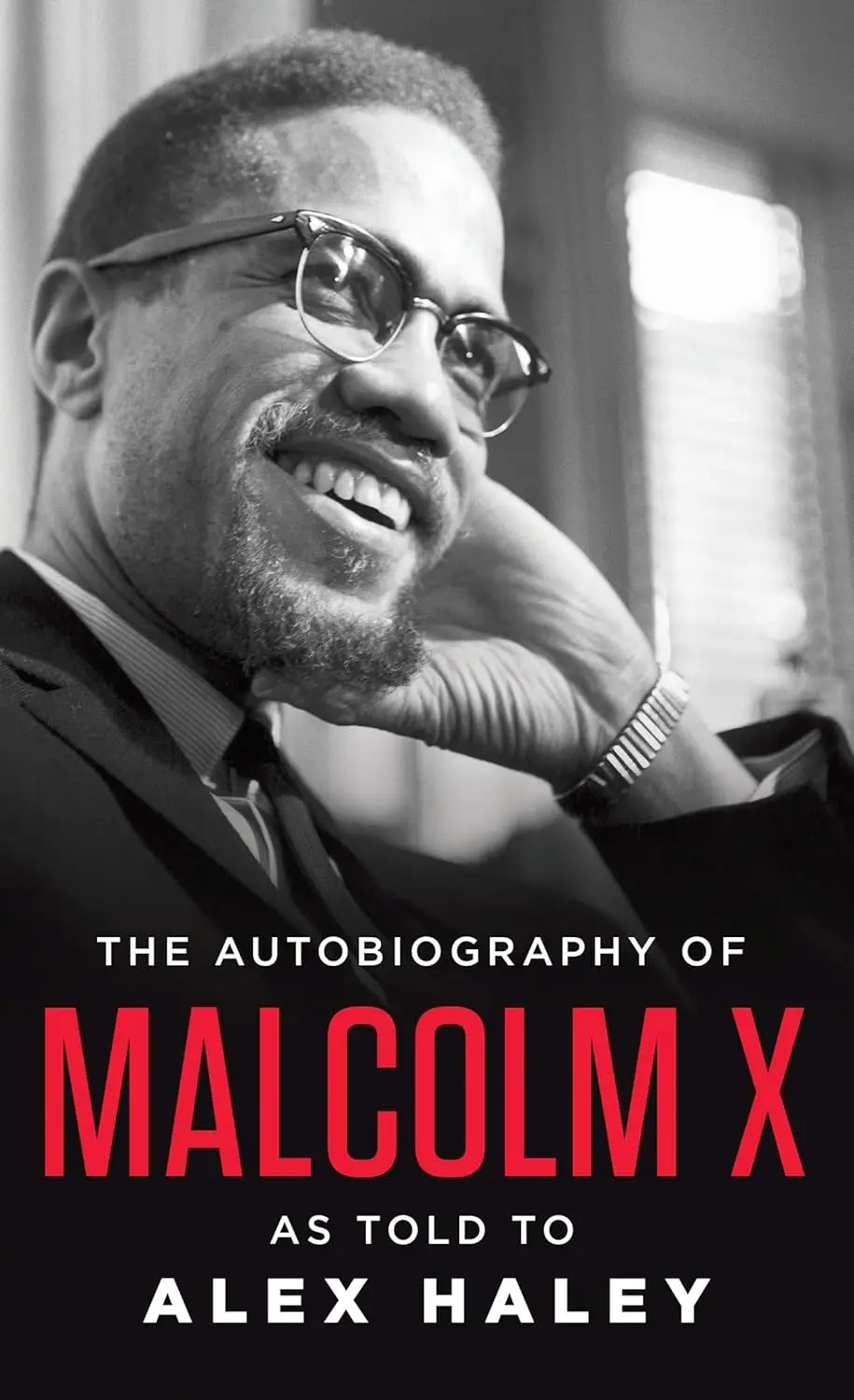
Malcolm X did not expect to live long enough to see this book published. He said as much to Alex Haley during the two years they spent working on it together. He was right. He was assassinated in February 1965, months before the book appeared.
The autobiography covers the full arc of Malcolm’s life. He was born Malcolm Little in Omaha, Nebraska. His father, a Baptist minister and organizer for Marcus Garvey’s movement, was killed when Malcolm was six. His mother was committed to a mental institution. The children were split among foster homes. By his late teens, Malcolm was living in Boston and New York, involved in numbers running, drug dealing, and burglary.
He was arrested at 20 and sentenced to eight to ten years. In prison, he discovered the Nation of Islam through the teachings of Elijah Muhammad. He educated himself, reading everything in the prison library, and converted. When he came out, he took the name Malcolm X and became the Nation’s most effective spokesperson, building temples across the country and attracting national attention with speeches that rejected integration in favor of Black self-determination.
The later chapters cover his break with the Nation of Islam after learning of Elijah Muhammad’s personal conduct, his pilgrimage to Mecca, and the shift in his thinking that followed. After experiencing Muslims of all races praying together during the Hajj, Malcolm moved away from the racial separatism he had preached and toward a broader human rights framework. He founded the Organization of Afro-American Unity and began building international alliances.
What makes this book relevant to founders and builders goes beyond its historical importance. Malcolm X reinvented himself multiple times under extreme pressure. He built organizations from nothing, learned to speak in public with no formal training, educated himself in prison, and maintained conviction in the face of death threats. The book is a case study in self-transformation.
Barack Obama cited it as a formative influence in Dreams from My Father. Spike Lee built his 1992 film around it. The book has never gone out of print. Time included it in their list of the ten most important nonfiction books of the twentieth century. It remains one of the most widely read autobiographies in any language.
