
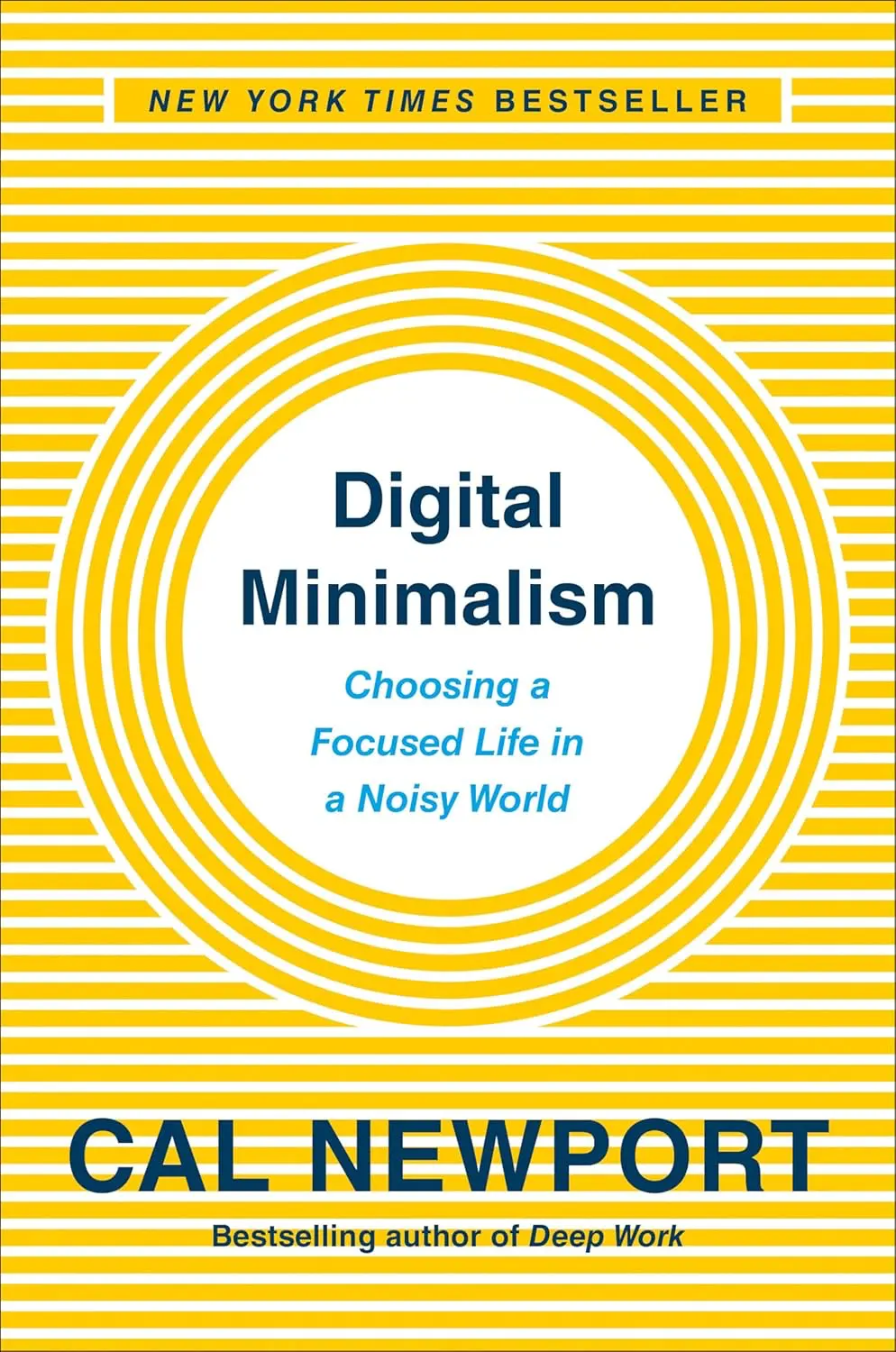
Digital Minimalism is Cal Newport’s response to the growing sense that our phones and apps are consuming more of our attention than we’re comfortable with. Rather than offering tips for reducing screen time, Newport proposes a full philosophy: use technology to support the things you value, and ruthlessly eliminate everything else.
The book starts with an explanation of why willpower-based approaches to phone use rarely work. The apps on your phone were designed by teams of engineers specifically to be addictive. Small tweaks like turning off notifications are fighting an arms race you’re going to lose. Newport argues you need a fundamentally different approach.
His solution is a 30-day “digital declutter” where you remove all optional technology from your life, then slowly reintroduce only the tools that pass a strict test: they must significantly support something you deeply value, and they must be the best way to support that value. Everything else stays off.
The second half of the book covers what to do with the time and attention you reclaim. Newport draws from thinkers like Thoreau and the Amish (whose relationship with technology is more thoughtful than most people realize) and suggests specific practices: spending time alone with your thoughts, investing in high-quality leisure activities, and rebuilding in-person social connections that have been crowded out by digital substitutes.
For founders, who are often glued to their phones out of a sense that they need to be always available, the book raises uncomfortable questions. How much of your “work” on your phone is actually productive? How much is reactive scrolling disguised as keeping up? Newport doesn’t argue against using technology in your business. He argues against letting technology use you.
The writing is calm and well-organized. Newport avoids the preachy tone that many books on this topic fall into. He acknowledges that his approach won’t work for everyone and that the right balance depends on individual circumstances. But for anyone feeling overwhelmed by their digital life, the framework is practical and well thought out.
