
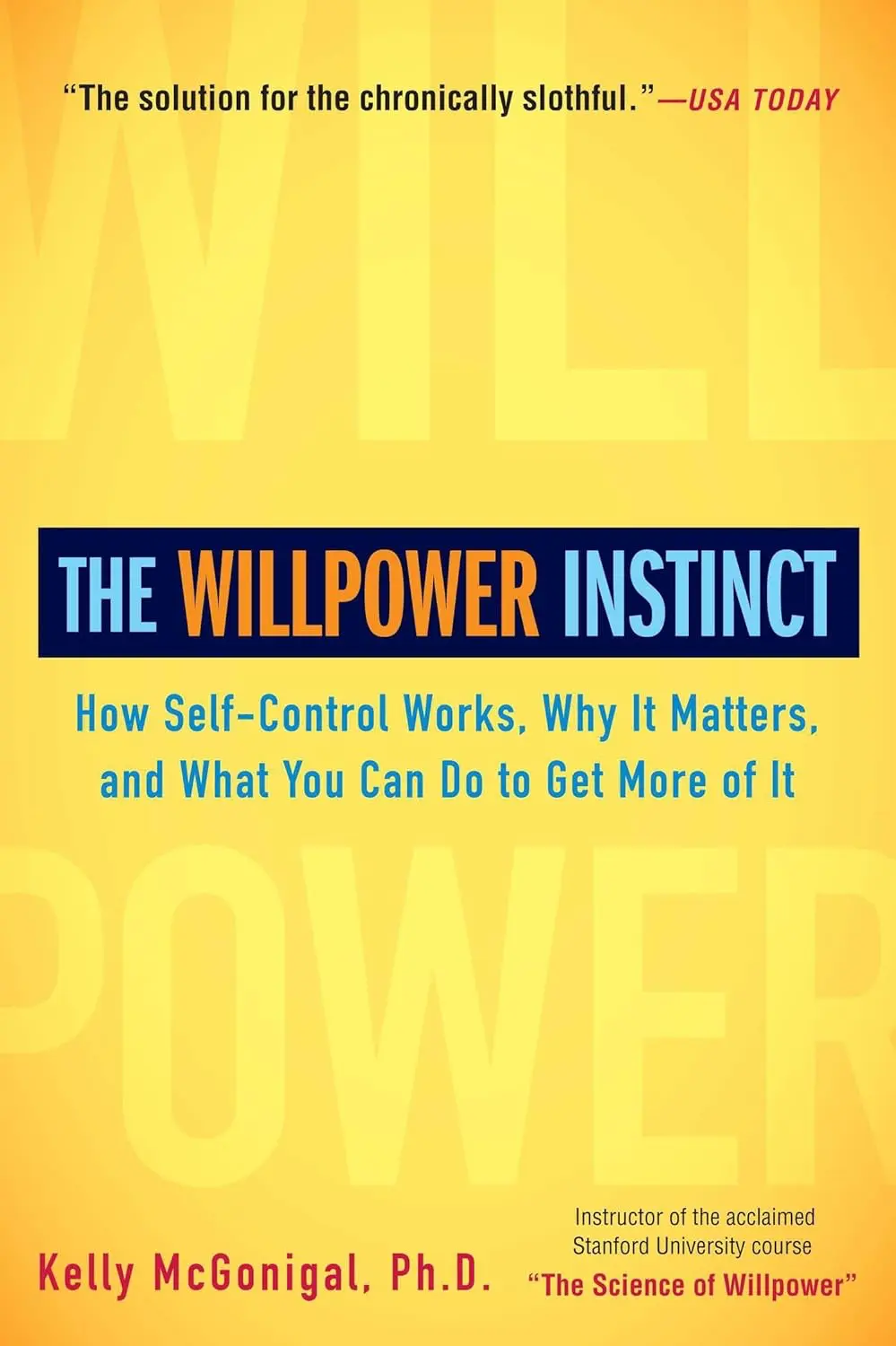
Kelly McGonigal taught a course at Stanford called “The Science of Willpower.” It became one of the most popular courses the university had ever offered. The Willpower Instinct is the book version of that course, structured as ten chapters you can read one per week, each built around a specific misconception about self-control.
The first thing McGonigal does is reframe willpower. It is not a moral quality. It is a biological response. Your prefrontal cortex manages three types of willpower: “I will” (making yourself do things you need to do), “I won’t” (resisting temptation), and “I want” (remembering your long-term goals). When this system gets overwhelmed by stress, fatigue, or distraction, self-control breaks down. This is physiology, not character failure.
From there, the book gets into the specific ways self-control goes wrong and what to do about it. Some of the findings are counterintuitive. Beating yourself up after a lapse does not help you do better next time. It actually makes you more likely to lapse again, because guilt triggers the brain’s stress response, which weakens willpower further. Self-forgiveness, oddly, is more effective than self-discipline at preventing repeat failures.
The chapter on dopamine is worth the price of the book on its own. McGonigal explains that dopamine does not create pleasure. It creates the anticipation of pleasure, which is a different thing entirely. This distinction explains why scrolling social media feels urgent and rewarding before you do it but empty afterward, and why the promise of a reward can feel like a life-or-death matter even when the reward itself is trivial.
McGonigal covers practical interventions throughout: meditation (even brief sessions measurably increase self-control within days), sleep (people who are sleep-deprived show brain patterns similar to people who are mildly intoxicated), exercise (it increases baseline willpower), and breathing techniques (slowing to four to six breaths per minute shifts the nervous system into self-control mode).
For founders and ambitious people, this book is particularly relevant because the standard advice is to push harder, work longer, and discipline yourself into compliance. McGonigal shows that this approach often backfires. The people who are best at sustained effort are not the ones with the most discipline. They are the ones who understand their own biology and work with it instead of against it.
