



What Scott Farquhar’s book recommendations tell you about Atlassian’s co-founder
Scott Farquhar became a billionaire because he answered an email. In 2001, his University of New South Wales classmate Mike Cannon-Brookes sent a message to the entire cohort asking if anyone wanted to start a tech company after graduation. Farquhar was the only person who replied. A year later they founded Atlassian on $10,000 in credit card debt, no business plan, no venture capital, and one clear goal: make at least $48,500 each, which was the typical graduate starting salary at the big consulting firms they did not want to work for.
That origin story matters because Farquhar has consistently described himself as an “accidental billionaire.” He did not set out to build a multibillion-dollar company. He set out to avoid getting a corporate job. The company grew because the product was good and they reinvested everything into making it better instead of hiring a sales team. For eight years they took no outside money. When Atlassian finally went public on the Nasdaq in 2015, it was valued at $4.37 billion, making Farquhar and Cannon-Brookes Australia’s first tech startup billionaires.
In August 2024, Farquhar stepped down as co-CEO to focus on family, philanthropy, and investing through his fund Skip Capital. He remains on Atlassian’s board and chairs the Tech Council of Australia. He co-founded Pledge 1%, a movement encouraging companies to donate one percent of equity, employee time, product, and profit to charity. Over 10,000 companies have joined. He also holds a pilot’s license and is a serious road cyclist.
His reading list reflects someone who thinks in probabilities, cares about understanding why the world works the way it does, and reads fiction for the same reason he reads business books: to see a situation from an angle he would not have found on his own.
Scott Farquhar’s books on critical thinking and decision-making
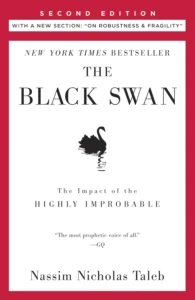
Three books on this list come from Nassim Nicholas Taleb, and that concentration tells you something about how Farquhar thinks about uncertainty. The Black Swan argues that the events with the biggest impact on the world are the ones nobody predicted. Skin in the Game argues that people make better decisions when they personally bear the consequences of being wrong. Together, these books form a worldview: the future is unpredictable, most experts are overconfident, and the only reliable signal of someone’s judgment is whether they have something real at stake.
Farquhar and Cannon-Brookes had skin in the game from day one. They funded Atlassian with credit cards. If the company failed, they owed that money personally. That kind of exposure changes how you make decisions. You do not take unnecessary risks, but you also do not waste time on consensus-building that delays action. Taleb’s framework is essentially the intellectual version of what Farquhar learned by experience in his twenties.
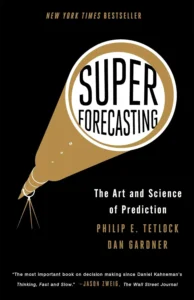
Superforecasting by Philip Tetlock is the practical companion to Taleb’s more philosophical work. Tetlock studied thousands of predictions and found that the best forecasters were not specialists with deep expertise. They were generalists who updated their beliefs frequently, thought in probabilities rather than certainties, and were willing to be wrong. Farquhar ran a company that had to make product bets years in advance, investing in features and platforms before knowing whether the market would want them. Superforecasting’s lesson is not that you can predict the future. It is that you can get incrementally better at it if you approach forecasting as a skill rather than a gift.
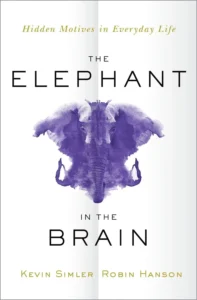
The Elephant in the Brain by Robin Hanson and Kevin Simler argues that most of our behavior is driven by motives we do not acknowledge, even to ourselves. We say we give to charity because we care about the cause, but status and signaling play a bigger role than we admit. We say we choose jobs based on mission, but compensation and prestige matter more than we let on. Farquhar co-founded Pledge 1% and has donated substantial sums to education in the developing world. Recommending a book that questions the purity of altruistic motives is honest in a way that most philanthropists avoid. It suggests he has thought seriously about his own motivations rather than just accepting the flattering version.
Books on history and human nature Scott Farquhar recommends
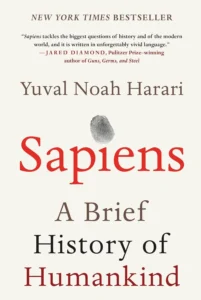
Sapiens by Yuval Noah Harari is a sweeping history of the human species from the cognitive revolution seventy thousand years ago to the present. Harari’s central argument is that humans dominate the planet because of our ability to create and believe in shared fictions: religions, nations, money, corporations. Atlassian is, in Harari’s framework, a shared fiction. It exists because enough people agree that it does: customers, employees, investors, regulators. Farquhar built a company that operates in over a hundred countries. Understanding why humans cooperate at scale, and what makes those cooperative structures fragile, is not a theoretical interest for someone at that level.
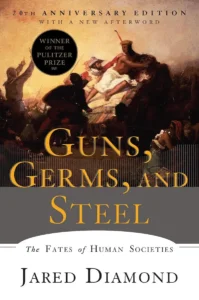
Guns, Germs, and Steel by Jared Diamond asks why some civilizations developed technology and political power faster than others. Diamond’s answer is environmental: geography, climate, and access to domesticable species determined which groups could farm, build cities, and develop writing. Farquhar grew up in Australia, a country that was colonized by a European power with significant technological advantages. Diamond’s book provides a structural explanation for that history that does not rely on claims about cultural superiority, which makes it a useful framework for someone building a global company across very different societies.
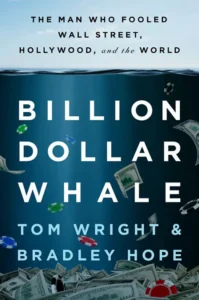
Billion Dollar Whale by Tom Wright and Bradley Hope is the story of Jho Low, a young Malaysian financier who stole billions from the Malaysian government’s development fund and spent it on yachts, real estate, and Hollywood film financing. It is a book about what happens when there is no accountability, no skin in the game, and no system of checks to catch fraud before it reaches catastrophic scale. Farquhar recommending this alongside Taleb’s Skin in the Game creates an interesting pair: one book argues why accountability matters, and the other shows what happens when it is entirely absent.
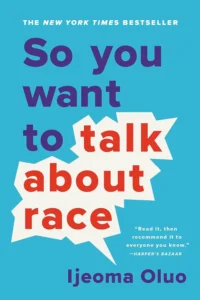
So You Want to Talk About Race by Ijeoma Oluo is a practical guide to having conversations about race, racism, and systemic inequality. Farquhar runs a company with thousands of employees across multiple continents and has been vocal about Atlassian’s diversity and inclusion efforts. This is not a theoretical recommendation. It is the reading of someone who manages a global workforce and understands that building a good culture requires engaging with uncomfortable topics rather than avoiding them.
Scott Farquhar’s books on business and entrepreneurship
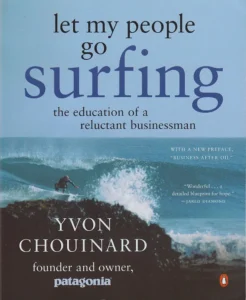
Let My People Go Surfing by Yvon Chouinard, the founder of Patagonia, is the business book on this list that most closely matches Farquhar’s values. Chouinard built a billion-dollar outdoor clothing company while prioritizing environmental responsibility, employee well-being, and a culture that let people go surfing when the waves were good. Farquhar and Cannon-Brookes built Atlassian with a similarly unconventional set of values: “Open company, no bullshit” was one of the original company principles, along with “Don’t #@!% the customer.” Chouinard proved you could build a massive business without sacrificing the culture that made you want to start it in the first place. That is the same bet Farquhar made.
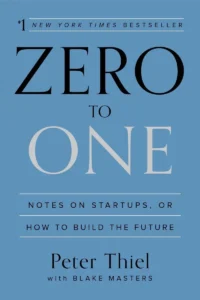
Zero to One by Peter Thiel argues that the most valuable companies are monopolies that create something genuinely new, moving from zero to one, rather than competing in existing markets. Atlassian did something close to this with Jira. When they launched it, project-tracking tools for software developers existed, but they were expensive and painful to use. Atlassian made a cheaper, better product and sold it directly online without a sales team. That was not quite creating a new category, but it was close enough to Zero to One’s thesis that the recommendation makes sense.
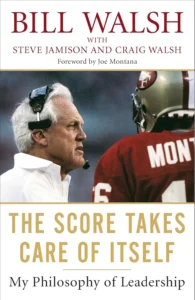
The Score Takes Care of Itself by Bill Walsh is about the former San Francisco 49ers coach’s obsession with process over outcomes. Walsh believed that if you set the standard of performance high enough in every detail, from how the receptionist answers the phone to how players practice footwork, the wins would follow. Atlassian’s culture of transparency, its emphasis on how teams work rather than just what they produce, and its investment in internal communication tools over external sales teams all reflect this philosophy. Focus on how you operate, and the results take care of themselves.
The fiction and personal picks on Scott Farquhar’s reading list
The Little Prince by Antoine de Saint-Exupéry is the most surprising book on this list. It is a children’s book, or at least it pretends to be. It is really a story about what adults forget when they stop paying attention to the things that matter: imagination, friendship, and the willingness to be curious without needing a practical reason. Farquhar has talked about how important it is for leaders to maintain perspective as their companies grow, to not lose the original sense of purpose under the weight of quarterly targets and board meetings. The Little Prince is a gentle reminder that efficiency is not the same thing as meaning.
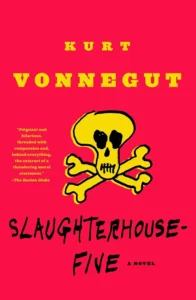
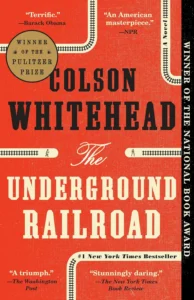
Slaughterhouse-Five by Kurt Vonnegut and The Underground Railroad by Colson Whitehead are the two darkest books on the list. Vonnegut’s novel processes the trauma of the Dresden firebombing through time-fractured narrative. Whitehead reimagines the escape routes used by enslaved people as a literal underground train network. Both are about what humans endure and how they find agency in systems designed to destroy them. For someone who co-founded Pledge 1% and has committed to educating ten million children in the developing world, books about systemic injustice are not just literary interests. They are part of understanding what philanthropy is supposed to address.
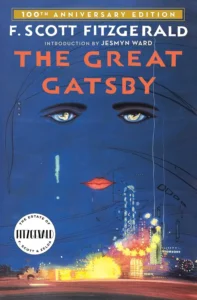
The Great Gatsby by F. Scott Fitzgerald is the other fiction pick, and it provides an interesting counterpoint to Farquhar’s self-description as an accidental billionaire. Gatsby is about a man who builds a fortune to win back something money cannot buy, and who is ultimately destroyed by the hollowness of the world he enters. Farquhar has chosen to step away from the CEO role at forty-four to spend time with his family. A novel about the emptiness of wealth pursued as an end in itself is a telling recommendation from someone who decided early that Atlassian was the means, not the goal.
How Scott Farquhar’s reading list connects to his approach to business and life
The thread through these twenty-four books is judgment. The Taleb books teach you to think about risk honestly. Superforecasting teaches you to update your beliefs. The Elephant in the Brain teaches you to question your own motives. Sapiens teaches you to see the structures humans build as useful fictions rather than fixed truths. And the fiction, from The Little Prince to The Great Gatsby, teaches you that there are things money and success cannot answer.
Farquhar answered one email in 2001 and ended up co-building a company worth tens of billions of dollars. Then he walked away from the CEO role to spend time with his kids. His reading list is the library of someone who has thought carefully about what matters, and who knows that the answer changes depending on which chapter of your life you are in.
