
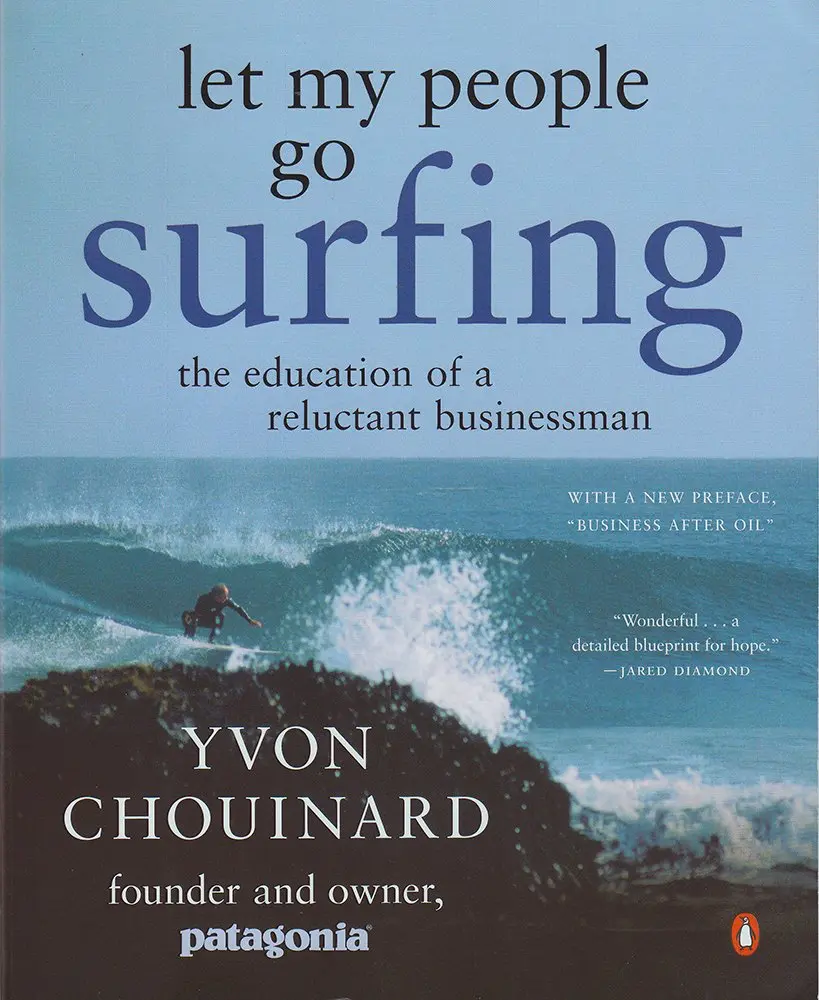
Let My People Go Surfing is Yvon Chouinard’s account of how he accidentally built Patagonia into a billion-dollar company while trying to avoid becoming a businessman. Chouinard started as a rock climber who made his own climbing gear because the existing equipment was inadequate. That gear business gradually became a clothing company, and the clothing company gradually became one of the most recognized outdoor brands in the world.
The book is organized around Chouinard’s business philosophies. He covers product design (build the best product, cause no unnecessary harm, and make things that last), management (let people manage themselves as much as possible, and let them go surfing when the waves are good), environmental policy (the company donates 1% of sales to environmental causes and tries to reduce its own footprint), and finance (grow slowly, avoid debt, and stay private).
What makes Chouinard’s perspective unusual is his genuine ambivalence about growth. He didn’t set out to build a big company and has spent most of his career trying to reconcile the inherent contradictions of running a consumer products business while caring about the environment. He’s honest about the fact that making and selling things creates waste, and that his company’s environmental efforts are a response to that problem, not a solution to it.
For founders, the book is relevant in two ways. First, it’s a model for building a company around values that go beyond profit, something increasingly important to both employees and customers. Second, Chouinard’s management philosophy, which emphasizes hiring good people, giving them autonomy, and getting out of their way, is practical and effective even if you’re not building an outdoor clothing company.
The writing is plain and direct, matching Chouinard’s personality. He doesn’t try to sound like a business guru. He sounds like a climber who ended up running a company and wants to explain how he thinks about it. The environmental sections can read as somewhat dated now that sustainability has become mainstream, but Chouinard was saying these things decades before most CEOs considered them relevant.
