
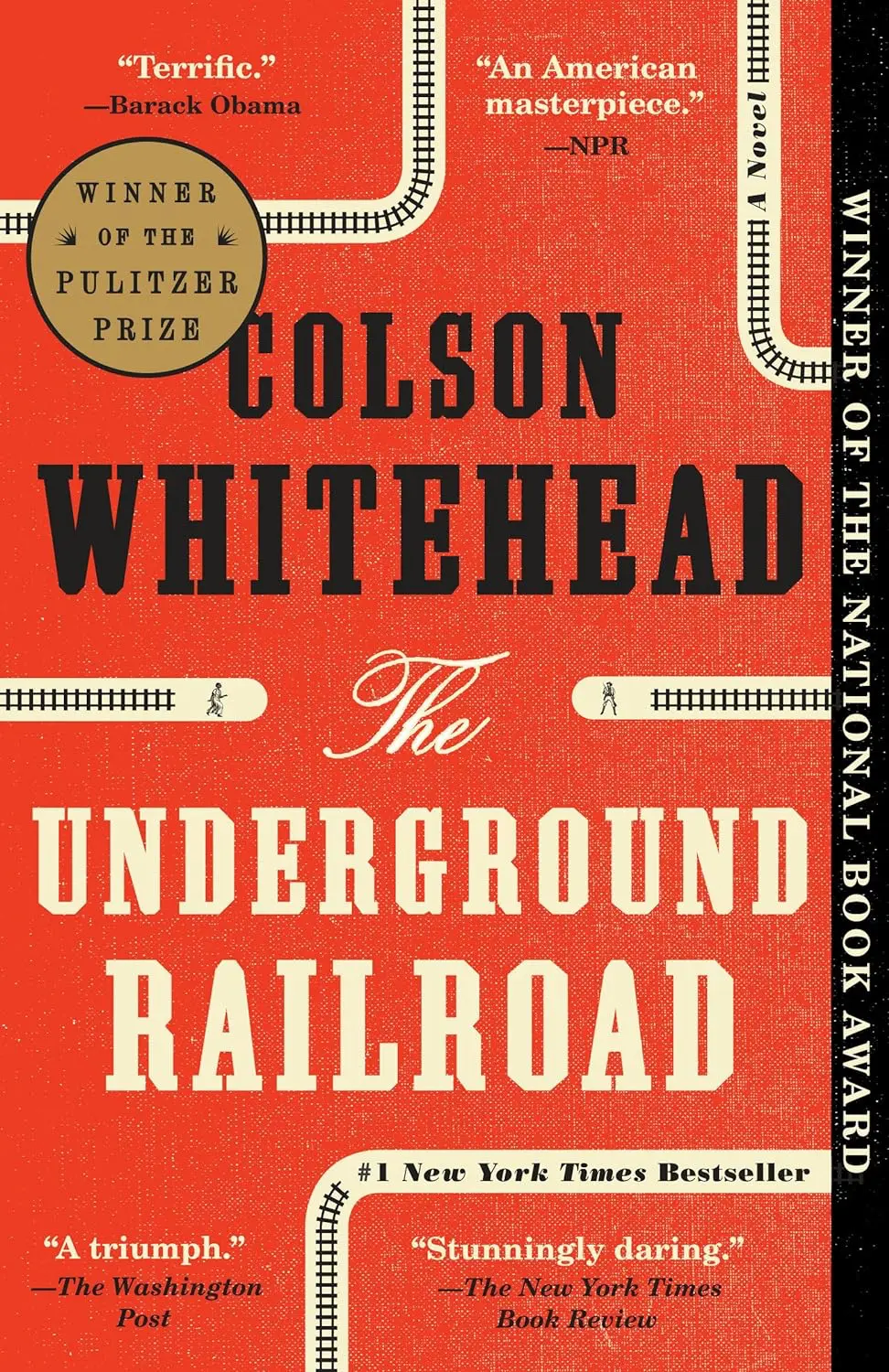
Cora is an enslaved woman on a cotton plantation in Georgia. She is an outcast among the other enslaved people because her mother, Mabel, ran away and never came back, the only person on the Randall plantation to have done so successfully. When a man named Caesar asks Cora to escape with him, she initially refuses. Then the violence on the plantation escalates, and she changes her mind.
What Whitehead does next is the move that makes the novel unlike any other book about slavery. In his version of antebellum America, the Underground Railroad is not a network of sympathizers and safe houses. It is a literal railroad, with locomotives, engineers, and stations hidden beneath the ground. Cora boards it and rides from state to state, and each state she passes through presents a different version of American racism. South Carolina appears benevolent on the surface but is running forced sterilization programs. North Carolina has banned Black people entirely and lynches anyone found within its borders. Indiana offers a fragile, temporary freedom.
Ridgeway, a slave catcher, pursues Cora through all of it. He is one of the most unsettling antagonists in recent American fiction: methodical, philosophical about his work, and convinced that returning fugitives is his contribution to the American project. He is not a cartoon villain. He believes in what he does, and that belief makes him terrifying.
Whitehead writes with controlled precision. The sentences are short and measured, which creates a tension that rarely lets up. He does not dwell on violence for its own sake, but when it appears, it lands hard because the prose around it is so restrained.
The novel makes a specific argument about American history without ever becoming a lecture. Each state Cora visits represents a real phase of the Black American experience compressed into geography: medical exploitation, cultural erasure, violent exclusion, conditional acceptance. The railroad itself works as a metaphor for the systems, both visible and hidden, that have shaped how race operates in this country.
Whitehead won the Pulitzer Prize for Fiction and the National Book Award for this novel in 2016. Barack Obama called it terrific. Oprah selected it for her book club. The New York Times included it in their list of the 100 best books of the 21st century. Barry Jenkins adapted it into a limited series for Amazon Prime Video in 2021. Whitehead later won a second Pulitzer for The Nickel Boys, making him one of only a handful of novelists to win the prize twice.
