
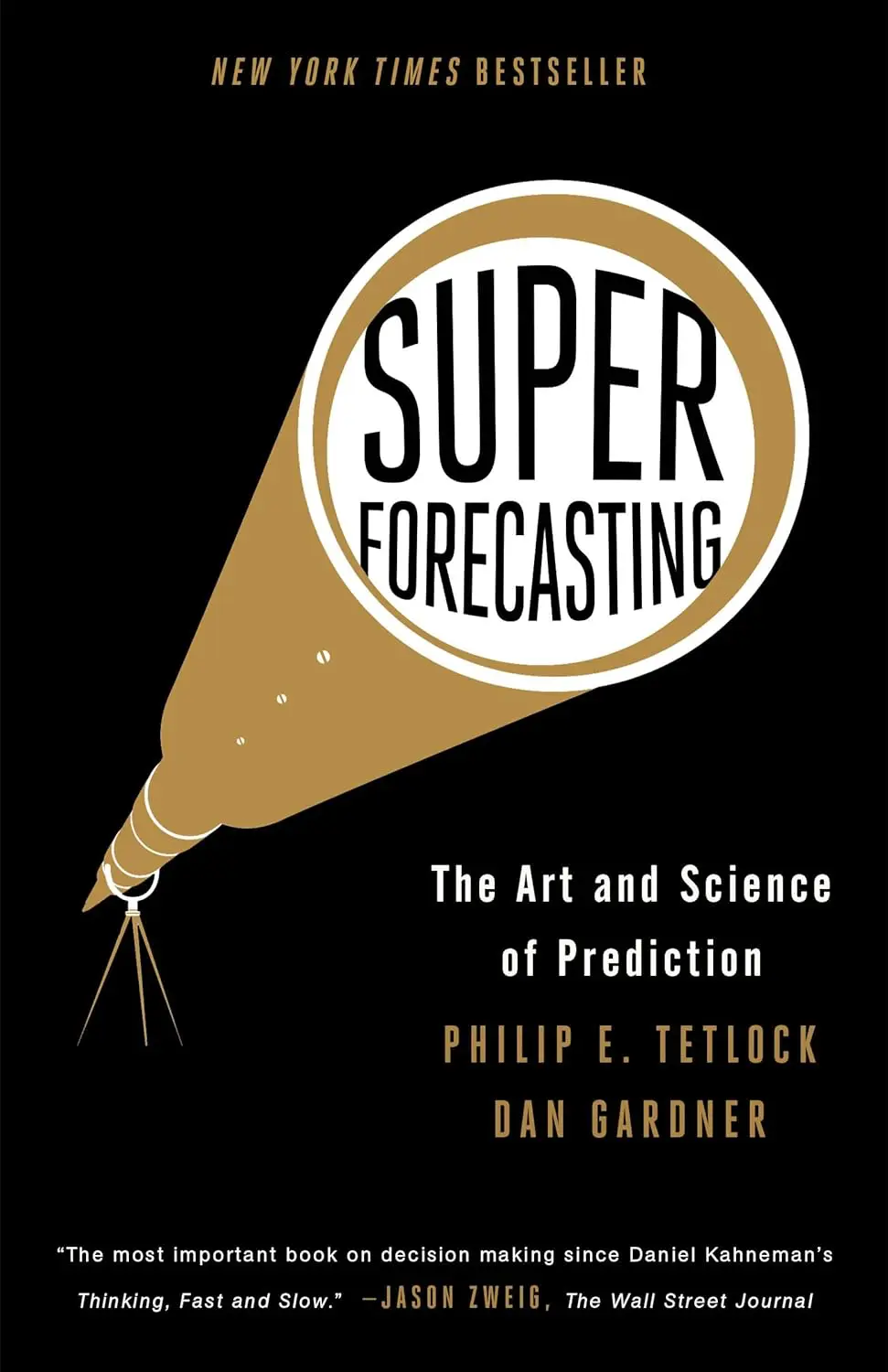
In 2011, the Intelligence Advanced Research Projects Activity, the research arm of the U.S. intelligence community, launched a forecasting tournament. The goal was simple: find out who is actually good at predicting geopolitical events, and figure out why.
Philip Tetlock, a psychologist at the University of Pennsylvania, entered teams of volunteers. These were not intelligence analysts. They were ordinary people, many with no special expertise in foreign affairs, recruited through open calls. They were asked to estimate the probability of specific events: Would North Korea test a nuclear weapon in the next year? Would Greece leave the eurozone?
The results were embarrassing for the professionals. Tetlock’s best forecasters, whom he dubbed “superforecasters,” outperformed intelligence analysts who had access to classified data. They beat prediction markets. They beat algorithms. And they did it consistently, year after year.
The book dissects what made these people different. It was not intelligence, though most were smart. It was not domain knowledge, though many were well-read. The difference was cognitive style. Superforecasters thought in terms of probabilities rather than certainties. They updated their estimates frequently when new information arrived. They broke big questions into smaller, more tractable ones. They were actively open-minded, meaning they sought out information that challenged their views rather than confirming them.
Tetlock also describes what bad forecasters look like. They think in binary terms (it will happen or it will not). They rely on sweeping narratives rather than specific evidence. They are slow to change their minds. And perhaps most importantly, they never track their accuracy, which means they never learn from being wrong.
The distinction between “foxes” and “hedgehogs” runs through the book. Hedgehogs have one big idea and fit everything into it. Foxes know many small things and aggregate them carefully. Superforecasters are almost always foxes.
Anyone who makes decisions under uncertainty will find this book directly useful. Predicting whether a product will succeed, whether a hire will work out, or whether a market will shift are all forecasting problems. Tetlock’s research suggests that the way you approach these questions matters more than how much you know about the subject. The habits of superforecasting, probabilistic thinking, frequent updating, intellectual humility, are trainable skills, not fixed traits.
The book won praise from Daniel Kahneman, who called it the most important book on this topic.
