



What Tony Hsieh’s book recommendations tell you about the Zappos CEO
Tony Hsieh’s reading list is fourteen books long. That is the shortest list in this collection. Every single book is about the same thing: how groups of people can be organized so that everyone is happier, more creative, and more generous. There are no books about competition, market dominance, or crushing the enemy. There is no Sun Tzu. There is no Hard Thing About Hard Things. The list reads like the bookshelf of someone who genuinely believed that the point of business was to make people happy, and who spent his entire career trying to prove it.
Some context. Hsieh was born in 1973 to Taiwanese immigrant parents in Illinois and grew up in Marin County, California. He went to Harvard, where he studied computer science and ran a pizza business out of his dorm. His best customer, Alfred Lin, would later become Zappos’s CFO. After college, Hsieh co-founded LinkExchange, an internet advertising network, and sold it to Microsoft for $265 million before he turned twenty-five. He then invested in a small online shoe company called Zappos and eventually became its CEO.
What Hsieh did at Zappos made the company famous. He built a customer service culture so extreme that employees were encouraged to send customers to competitor websites if Zappos did not have what they wanted. The return policy was 365 days with free shipping both ways. Call center staff had no time limits on calls. One employee reportedly stayed on the phone with a customer for ten hours. Hsieh’s logic was that every interaction was a chance to build loyalty, and loyalty compounded over time into something no advertising budget could buy.
Amazon acquired Zappos for $1.2 billion in 2009. Hsieh stayed on as CEO and poured $350 million of his own money into the Downtown Project, an attempt to turn a decaying stretch of downtown Las Vegas into a walkable neighborhood of startups, restaurants, and community spaces. He measured success by counting strollers on the street. He lived in an Airstream trailer in a trailer park he built. He implemented holacracy, a management system with no traditional hierarchy. He retired from Zappos in August 2020. He died three months later, at forty-six, from injuries sustained in a house fire.
Tony Hsieh’s books on culture, community, and happiness
Tribal Leadership by Dave Logan, John King, and Halee Fischer-Wright argues that every organization is a collection of tribes at different stages of development, and that a leader’s job is to move the tribe from “my life sucks” through “I’m great” to “we’re great” and eventually to “life is great.” Hsieh ran Zappos explicitly at the highest stage. His core values included “Create fun and a little weirdness” and “Build a positive team and family spirit.” Tribal Leadership gave him the language for what he was already building intuitively.
The Happiness Hypothesis by Jonathan Haidt synthesizes ancient wisdom and modern psychology to explore what actually makes people happy. Haidt’s conclusion is that happiness comes from the right relationship between yourself and others, between yourself and your work, and between yourself and something larger than yourself. Hsieh named his book Delivering Happiness and built a consulting company around the concept. Haidt’s research was the academic foundation for the philosophy Hsieh turned into a business model.
Give and Take by Adam Grant argues that the most successful people in the long run are givers, not takers or matchers. Hsieh ran Zappos on this principle. The customer service culture was built on giving: giving customers more than they expected, giving employees more autonomy than they were used to, giving the Downtown Project community resources without demanding immediate returns. Grant’s research validated what Hsieh believed from experience: generosity creates value that selfishness cannot.
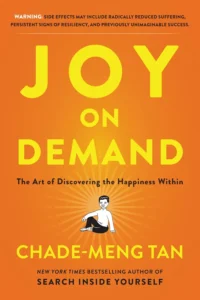
Joy on Demand by Chade-Meng Tan is about training yourself to access joy as a skill rather than waiting for it to arrive as a circumstance. Hsieh’s entire philosophy was that happiness was not a byproduct of success. It was the input. Make people happy first, and the business results follow. Tan’s book, written by a former Google engineer who created the company’s mindfulness program, approaches the same idea from a personal rather than organizational angle.
Books on entrepreneurship and getting things done Tony Hsieh recommended
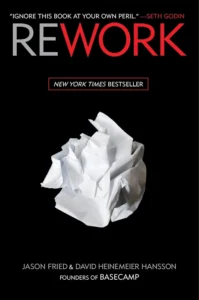
Rework by Jason Fried and David Heinemeier Hansson argues that most of what business culture considers essential, long hours, endless meetings, detailed business plans, is actually waste. Build something small, ship it fast, and iterate. Hsieh built LinkExchange the same way: he and his co-founders found their first thirty clients by cold-emailing webmasters, and within ninety days they had twenty thousand participating pages. Rework’s philosophy of doing less but better is consistent with how Hsieh operated before Zappos became large enough to need more structure.
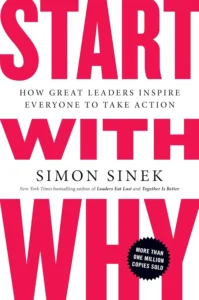
Start with Why by Simon Sinek argues that the most inspiring organizations lead with purpose, not product. Zappos did not lead with shoes. It led with happiness. The shoes were the vehicle. The purpose was creating an experience that made people feel cared for. Sinek’s framework describes exactly what Hsieh built, and why it resonated so deeply with customers and employees who were tired of being treated like transactions.
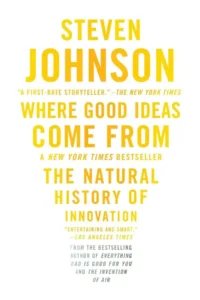
Where Good Ideas Come From by Steven Johnson is about how innovation happens through connection and collision, not isolated genius. Hsieh used this exact language for the Downtown Project. He measured “collisions,” serendipitous encounters between people, as a key metric of the neighborhood’s health. He believed that if you put the right people in proximity and gave them reasons to interact, new ideas would emerge on their own. Johnson’s book provided the theoretical support for that bet.
How Tony Hsieh’s reading list connects to his life and legacy
Fourteen books. Every one of them is about making people happier, more connected, or more creative. There is no cynicism on this shelf. No hedging. No books about protecting yourself from competitors or managing downside risk. It is the reading list of someone who believed, completely, that if you take care of people, everything else works out.
The tragedy of Hsieh’s story is that the philosophy he built for others did not save him from himself. The last year of his life was marked by isolation, substance abuse, and a spiral that the people around him could not stop. A man who measured happiness by counting strollers on a street died alone in a fire at forty-six. His reading list cannot answer the question of what went wrong. But it does tell you what he was reaching for, and the distance between what he built for everyone else and what he could not build for himself is the saddest part of a story that started with the genuine belief that happiness was something you could deliver.
