
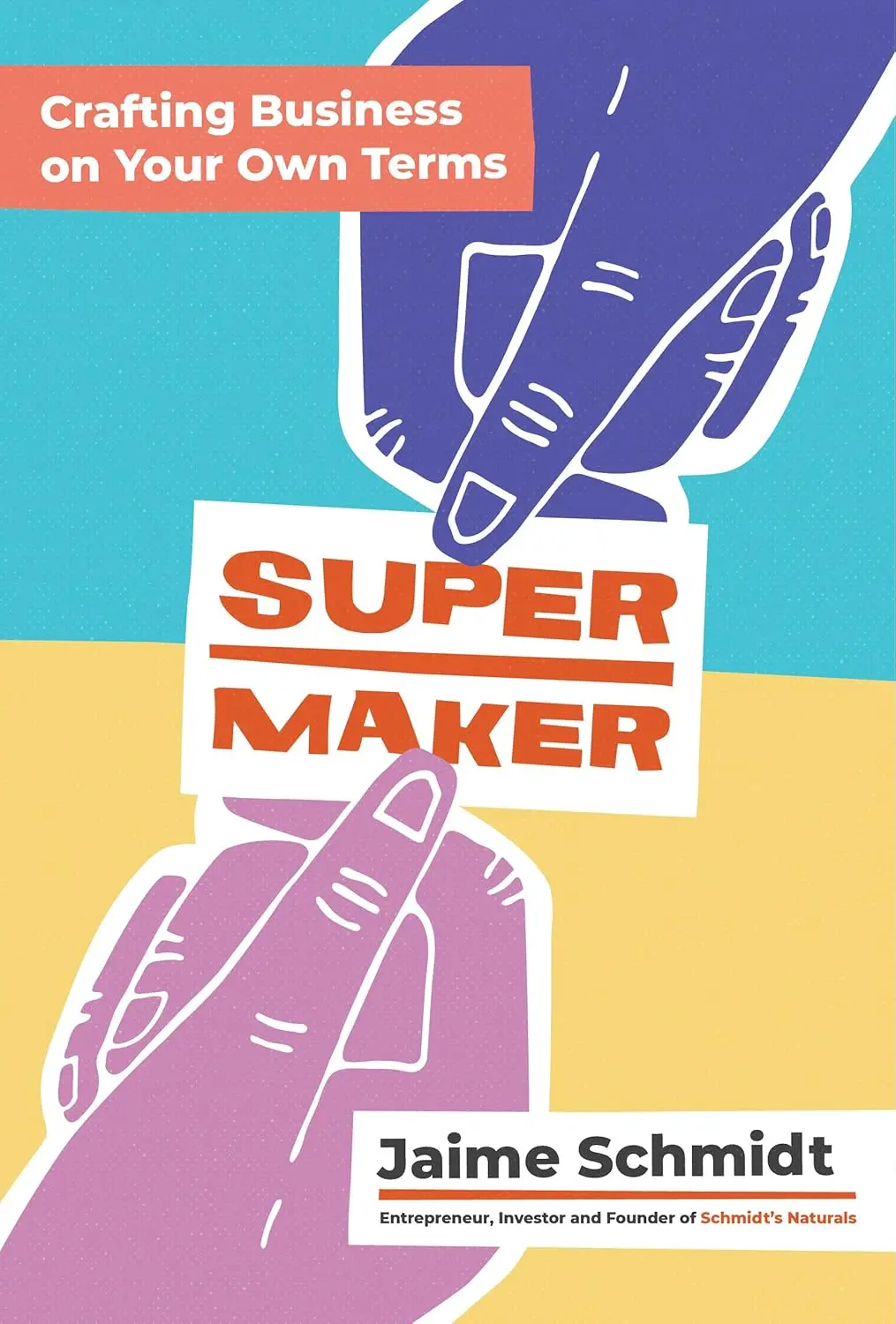
Jaime Schmidt mixed her first batch of natural deodorant in her kitchen in 2010. She was not trying to start a business. She was trying to find a deodorant that actually worked without the ingredients she wanted to avoid. When the formula turned out well, she brought jars to Portland’s farmers market and sold out. That pattern, make something, see if people want it, make more, repeated itself until Schmidt’s Naturals was on shelves at Target, Walmart, and Whole Foods.
In 2017, Unilever acquired the company. Schmidt was 34 years old.
Supermaker covers the full story, from kitchen counter to acquisition. Schmidt is specific about the operational details that other founder memoirs gloss over. She writes about formulation challenges (natural deodorant is genuinely hard to get right), about the cash flow crises that come with rapid growth, about the difficult transition from making everything by hand to contract manufacturing, and about what it feels like to hand your brand over to a multinational corporation.
The book is organized around lessons rather than chronology, though the chronological story runs through it. Schmidt discusses how she figured out pricing without any business training, how she built a social media following before she had a marketing budget, how she handled copycats entering the natural deodorant market, and how she negotiated the sale to Unilever.
Schmidt is honest about the parts that were not fun. Scaling a handmade product means losing control of the making process, which is often the part the founder cares about most. Dealing with large retailers means accepting their terms, their timelines, and their return policies. Selling a company means watching someone else make decisions about the thing you built. The book does not pretend these trade-offs are painless.
Tony Hsieh recommended the book before his death in 2020. For anyone who makes physical products, runs a DTC brand, or is thinking about whether to sell a company they started in their kitchen, Supermaker provides a grounded, practical account of the full journey without the usual romanticization of entrepreneurship.
