
Meng, as everyone at Google called him, started as an engineer. He joined the company early enough to get employee number 107, which in Silicon Valley terms makes him both old-school and wealthy. At some point he became more interested in happiness research than in code, and Google, being Google, let him pursue it. He developed an internal course called Search Inside Yourself that combined mindfulness meditation, emotional intelligence training, and neuroscience. It became one of the most popular courses inside the company.
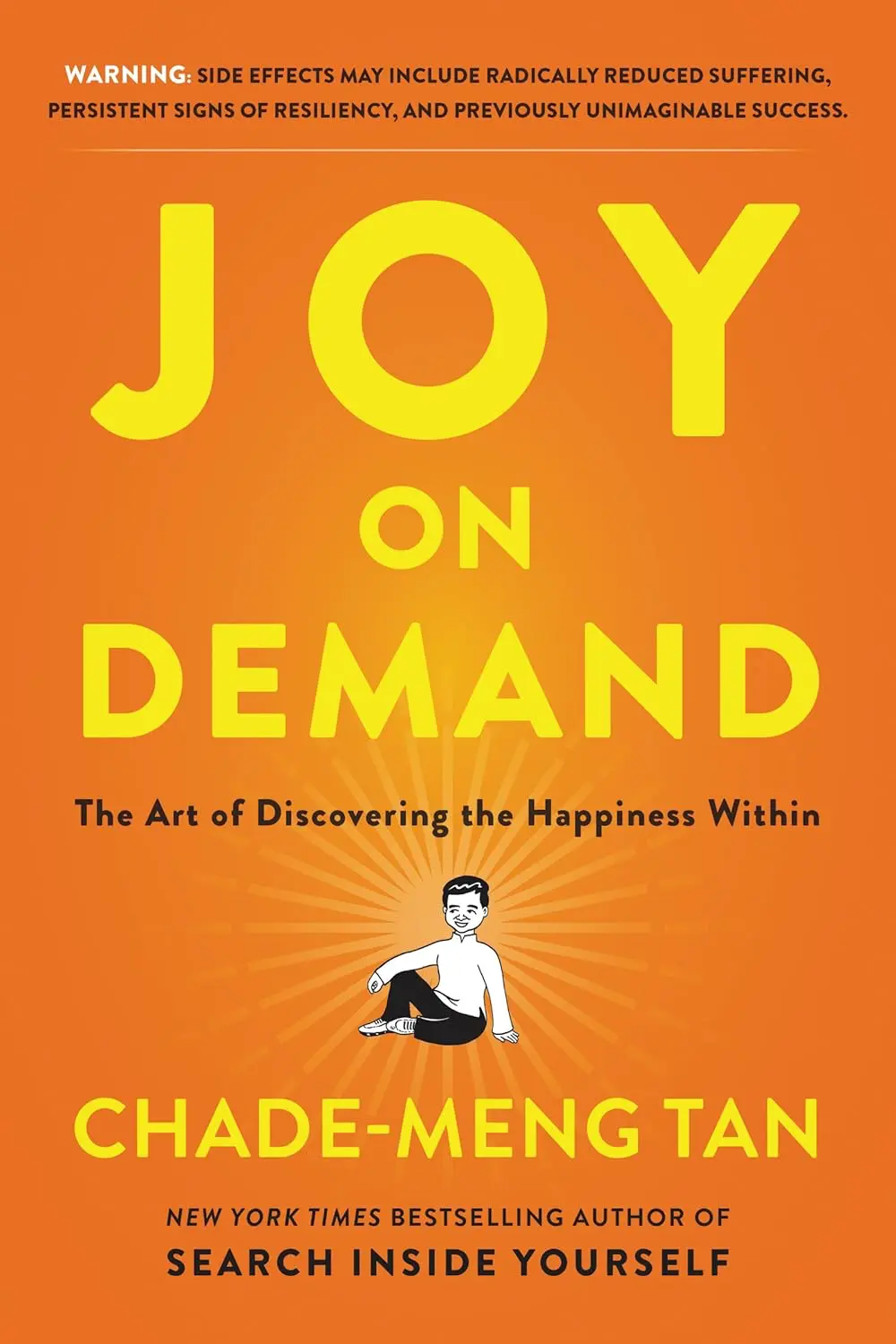
Joy on Demand is the book version of what he learned. The core argument: joy is not something that happens to you. It is a mental skill that can be developed through practice, the same way you develop any other skill. You do not need to meditate for hours. You do not need to go on a retreat. You can start with one breath.
Meng structures the training around three steps. The first is learning to calm the mind, even for a few seconds at a time. The second is learning to notice joy when it arises naturally, which happens more often than most people realize but passes unnoticed because attention is elsewhere. The third is learning to incline the mind toward joy as a default state, so that the baseline shifts upward over time.
The tone is light, frequently funny, and deliberately unpretentious. Meng tells jokes. He draws cartoons. He quotes the Dalai Lama and then makes fun of himself for quoting the Dalai Lama. This tone is strategic. He is trying to make meditation accessible to engineers and executives who would roll their eyes at anything that sounded too spiritual. The humor disarms resistance.
The science sections draw on research from neuroscientists like Richard Davidson, who has studied the brains of long-term meditators and found measurable differences in the circuits associated with attention, emotional regulation, and well-being. Meng does not oversell the research. He is careful to note what has been established and what remains speculative.
The book’s limitations are the limitations of the genre. Meditation helps many people. It does not help everyone. The claim that joy is trainable can sound glib to someone dealing with clinical depression or situational despair. Meng briefly acknowledges this but does not dwell on it.
Meng retired from Google and now works on peace-related initiatives. His previous book, Search Inside Yourself, covered similar territory with a slightly more corporate focus. Joy on Demand is the more personal and accessible of the two.
