
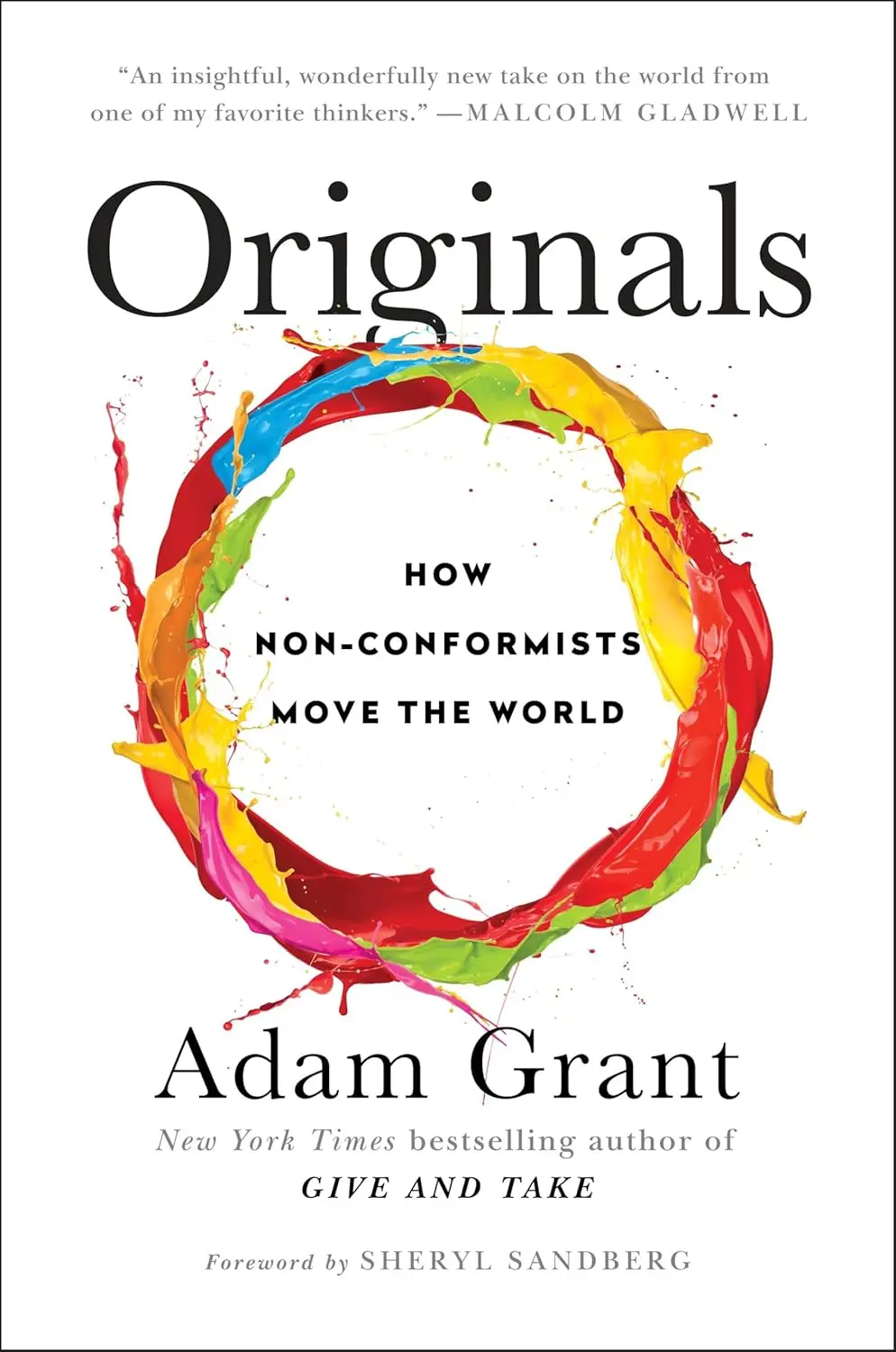
Originals examines how people come up with new ideas, decide which ones to pursue, and build support for them. Adam Grant, an organizational psychologist at Wharton, draws on research and real-world examples to challenge common beliefs about what it takes to be original.
One of the book’s most interesting findings is that original thinkers are not the fearless risk-takers they’re often portrayed as. Many successful entrepreneurs hedged their bets by keeping their day jobs while starting their companies. The founders of Warby Parker, for instance, all had backup plans. Grant argues that this kind of calculated risk management is actually more common among successful originals than blind leaps of faith.
The book also covers the idea-generation process. Grant cites research showing that quantity leads to quality, meaning that people who generate more ideas, including many bad ones, tend to produce more good ones too. He explores why first-movers often lose to later entrants, why some ideas get championed while equally good ones get ignored, and how dissent and disagreement within organizations can lead to better outcomes.
Other chapters cover procrastination (which can sometimes improve creative output by allowing ideas to incubate), how to build coalitions for new ideas, and how birth order affects the likelihood of being original (later-born children are statistically more likely to challenge the status quo).
For founders, the book is relevant on multiple levels. It offers practical advice on when to quit your job (later than you think), how to pitch unconventional ideas (lead with the problems, not the solution), and how to create a culture where people speak up rather than stay silent. Grant’s research on how to evaluate which of your own ideas are worth pursuing is particularly useful for anyone generating a lot of concepts and needing to filter them.
The writing is engaging and well-paced. Grant is good at turning academic research into readable stories. The book occasionally tries to cover too much ground, and some connections feel like a stretch, but the core material on creative risk-taking and idea selection is strong.
