

Sergey Brin

Sergey Brin Book Recommendations (20 Books)

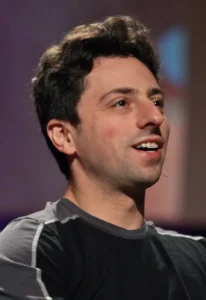
Sergey Brin co-founded Google in 1998 with Larry Page. Born in Moscow, his family emigrated to the United States when he was six. Brin studied computer science and mathematics at the University of Maryland before starting a PhD at Stanford, where he and Page developed the search engine that became Google. After stepping back from day-to-day operations at Alphabet in 2019, he returned to work on AI projects within the company.

Learn more about the founder on Wikipedia

*post may include affiliate links, view our Disclaimer for more info.

Share:

Sergey Brin Reading List:

FREE Notion Book Tracker

+9 recommended books for founders inside

by Unseen Founder

Notion Book Tracker helps you organize what you read, save key insights, and build your personal founder library. It also includes carefully selected books recommended for founders.

Get FREE Now
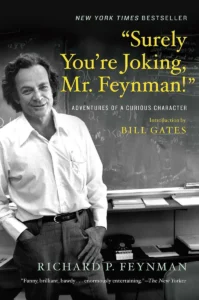
Surely You're Joking, Mr. Feynman!

Surely You’re Joking, Mr. Feynman!

Adventures of a Curious Character

Book by Richard Feynman

Nobel physicist Richard Feynman recounts a life spent chasing curiosity wherever it led, from cracking safes at Los Alamos to learning to draw nudes to playing bongo drums in a samba band. The book reads like a collection of adventures rather than a standard memoir.

View on Amazon
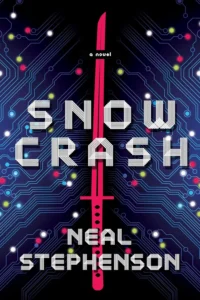
Snow Crash

Snow Crash

Book by Neal Stephenson

Stephenson's 1992 science fiction novel predicted virtual reality, avatars, digital currencies, and the fragmentation of government decades before these concepts became real. The story follows a hacker/pizza deliveryman through a fractured America where corporations have replaced the federal government.

View on Amazon
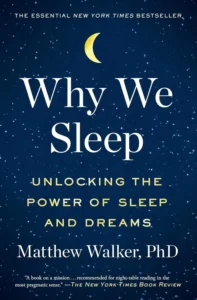
Why We Sleep

Why We Sleep

Unlocking the Power of Sleep and Dreams

Book by Matthew Walker

Sleep scientist Matthew Walker makes the case that sleep is the single most effective thing you can do for brain and body health. The book covers the science of sleep stages, dreaming, and the consequences of sleep deprivation on everything from memory to immune function.

View on Amazon
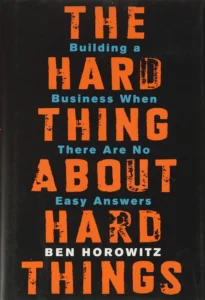
The Hard Thing About Hard Things

The Hard Thing About Hard Things

Building a Business When There Are No Easy Answers

Book by Ben Horowitz

Ben Horowitz, cofounder of Andreessen Horowitz, writes about the problems nobody prepares you for when running a company: layoffs, demotions, dealing with your own psychology under pressure. There is no sugarcoating here, just honest accounts from someone who went through it.

View on Amazon
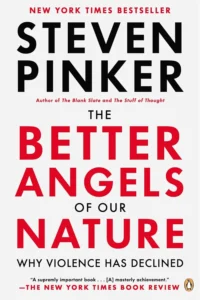
The Better Angels of Our Nature

The Better Angels of Our Nature

Why Violence Has Declined

Book by Steven Pinker

Pinker makes the case, with extensive data, that violence has declined over centuries and millennia, from tribal warfare to homicide to interstate conflict. The book examines the psychological and institutional forces behind this decline.

View on Amazon
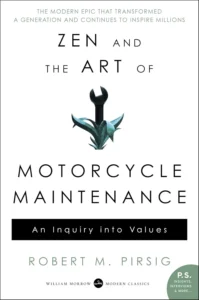
Zen and the Art of Motorcycle Maintenance

Zen and the Art of Motorcycle Maintenance

An Inquiry into Values

Book by Robert M. Pirsig

Pirsig's novel follows a father and son on a motorcycle trip across America while the narrator explores questions about quality, technology, rationality, and what it means to do good work. The book was rejected by 121 publishers before becoming one of the best-selling philosophy books ever written.

View on Amazon
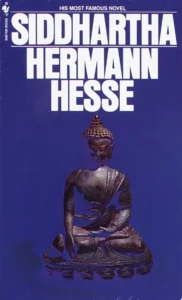
Siddhartha

Siddhartha

Book by Hermann Hesse

Hesse's short novel follows a young man in ancient India who leaves a life of privilege to search for enlightenment through asceticism, wealth, and eventually simplicity. The story is about finding your own path rather than following someone else's, even when that someone is the Buddha.

View on Amazon
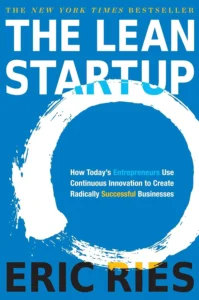
The Lean Startup

The Lean Startup

How Today's Entrepreneurs Use Continuous Innovation to Create Radically Successful Businesses

Book by Eric Ries

Ries introduces a method for building startups based on rapid experimentation, validated learning, and short feedback loops. Instead of spending months on a product nobody wants, the book advocates shipping a minimum viable product early and iterating based on real customer data.

View on Amazon
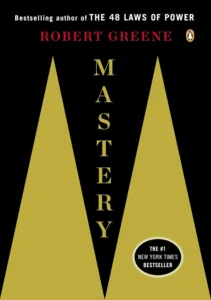
Mastery

Mastery

Book by Robert Greene

Greene studies the lives of historical and contemporary masters, from Leonardo da Vinci to Paul Graham, to identify the common pattern behind achieving the highest level of skill. The path involves an apprenticeship phase, a creative-active phase, and eventually a period where intuition and skill merge.

View on Amazon
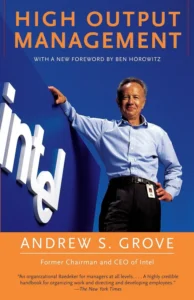
High Output Management

High Output Management

Book by Andrew S. Grove

Andy Grove, former CEO of Intel, wrote this management guide in 1983, and it still circulates widely among startup founders and tech executives. The book treats management as a production process, covering meetings, decision-making, performance reviews, and how to get the most out of your team.

View on Amazon
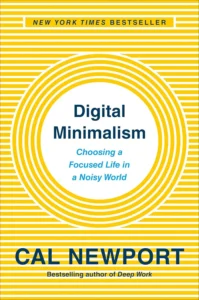
Digital Minimalism

Digital Minimalism

Choosing a Focused Life in a Noisy World

Book by Cal Newport

Cal Newport offers a philosophy for using technology intentionally rather than by default. The book proposes a 30-day digital declutter, followed by a deliberate reintroduction of only the tools and apps that genuinely support what you value.

View on Amazon
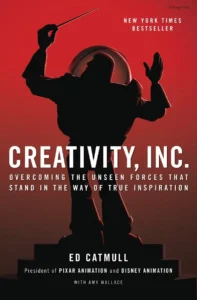
Creativity, Inc.

Creativity, Inc.

Overcoming the Unseen Forces That Stand in the Way of True Inspiration

Book by Ed Catmull

Ed Catmull, cofounder of Pixar, describes how the studio built a culture that consistently produces original work. The book covers how to manage creative teams, deal with failure productively, and protect new ideas from the organizational forces that tend to kill them.

View on Amazon
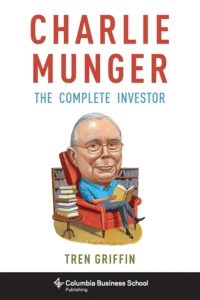
Charlie Munger

Charlie Munger

The Complete Investor

Book by Tren Griffin

Tren Griffin distills the investing philosophy and mental models of Charlie Munger, Warren Buffett's longtime partner at Berkshire Hathaway. The book organizes Munger's decades of speeches, interviews, and shareholder letters into a coherent system of thinking about business, value, and decision-making.

View on Amazon
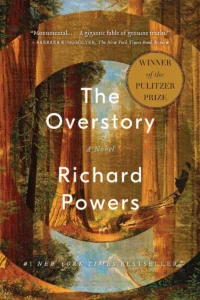
The Overstory

The Overstory

A Novel

Book by Richard Powers

Richard Powers's Pulitzer Prize-winning novel follows nine Americans whose lives become entangled with trees and forests in ways that pull them toward environmental activism. It is a dense, ambitious work that will change how you look at the natural world, and it reads like nothing else in contemporary fiction.

View on Amazon
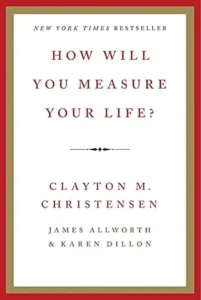
How Will You Measure Your Life?

How Will You Measure Your Life?

Book by Clayton M. Christensen, James Allworth & Karen Dillon

Clayton Christensen, the Harvard professor who coined "disruptive innovation," applies business strategy frameworks to the personal decisions that shape careers, relationships, and character. The book grew out of a lecture he gave to HBS graduating students that went viral.

View on Amazon
Tiny Beautiful Things

Tiny Beautiful Things

Advice on Love and Life from Dear Sugar

Book by Cheryl Strayed

Cheryl Strayed, writing anonymously as Dear Sugar on the literary website The Rumpus, answered strangers' questions about love, loss, ambition, and failure with a level of honesty that advice columns almost never reach. This collection of those columns doubles as an accidental memoir, since Strayed answered every question by pulling from the wreckage and joy of her own life.

View on Amazon
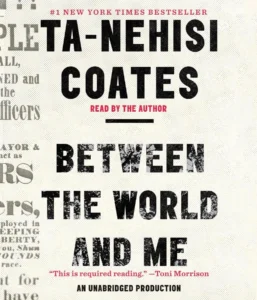
Between the World and Me

Between the World and Me

Book by Ta-Nehisi Coates

Written as a letter to his teenage son, Ta-Nehisi Coates reflects on what it means to live in a Black body in America. The book draws from history, personal experience, and the death of a college friend to confront questions about race, fear, and the American myth. It won the National Book Award in 2015.

View on Amazon
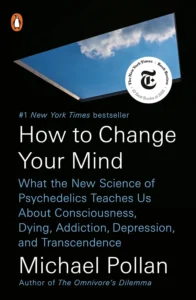
How to Change Your Mind

How to Change Your Mind

What the New Science of Psychedelics Teaches Us About Consciousness, Dying, Addiction, Depression, and Transcendence

Book by Michael Pollan

Michael Pollan traces the history of psychedelic research from the 1950s through its suppression and current revival, then volunteers as a subject himself. The book is part scientific journalism, part memoir of altered states, and part argument for taking consciousness more seriously.

View on Amazon
The Stranger

The Stranger

Book by Albert Camus

Albert Camus's 1942 novel opens with one of the most famous lines in literature: "Mother died today. Or maybe yesterday; I can't be sure." The narrator, Meursault, moves through life without the emotional reactions people expect of him, and that detachment eventually destroys him.

View on Amazon

What Sergey Brin’s book recommendations tell you about Google’s co-founder

Sergey Brin was six years old when his family left the Soviet Union. His father, a mathematics professor, had been fired after applying for an exit visa. His mother, a researcher, lost her job too. They waited eight months, afraid the visa would be denied, before finally emigrating to the United States in 1979. Brin grew up in Maryland, studied mathematics and computer science, went to Stanford for a PhD, met Larry Page, and together they built the search engine that became Google. He never finished the PhD.

Brin stepped back from day-to-day operations at Alphabet in 2019, then came back in 2023 because artificial intelligence was too exciting to watch from the outside. He has been at Google’s offices “pretty much every day” since, working on Gemini and telling interviewers he has never seen anything as thrilling as the recent progress in AI. He is deep in the technical details, convening weekly research discussions and contributing code. He admitted publicly that Google Glass failed because he did not understand consumer hardware supply chains, which is a rare confession from a co-founder worth $135 billion.

His reading list looks different from his co-founder Larry Page’s. Where Page’s bookshelf leans toward first-principles physics and business strategy, Brin’s is more philosophical and literary. Both recommend Feynman and Snow Crash. After that, the lists diverge into what feels like two different minds that happened to build the same company.

Sergey Brin’s books on science, curiosity, and how things work

Surely You’re Joking, Mr. Feynman! is on both Brin’s and Page’s lists, and the reasons are the same. Feynman was a physicist who refused to accept anything on authority, derived everything from first principles, and treated every field as equally interesting. Brin and Page built Google the same way: starting from the question of how to measure the importance of a web page rather than accepting the existing approaches. Feynman’s playful, anti-authoritarian approach to knowledge is embedded in Google’s DNA.

Snow Crash by Neal Stephenson invented the word “metaverse” and depicted a future where computing, linguistics, and neuroscience collide. Brin studied computer science with a mathematical bent, but his interests have always been broader than code. Snow Crash treats information as a virus, language as a programming language for the brain, and the internet as a space where reality and fiction blur. For someone who built the world’s most powerful information retrieval system, a novel about information as a force of nature is not entertainment. It is occupational reading.

Creativity, Inc. by Ed Catmull describes how Pixar maintained creative quality while scaling. Catmull’s central insight is that creative teams need candor and psychological safety more than they need process. Brin came back to Google specifically because the AI race required the kind of creative urgency that bureaucracy kills. Catmull’s book is about how to keep that urgency alive inside a large organization, which is exactly the challenge Brin faces working on Gemini inside a company with over 180,000 employees.

Books on philosophy and meaning Sergey Brin recommends

Siddhartha by Hermann Hesse is a novel about a young man who searches for enlightenment through asceticism, wealth, pleasure, and eventually finds it by sitting beside a river and listening. Brin has lived multiple versions of his own career: researcher, entrepreneur, billionaire, retiree, and now hands-on AI engineer again. Siddhartha’s message is that wisdom does not come from any single phase of life. It comes from living through all of them and paying attention to what each one teaches you.

Zen and the Art of Motorcycle Maintenance by Robert Pirsig is about quality, the thing you recognize when you encounter it but cannot define. Brin’s return to Google was driven by recognizing quality in the AI work being done. He has said he is drawn to the “scientific interest” of the field. Pirsig would call that an encounter with quality so strong it pulls you out of retirement.

The Stranger by Albert Camus is the darkest book on this list. A man feels nothing at his mother’s funeral and later kills someone without understanding why. Camus was exploring absurdism, the idea that life has no inherent meaning. Brin, whose family fled Soviet antisemitism and who built one of the most consequential companies in history, recommending a book about meaninglessness is not nihilism. It is the reading of someone who has thought seriously about whether organizing the world’s information actually answers the question of what the information is for.

The personal and unexpected picks on Sergey Brin’s reading list

How to Change Your Mind by Michael Pollan is about psychedelic research and what it reveals about consciousness and the dissolution of ego. Brin has always been the more experimental of the two Google founders, the one who championed Google Glass, who showed up at the AGI House in Silicon Valley, who went skydiving at Google I/O to demo wearable computing. A book about expanding the boundaries of perception fits someone who has spent his career trying to see things that other people have not seen yet.

Between the World and Me by Ta-Nehisi Coates and Tiny Beautiful Things by Cheryl Strayed are the most emotionally grounded picks on a list otherwise dominated by science and philosophy. Coates writes about race and the body. Strayed writes about grief and the hard work of being alive. Brin grew up as a Soviet Jewish immigrant in America. He knows what it means to be an outsider in a system that was not built for you. These books are about different forms of that experience, and recommending them suggests he reads to understand lives that are nothing like his own.

The Overstory by Richard Powers is a novel about trees and the people who try to protect them. It is sweeping, interconnected, and fundamentally about systems that operate on timescales humans struggle to perceive. Brin builds systems that process billions of queries per second. Powers writes about systems that grow one ring per year. The contrast is the point. Not everything worth understanding moves at the speed of a search query.

How Sergey Brin’s reading list connects to his return to Google

Brin left Google because the company was mature and running fine without him. He came back because AI made it feel like a startup again. His reading list captures both modes. The science books and Feynman reflect the curious, playful mind that built Google in a dorm room. The philosophy books reflect someone who has spent enough time away to ask what any of it means. And the fiction, Siddhartha and The Overstory and The Stranger, reflects a mind that knows the most important patterns are not always in the data.

He left the Soviet Union at six, co-built the largest information system in human history, stepped away, and came back because the next version of that system was too interesting to miss. His reading list is the library of someone who has never stopped being curious, even when he could afford to stop everything else.