
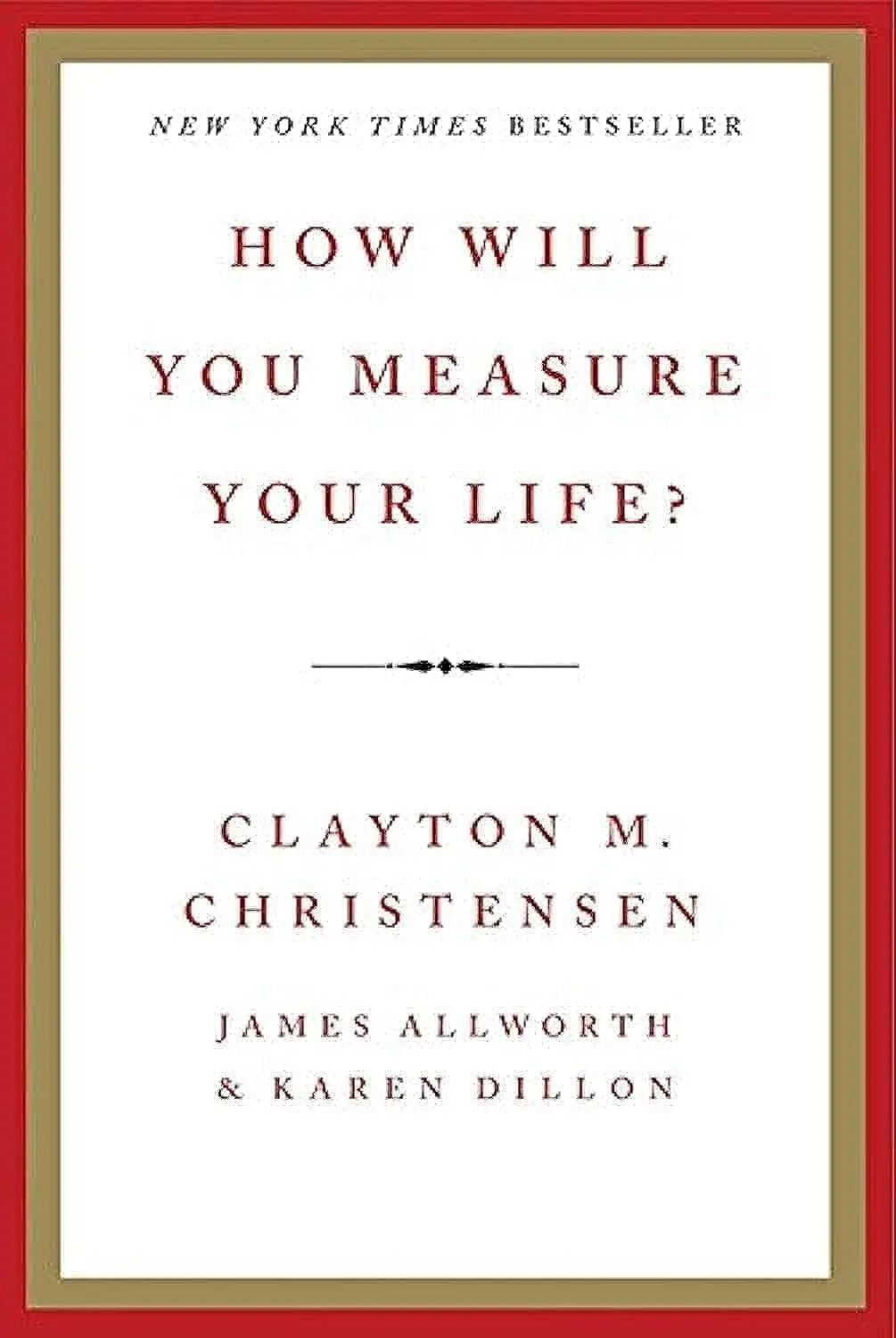
Clayton Christensen gave a talk to Harvard Business School’s graduating class in 2010. Instead of telling them how to succeed in business, he told them about three of his classmates from the HBS class of 1979: one went to prison (Jeffrey Skilling of Enron), one was caught in a banking scandal, and another destroyed his marriage. All three had been brilliant students with promising careers. Christensen wanted to explain how smart people end up making terrible decisions about their own lives, even while making sharp ones at work.
The talk became an article. The article became this book, which Christensen wrote with James Allworth and Karen Dillon. The structure is unusual: each chapter takes a business theory that Christensen developed or taught at Harvard and applies it to a personal question. How do you find work that makes you happy? How do you build strong relationships? How do you stay out of jail?
The chapter on career satisfaction uses Herzberg’s two-factor theory of motivation. Hygiene factors like salary, status, and job security prevent dissatisfaction but do not create satisfaction. Motivators like autonomy, growth, and a sense of contribution are what actually make work feel worthwhile. People who optimize for hygiene factors, chasing the highest salary and the most prestigious title, often end up in well-paid jobs they hate.
The chapter on relationships applies the concept of resource allocation. Companies fail when they over-invest in short-term results and under-invest in long-term growth. People do the same thing with their time. Work demands are immediate and measurable. Family demands are not. So people allocate time to work, where the feedback is fast, and shortchange relationships, where the damage takes years to show up.
Christensen writes with a quiet authority that comes from having both studied and lived these questions. He was diagnosed with cancer and suffered a stroke before writing the book, which gives the material an urgency that most business-school-adjacent books lack. He is not theorizing about what matters. He is writing from a place where the theory has been tested against his own mortality.
Christensen died in January 2020. This book, along with The Innovator’s Dilemma, remains one of the two works he is most known for. It is short, clearly written, and one of the few business books that takes the rest of your life as seriously as it takes your career.
