
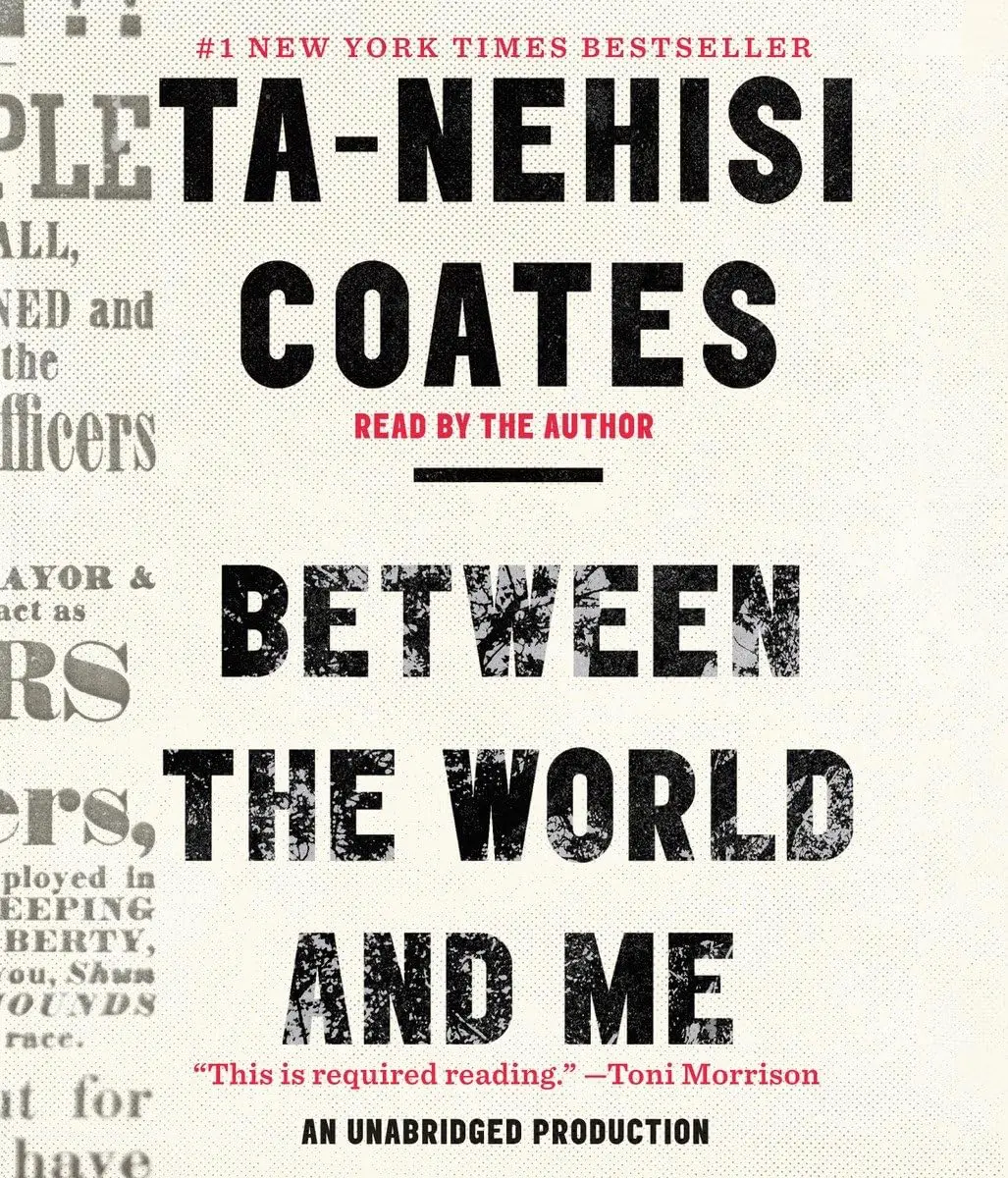
Between the World and Me is a letter from Ta-Nehisi Coates to his fifteen-year-old son, Samori. The occasion is the announcement that the police officer who killed Michael Brown in Ferguson, Missouri, would not be indicted. Coates wants to explain to his son what this means and how it connects to a longer history.
The book is structured as a single extended letter divided into three sections. The first covers Coates’s childhood in West Baltimore, where the threat of physical violence was constant and where he learned early that his body was always at risk. The second traces his time at Howard University, which he calls “The Mecca,” where he encountered Black intellectual life on its own terms for the first time. The third follows the death of his college friend Prince Jones, who was shot and killed by a plainclothes police officer in a case of mistaken identity.
Coates writes in a dense, compressed style. His sentences carry a lot of weight. He is not interested in offering hope or solutions. He is interested in describing, as precisely as he can, what it feels like to live inside a specific reality that many Americans either do not see or choose to look away from. The American Dream, as Coates frames it, depends on a specific arrangement of bodies, and some bodies pay the cost of others’ comfort.
The book has drawn comparisons to James Baldwin’s The Fire Next Time, which was also structured as a letter and also addressed the experience of being Black in America. Coates acknowledges the debt. His voice, though, is his own: angrier, more materialist, less interested in redemption.
For readers in business and entrepreneurship, the book provides perspective that most business literature lacks entirely. If you are building products, hiring teams, or making decisions that affect communities, understanding how race operates in America is not optional. Coates does not write for a business audience, but the clarity of his thinking transfers to anyone who wants to see systems as they actually function rather than as they are described in mission statements.
The book won the National Book Award in 2015 and was a finalist for the Pulitzer Prize. Toni Morrison, who wrote the foreword to its publication, called it required reading.
