
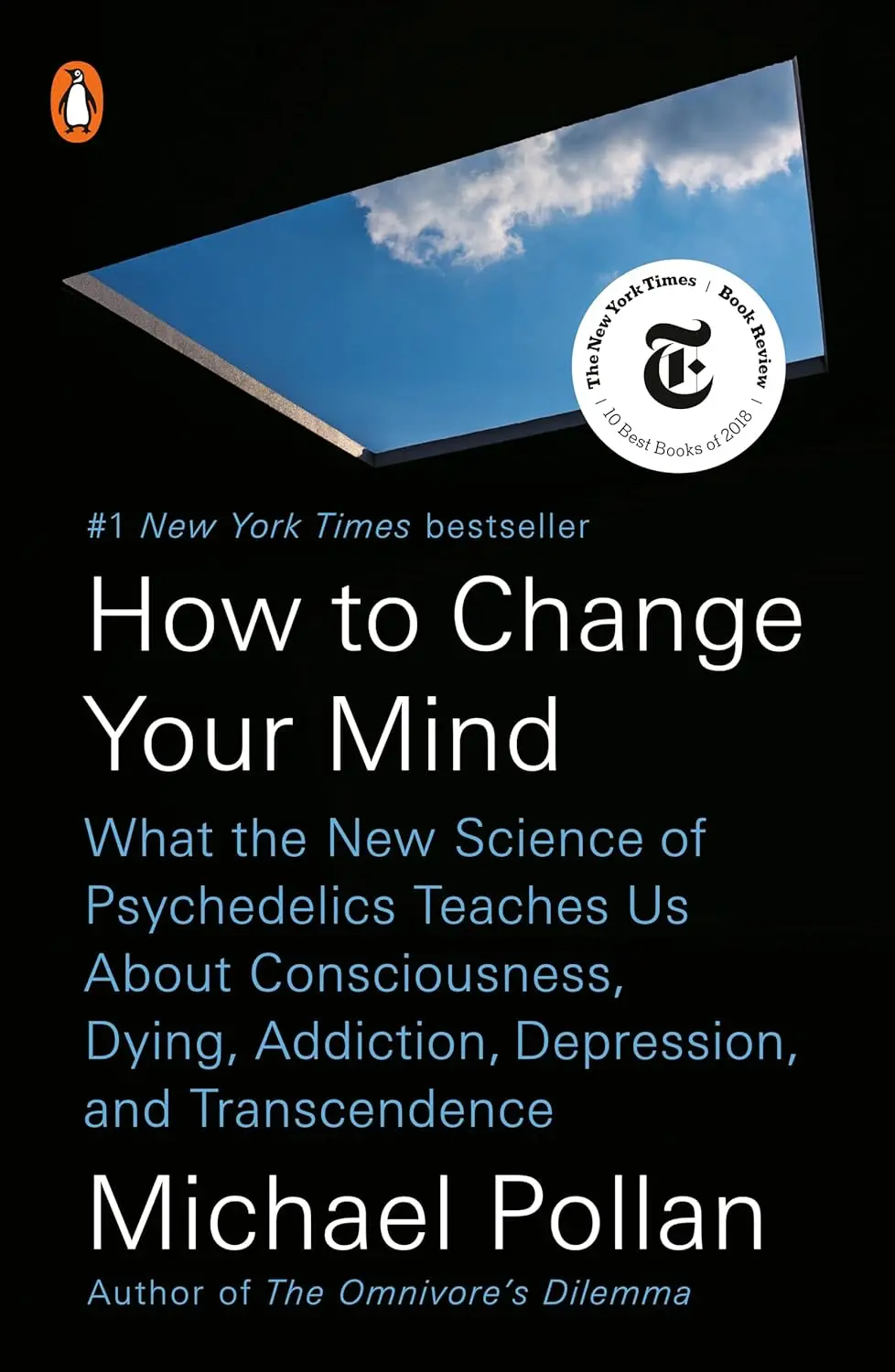
Michael Pollan did not set out to write about psychedelics. He is the food writer behind The Omnivore’s Dilemma and In Defense of Food. But a set of studies caught his attention: researchers at Johns Hopkins and NYU were giving psilocybin to terminal cancer patients to help them face death, and the results were startling. Patients who had been paralyzed by anxiety were reporting, after a single session, a peace they had never experienced. The effect lasted months.
Pollan wanted to understand what was happening. The resulting book follows three tracks. The first is historical: the discovery of LSD in 1943, the explosion of research in the 1950s and 60s, the cultural backlash that led to prohibition, and the current renaissance in psychedelic science. The second is scientific: what these substances do to the brain, particularly the default mode network, which neuroscientists have identified as the system responsible for our sense of self. The third is personal: Pollan, in his late fifties, undergoes guided sessions with psilocybin, LSD, and 5-MeO-DMT, and reports what happens with the analytical precision of a journalist and the bewilderment of a first-time tripper.
The science section is the most valuable for skeptical readers. Pollan explains how psilocybin temporarily reduces activity in the default mode network, which is the part of the brain that maintains your ongoing sense of who you are and how you fit into the world. When that network quiets down, the boundaries between self and world blur, rigid thought patterns loosen, and people often experience what they describe as a connection to something larger. Researchers are finding that this experience, properly guided, can produce lasting reductions in anxiety, depression, and addiction.
Pollan is careful not to oversell the findings. The studies are still small. Set and setting matter enormously. There are real risks, particularly for people with certain psychiatric conditions. He writes as a curious skeptic who was convinced by the evidence, not as an advocate.
For ambitious readers and founders, the book’s most interesting implication is about cognitive flexibility. The default mode network does not just create your sense of self. It also creates your habitual patterns of thinking, the well-worn grooves you fall into when solving problems. When those grooves become too deep, you lose the ability to see alternatives. The research Pollan covers suggests that psychedelics, and to a lesser extent meditation, can temporarily flatten those grooves and restore a beginner’s perspective.
The book was adapted into a Netflix documentary series in 2022.
