
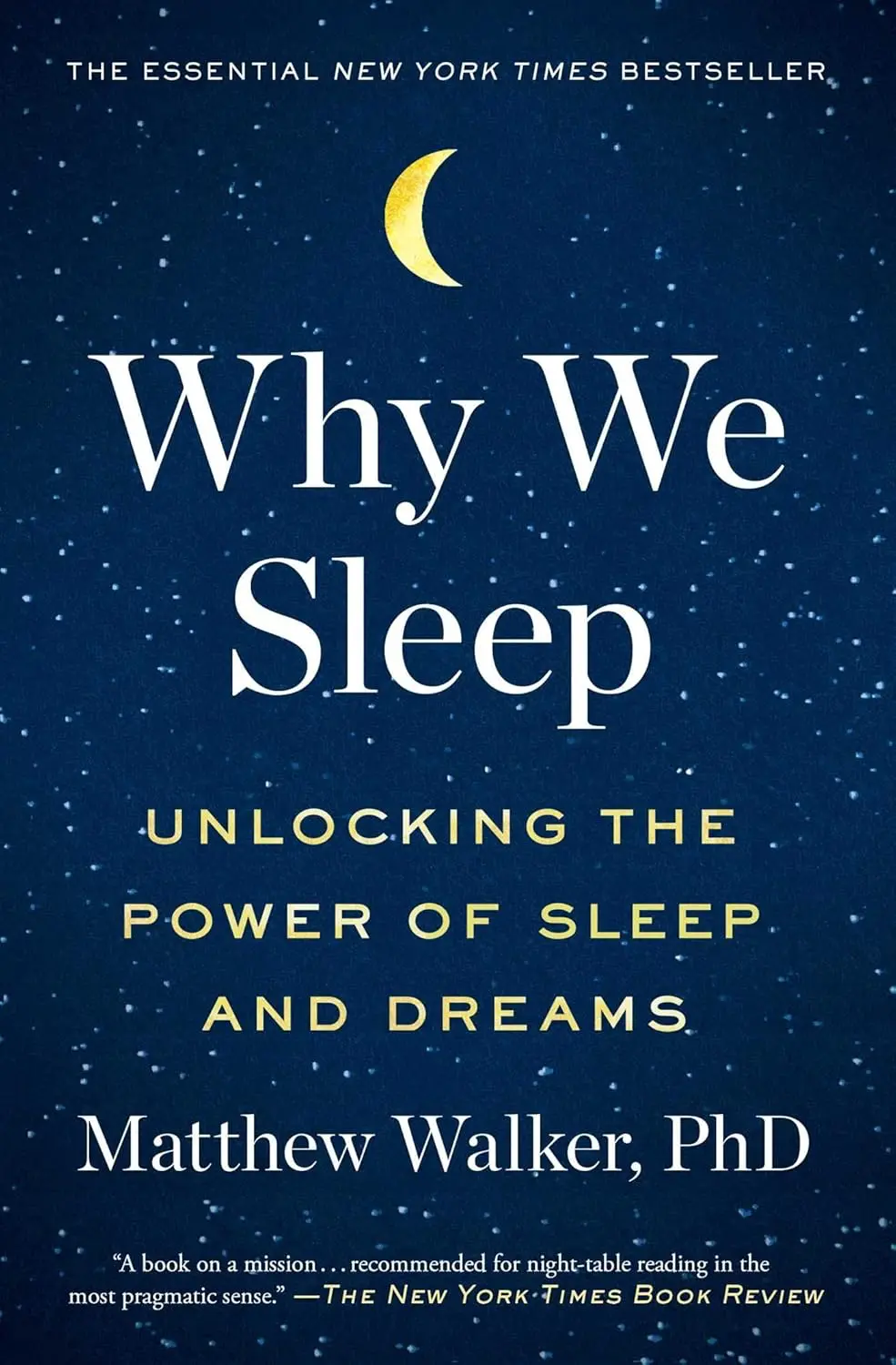
Why We Sleep is Matthew Walker’s attempt to convince the reader that sleep matters far more than most people realize. Walker is a professor of neuroscience at UC Berkeley and the director of the Center for Human Sleep Science, and the book is built on decades of research into what sleep does, what happens when we don’t get enough of it, and why modern society has made it so hard to sleep well.
The book covers the mechanics of sleep in accessible detail. Walker explains the two types of sleep, REM and non-REM, what each does for the brain and body, how circadian rhythms work, and why the architecture of a full night’s sleep matters more than the total number of hours. He also explains why caffeine, alcohol, and screens interfere with sleep in ways most people underestimate.
The most persuasive sections deal with the consequences of sleep deprivation. Walker links insufficient sleep to increased risk of heart disease, cancer, Alzheimer’s, depression, anxiety, obesity, and impaired immune function. He also covers the effects on cognitive performance, showing how even moderate sleep loss degrades memory, decision-making, and emotional regulation.
For founders and anyone working long hours, the book is a direct challenge to the “I’ll sleep when I’m dead” mentality. Walker’s argument is that skipping sleep to get more done actually makes you worse at everything you’re trying to do. The chapters on how sleep affects learning, creativity, and decision-making are particularly relevant for people in roles that depend on clear thinking.
The book has received some criticism from scientists who argue that Walker occasionally overstates the evidence or presents correlational findings as causal. Those critiques are worth reading alongside the book. But even accounting for some overreach, the core message, that most people need more sleep than they get and that the consequences of chronic deprivation are real, is well supported.
