





Why Peter Attia’s Book Recommendations Matter
Peter Attia is a physician who has spent most of his career trying to answer one question: how do you avoid spending the last decade of your life sick, frail, and unable to do the things you care about? He trained in surgery at Stanford and Johns Hopkins, did cancer research at the National Institutes of Health, and then walked away from conventional medicine to build a practice focused entirely on longevity. His 2023 book Outlive: The Science and Art of Longevity became a #1 New York Times bestseller and introduced millions of people to his framework for what he calls “Medicine 3.0,” a proactive, patient-driven approach to preventing chronic disease before it takes hold.
His podcast, The Drive, has been downloaded over 100 million times and regularly features multi-hour interviews with researchers, athletes, and clinicians on everything from metabolic health to emotional well-being. The reading list above reflects how Attia actually thinks: across disciplines, with no real boundary between a biochemistry textbook and a book about race car driving. He has talked on The Drive about how reading across fields helps him catch patterns that specialists miss by staying inside their own lane, and the book list backs that up.
Here is a closer look at the books on his list that tell you the most about how he operates.
The books that shaped Attia’s approach to longevity
Outlive is the obvious starting point if you want to understand Attia’s worldview, but it did not come out of nowhere. The ideas in that book were built on top of years of reading in biology, oncology, decision-making, and exercise science.
The Emperor of All Maladies by Siddhartha Mukherjee is a history of cancer that reads more like a novel than a medical text. Attia has referenced this book multiple times on his podcast when talking about why the conventional “wait until it shows up, then treat it” model fails for cancer. Mukherjee traces how the medical establishment repeatedly underestimated the complexity of cancer over decades, a pattern Attia sees repeating with other chronic diseases today. If you want to understand why Attia pushes for early screening and aggressive prevention, this book gives you the historical backdrop.
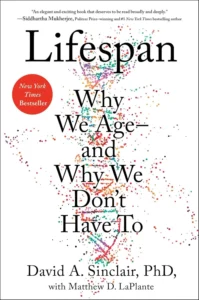
Lifespan by David Sinclair tackles the biology of aging from a genetics-first perspective. Sinclair’s argument is that aging itself is a disease, not an inevitability. Attia does not agree with everything in the book (he has said as much publicly), but the core idea that we should study aging as a biological process rather than just accept it clearly influenced how he frames his own work. Reading Lifespan alongside Outlive gives you two different lenses on the same problem, and the tension between them is useful.
The Double Helix by James Watson is a strange pick for a longevity physician, until you realize what the book is actually about. On the surface it is the story of how Watson and Crick discovered the structure of DNA. Underneath, it is a book about how scientific breakthroughs happen in practice: messy, competitive, full of wrong turns and lucky guesses. Attia has talked about how this book changed his understanding of the difference between how science is presented and how it actually works. That skepticism toward clean narratives is all over his podcast.
Books on thinking, habits, and decision-making
The second pattern in Attia’s reading list is a deep interest in how people actually change their behavior. This makes sense when you think about what his practice does. He can give a patient the perfect protocol for exercise, nutrition, and sleep, but none of it matters if they do not follow through. Behavior change is the bottleneck.
Atomic Habits by James Clear is probably the most practical book on his list. Clear’s framework for building habits by making them obvious, attractive, easy, and satisfying is the kind of thing Attia’s patients need. Knowing that Zone 2 cardio extends your lifespan is one thing. Actually getting on the bike four days a week for the next thirty years is another. If you read Outlive and felt motivated but were not sure how to stick with the changes, Atomic Habits fills that gap.
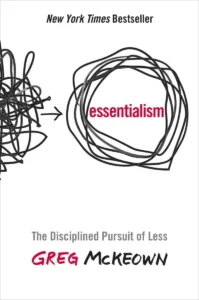
Essentialism by Greg McKeown is about doing fewer things and doing them well. Attia applies this principle directly in his practice. He does not try to treat every condition. He does not take hundreds of patients. He works with a small number of people and goes deep. Whether you agree with his pricing model or not, the philosophy behind it comes straight out of this kind of thinking. If you are the type of person who keeps adding commitments until nothing gets your full attention, Essentialism is a useful corrective.
Meditations by Marcus Aurelius might seem like an odd fit next to books about cancer biology and habit formation. But Attia has spoken openly about his struggles with emotional health, including a period of depression and a difficult process of working through issues from his childhood. Meditations is a book about accepting what you cannot control and focusing on what you can. For someone whose entire career is built around the tension between control and uncertainty (you can do everything right and still get cancer), Stoic philosophy is not decorative. It is functional.
The business and biography picks
Before Attia went into medicine, he worked at McKinsey & Company in their corporate risk and healthcare practice. That consulting background shows up in his reading. The Hard Thing About Hard Things by Ben Horowitz is a book about making difficult decisions when there is no good option, a situation Attia knows well from both the business and medical sides. Horowitz writes about firing friends, admitting failures publicly, and operating when you are terrified. The book’s tone is blunt in a way that Attia seems to appreciate, given how direct he is on his own podcast.
Becoming Steve Jobs by Brent Schlender and Rick Tetzeli is the Steve Jobs biography that most people who actually knew Jobs prefer over the Isaacson version. It focuses on how Jobs matured as a leader, not just the mythology of his product launches. Attia co-founded the Nutrition Science Initiative (NuSI) with Gary Taubes in 2012, so he has firsthand experience with building something ambitious and watching it not go according to plan. A book about learning from failure and coming back differently probably hit close to home.
The Most Important Thing Illuminated by Howard Marks is an investing book, but the lessons transfer well beyond portfolio management. Marks writes about second-order thinking, understanding risk versus uncertainty, and being skeptical of consensus opinions. Attia applies exactly this kind of reasoning when evaluating medical research. Just because a study got published does not mean the conclusion is right. Just because a treatment is popular does not mean it is effective. If you want to think more carefully about health claims you encounter online, Marks will teach you the mental framework for it, even though the book is nominally about markets.
The unexpected picks
Two books on the list stand out because they do not fit any obvious category. Surely You’re Joking, Mr. Feynman! is a collection of stories from physicist Richard Feynman that is really about curiosity as a way of life. Feynman picked locks for fun, learned to draw, played bongo drums, and won a Nobel Prize. He also had a famous distrust of authority and credentialism, which tracks with Attia’s own willingness to challenge medical orthodoxy.
Ayrton Senna’s Principles of Race Driving is perhaps the most Peter Attia book on the list. Attia is an endurance athlete who has swum across ocean channels and raced cars. Senna’s book is about performing at the absolute limit of what is physically possible while managing risk in real time. That is not a bad metaphor for longevity medicine either: push your body hard enough to build resilience, but not so hard that you break something. The line between optimal stress and injury is exactly what both race drivers and longevity physicians spend their careers trying to find.
Where to start with Peter Attia’s reading list
If you are new to Attia’s work, read Outlive first. It gives you the framework. Then pick based on what grabbed you most: The Emperor of All Maladies if the cancer and disease prevention chapters interested you, Atomic Habits if your problem is implementation rather than information, or Meditations if the emotional health chapter in Outlive resonated with you.
The full list above includes 41 books. You do not need to read all of them. Attia himself would probably tell you to pick the three that match your current problems and go deep on those rather than skimming twenty. That, at least, is what Essentialism would suggest.
