
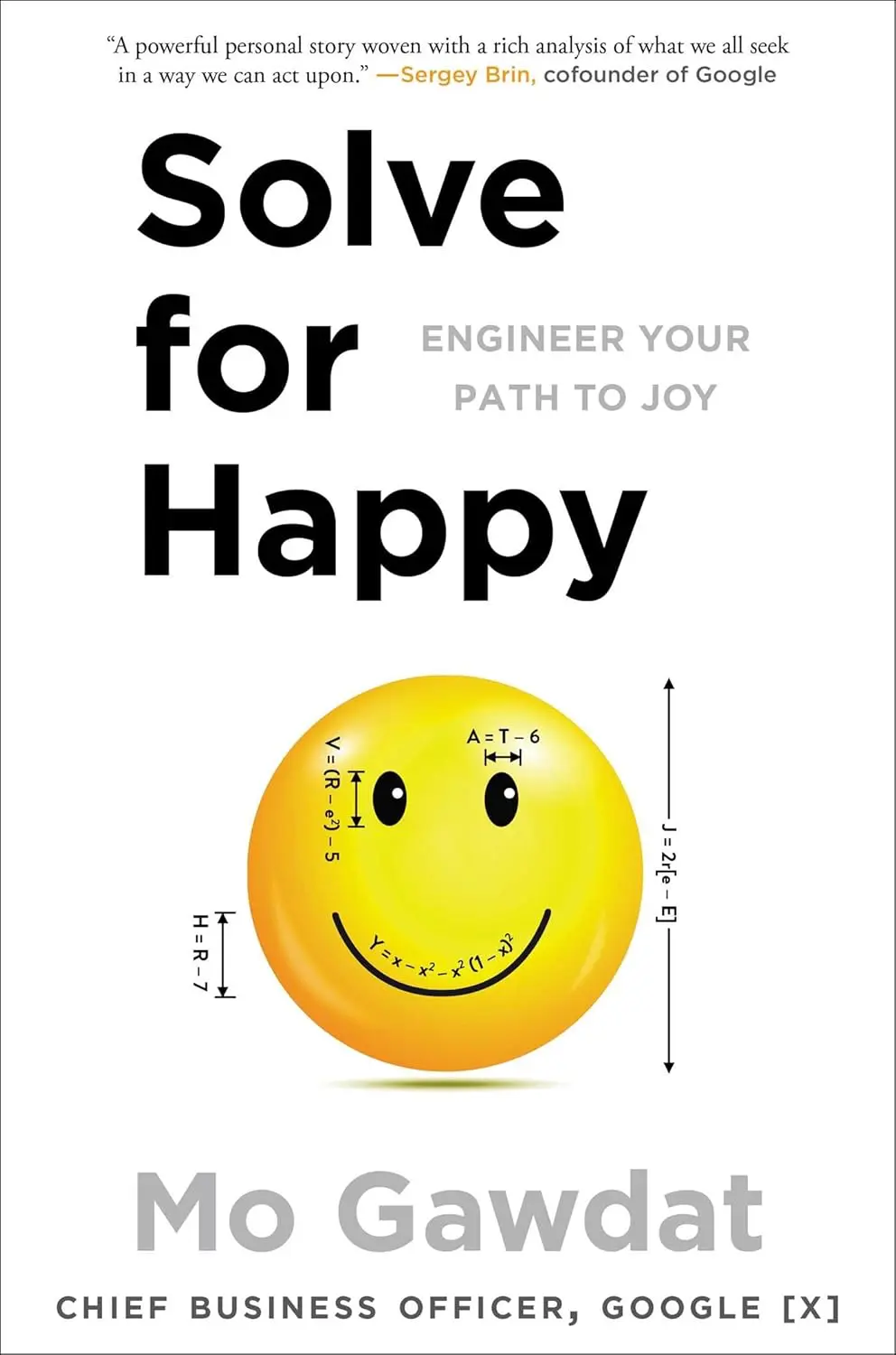
Mo Gawdat had everything that was supposed to make a person happy. He was a senior executive at Google X, had co-founded more than twenty businesses, and had accumulated significant wealth. In 2001, he realized none of it was working. He was miserable. So he did what engineers do: he defined the problem, gathered data, and built a model.
Gawdat’s happiness equation is simple in structure: happiness equals or exceeds the point where your perception of events meets or exceeds your expectations of how life should be. Unhappiness, in this model, is not caused by bad events but by the gap between what happens and what you expected to happen. Adjust the expectations or change how you perceive the event, and the equation shifts.
The book organizes this idea into three layers. First, Gawdat identifies six “grand illusions” that distort our thinking: the illusion of thought (confusing thinking with reality), the illusion of self (over-identifying with your ego), the illusion of knowledge (assuming you understand more than you do), the illusion of time (living in the past or future instead of the present), the illusion of control (believing you can manage outcomes you cannot), and the illusion of fear (treating imagined threats as real ones). Second, he describes seven “blind spots” in how the brain processes information, including its tendency to filter, label, exaggerate, and judge. Third, he proposes five “ultimate truths” about existence that, once accepted, remove the conditions for unhappiness.
In 2014, Gawdat’s 21-year-old son Ali died from a preventable medical error during what should have been a routine appendectomy. The tragedy became the ultimate test of his model. Gawdat writes about this with a rawness that sets the book apart from most happiness literature. He does not claim the loss was easy. He claims that the framework he had built gave him and his family a way to process grief without being destroyed by it.
The book has its critics. Some find the engineering metaphor reductive when applied to something as complex as human emotion. Others feel that the ultimate truths section veers into spiritual territory that sits uneasily with the analytical framework. But for readers who think in systems and respond better to structured arguments than to vague self-help advice, the engineering approach is the point.
Sergey Brin endorsed the book. Peter Attia has recommended it. Gawdat has since launched a mission to reach ten million people with his happiness model. Published in 2017, the book reads like a hybrid of cognitive behavioral therapy and systems engineering, which is more or less what it is.
