
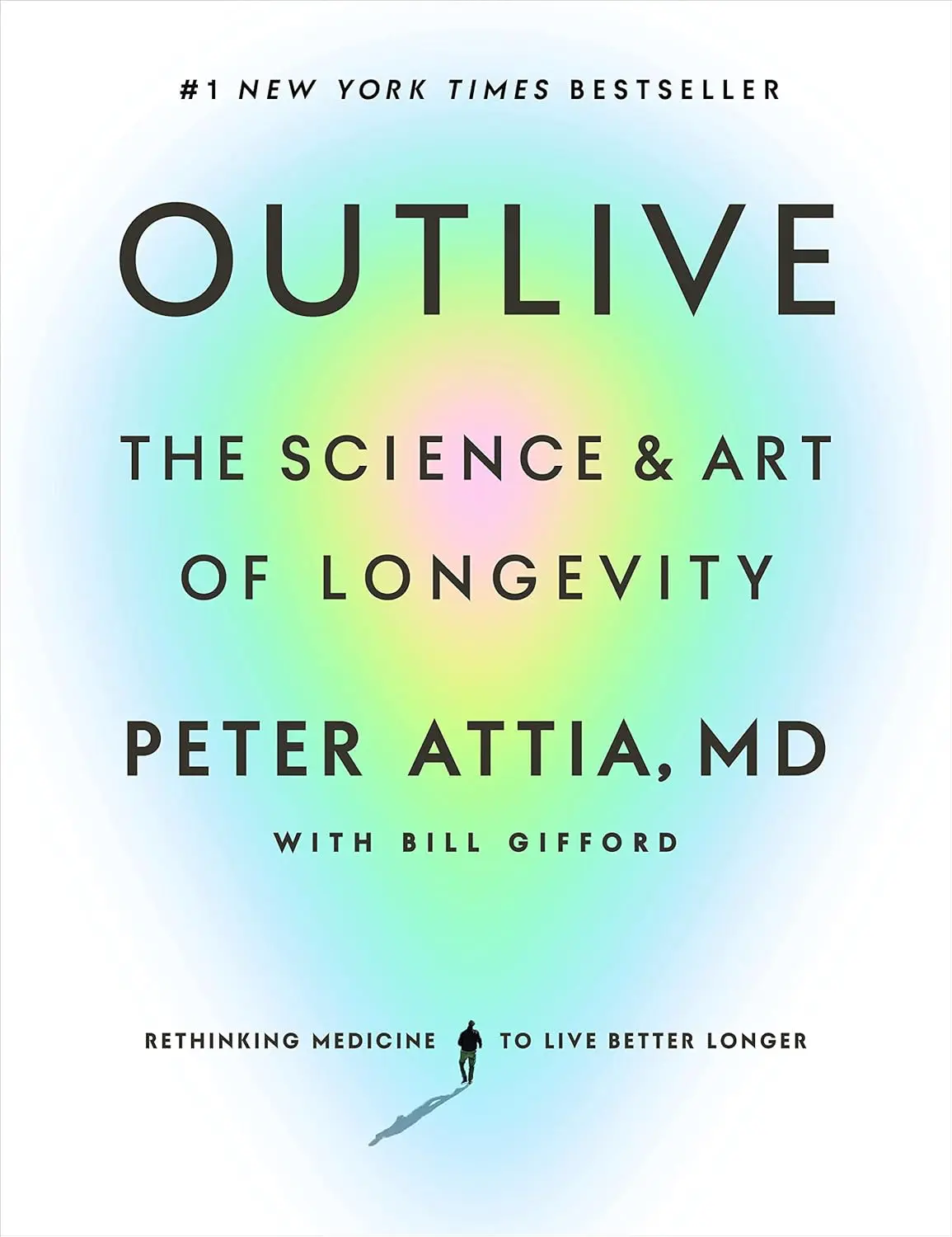
Outlive is Peter Attia’s framework for what he calls “Medicine 3.0,” a proactive approach to health that focuses on preventing the diseases of aging rather than treating them after they appear. Attia is a physician who trained at Johns Hopkins and the NIH, and the book reflects both his clinical experience and his obsessive personal interest in longevity science.
The book is organized around the four “horsemen” of chronic disease: heart disease, cancer, Alzheimer’s and other neurodegenerative diseases, and type 2 diabetes and metabolic dysfunction. For each, Attia explains the underlying biology, reviews the current evidence on prevention, and offers practical strategies. He argues that standard medical practice waits too long to intervene, only addressing these diseases after symptoms appear, when the damage is already significant.
The practical sections cover exercise, nutrition, sleep, and emotional health. Attia is specific about what kinds of exercise matter most (he emphasizes VO2 max, strength training, and stability work) and why. His nutrition advice avoids dogma, focusing instead on metabolic markers like glucose regulation and insulin sensitivity rather than specific diets. He also includes a chapter on emotional health that feels personal and somewhat unexpected in a book otherwise focused on physical optimization.
For founders and high-performers who treat their body as a secondary concern to their work, the book offers a reframe. Attia’s argument is that your physical health is the platform on which everything else is built, and that the time to invest in it is decades before problems appear, not after.
The writing is detailed and occasionally technical, but Attia explains complex medical concepts clearly enough for a general audience. The book is long and dense, which can feel overwhelming, but the level of specificity is what makes it more useful than most popular health books. It is the kind of book you return to as a reference.
