
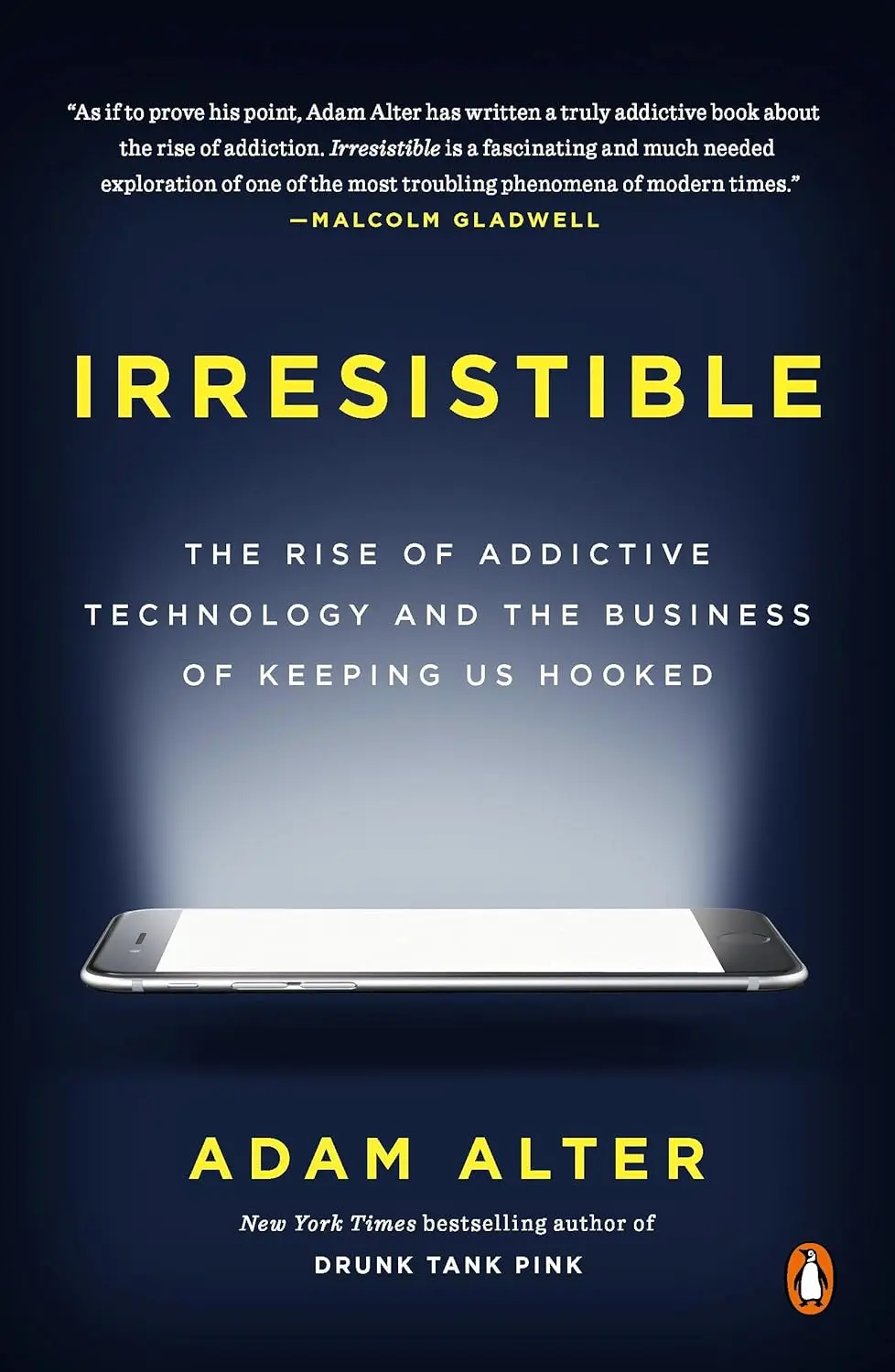
Adam Alter opens the book with a telling detail: Steve Jobs, when introducing the iPad in 2010, called it a magical device. A reporter later asked him whether his kids loved it. Jobs replied that his children had never used it. He would not let them.
The founders of the most addictive products in history often keep those products away from their own families. Alter, a marketing professor at NYU’s Stern School of Business, uses this observation as a starting point for examining why certain technologies are so hard to stop using and what that means for the people who cannot opt out.
The book is built on behavioral psychology research. Alter explains the mechanisms that make certain products sticky: variable reinforcement schedules (the same principle that makes slot machines addictive), social comparison loops (seeing how many likes your post received), progress bars and achievement systems (the gamification that makes you want to reach the next level), and cliffhangers (the autoplay feature that starts the next episode before you can decide to stop watching).
He traces these techniques through social media, video games, wearable fitness trackers, email, and online shopping. The pattern is consistent: the products that capture the most attention are the ones that exploit specific psychological vulnerabilities, not the ones that deliver the most value.
The book does not argue that technology is inherently bad. It draws a distinction between products that genuinely improve your life and products designed primarily to capture your time and attention. A navigation app that gets you to your destination is a tool. A social media feed engineered to keep you scrolling past your intended stop time is something else.
For founders, this book raises real ethical questions. If you are building a product, you have access to the same psychological playbook that Alter describes. Whether you use it to help users or to extract their attention is a design choice with consequences.
Alter published Irresistible in 2017, before the broader backlash against addictive tech fully hit the mainstream. The research he cites has only become more relevant since then. The book was adapted from his earlier academic work and became a New York Times bestseller.
