
matt davella

Matt D’Avella Book Recommendations (39 Books)

Matt D'Avella is a filmmaker and YouTuber known for his documentary Minimalism, which he directed alongside The Minimalists. His YouTube channel covers habits, productivity, and intentional living, and has drawn over four million subscribers. Before going independent, he worked as a freelance cinematographer in New York. He runs a course called Master YouTube where he teaches video creation.

*post may include affiliate links, view our Disclaimer for more info.

Share:

Matt D'Avella Reading List:

FREE Notion Book Tracker

+9 recommended books for founders inside

by Unseen Founder

Notion Book Tracker helps you organize what you read, save key insights, and build your personal founder library. It also includes carefully selected books recommended for founders.

Get FREE Now
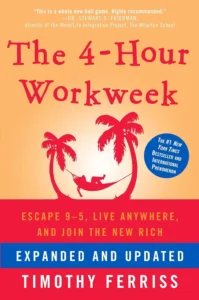
The 4-Hour Workweek

The 4-Hour Workweek

Escape 9-5, Live Anywhere, and Join the New Rich

Book by Tim Ferriss

Ferriss lays out a system for escaping the conventional 9-to-5 by automating income, outsourcing tasks, and designing a lifestyle around freedom rather than retirement. The book is part manifesto, part tactical playbook for people who want to work less and live more.

View on Amazon
Atomic Habits

Atomic Habits

An Easy & Proven Way to Build Good Habits & Break Bad Ones

Book by James Clear

A clear, actionable framework for building good habits and breaking bad ones by focusing on small, consistent changes that lead to remarkable results over time.

View on Amazon
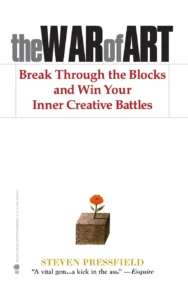
The War of Art

The War of Art

Break Through the Blocks and Win Your Inner Creative Battles

Book by Steven Pressfield

Pressfield identifies the internal force that stops people from doing their work and calls it Resistance. The book is a short, blunt manual on recognizing procrastination, self-doubt, and distraction for what they are, and showing up anyway.

View on Amazon
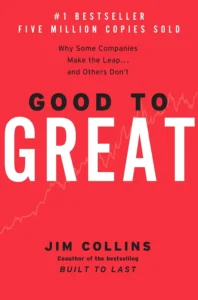
Good to Great

Good to Great

Why Some Companies Make the Leap and Others Don't

Book by Jim Collins

Collins and his research team studied companies that made the jump from average performance to sustained greatness, then compared them to similar companies that did not. The findings challenge a lot of popular management thinking, especially about the role of celebrity CEOs and dramatic turnarounds.

View on Amazon
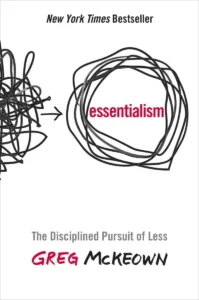
Essentialism

Essentialism

The Disciplined Pursuit of Less

Book by Greg McKeown

McKeown argues that most people spread themselves too thin by saying yes to everything, and that the highest performers are ruthless about doing fewer things better. The book offers a system for figuring out what actually matters and eliminating the rest.

View on Amazon
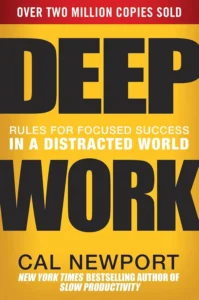
Deep Work

Deep Work

Rules for Focused Success in a Distracted World

Book by Cal Newport

Newport argues that the ability to concentrate without distraction on cognitively demanding tasks is becoming both rarer and more valuable. The book makes the case for deep work over shallow work and offers strategies for building a daily practice around focused effort.

View on Amazon
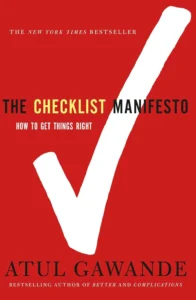
The Checklist Manifesto

The Checklist Manifesto

How to Get Things Right

Book by Atul Gawande

Surgeon and writer Atul Gawande makes the case that simple checklists can prevent errors in complex situations, from surgery to construction to aviation. The book argues that in a world of increasing complexity, the humble checklist is one of the most underused tools available.

View on Amazon
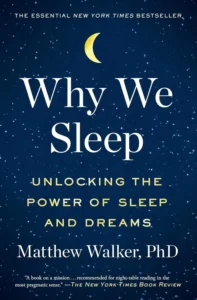
Why We Sleep

Why We Sleep

Unlocking the Power of Sleep and Dreams

Book by Matthew Walker

Sleep scientist Matthew Walker makes the case that sleep is the single most effective thing you can do for brain and body health. The book covers the science of sleep stages, dreaming, and the consequences of sleep deprivation on everything from memory to immune function.

View on Amazon
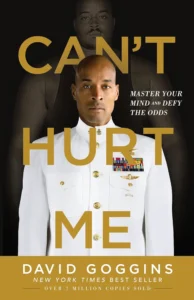
Can't Hurt Me

Can’t Hurt Me

Master Your Mind and Defy the Odds

Book by David Goggins

Goggins, a former Navy SEAL and ultramarathon runner, writes about overcoming an abusive childhood, obesity, and repeated failure through relentless self-discipline. The book is part memoir, part challenge to push past the mental limits you accept as real.

View on Amazon
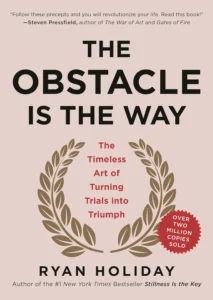
The Obstacle Is the Way

The Obstacle Is the Way

The Timeless Art of Turning Trials into Triumph

Book by Ryan Holiday

Holiday applies Stoic philosophy to modern challenges, arguing that obstacles are not things to avoid but raw material for growth. The book uses historical examples from Amelia Earhart to Steve Jobs to show how adversity can become advantage when approached correctly.

View on Amazon
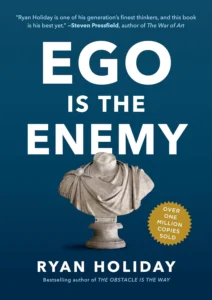
Ego Is the Enemy

Ego Is the Enemy

Book by Ryan Holiday

Holiday's follow-up to The Obstacle Is the Way examines how ego sabotages people at every stage: when they are aspiring, when they succeed, and when they fail. The book uses historical examples to show that the most common threat to sustained performance comes from inside, not outside.

View on Amazon
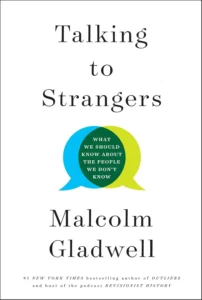
Talking to Strangers

Talking to Strangers

What We Should Know about the People We Don't Know

Book by Malcolm Gladwell

Malcolm Gladwell examines why we are so bad at reading people we don't know, drawing on cases from the Bernie Madoff scandal to the Sandra Bland arrest. The book explores the psychological biases that cause misjudgment and shows how overconfidence in our ability to read strangers leads to serious mistakes.

View on Amazon
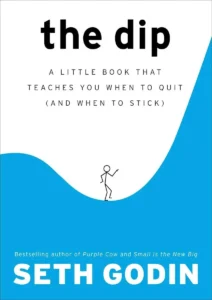
The Dip

The Dip

A Little Book That Teaches You When to Quit (and When to Stick)

Book by Seth Godin

Seth Godin's shortest book makes a sharp argument: winners quit the right things at the right time, and losers either quit too early or fail to quit things that will never work. The "dip" is the hard stretch between starting something and mastering it, and the book helps you figure out whether you're in a dip worth pushing through or a dead end.

View on Amazon
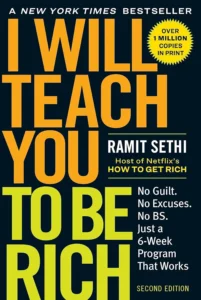
I Will Teach You to Be Rich

I Will Teach You to Be Rich

No Guilt. No Excuses. No BS. Just a 6-Week Program That Works

Book by Ramit Sethi

Ramit Sethi's personal finance book is aimed at young professionals who want to automate their finances without becoming budget obsessives. The book covers credit cards, bank accounts, investing, and conscious spending in a no-nonsense tone that skips the guilt and focuses on systems.

View on Amazon
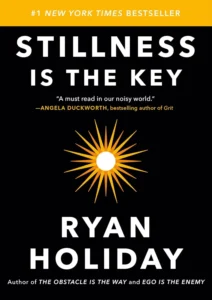
Stillness Is the Key

Stillness Is the Key

An Ancient Strategy for Modern Life

Book by Ryan Holiday

Ryan Holiday draws on Stoic and Buddhist philosophy to argue that inner stillness is what makes clear thinking and good decisions possible. The book uses stories from figures like Kennedy, Churchill, and Sadaharu Oh to show how slowing down gives people an edge in work and life.

View on Amazon
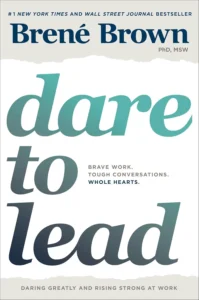
Dare to Lead

Dare to Lead

Brave Work. Tough Conversations. Whole Hearts.

Book by Brene Brown

Brown applies her vulnerability and courage research specifically to leadership and organizational culture. The book covers how to have tough conversations, give honest feedback, build trust, and create environments where people can take risks without fear of punishment.

View on Amazon
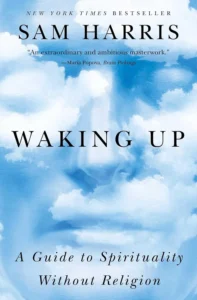
Waking Up

Waking Up

A Guide to Spirituality Without Religion

Book by Sam Harris

Neuroscientist and philosopher Sam Harris argues that spiritual experiences (loss of self, altered states of consciousness, deep presence) are real phenomena with neurological explanations, and that meditation is the most reliable method for accessing them without religious baggage.

View on Amazon
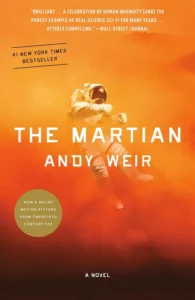
The Martian

The Martian

Book by Andy Weir

Astronaut Mark Watney is stranded alone on Mars and has to figure out how to survive using only the equipment left behind and his training as a botanist and engineer. The novel is a problem-solving story told with humor and scientific accuracy, where each new crisis requires a creative technical solution.

View on Amazon
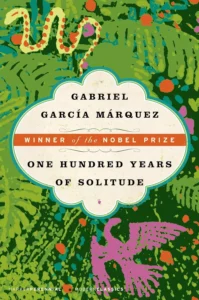
One Hundred Years of Solitude

One Hundred Years of Solitude

Book by Gabriel Garcia Marquez

Garcia Marquez tells the story of seven generations of the Buendia family in the fictional Colombian town of Macondo. The book blends the ordinary and the magical so seamlessly that it became the defining work of magical realism and one of the most influential novels of the 20th century.

View on Amazon
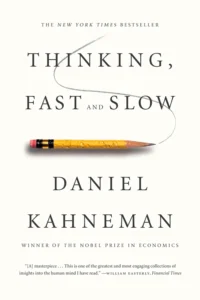
Thinking, Fast and Slow

Thinking, Fast and Slow

Book by Daniel Kahneman

Nobel laureate Daniel Kahneman explains the two systems that drive how people think: a fast, intuitive system and a slow, deliberate one. The book catalogues dozens of cognitive biases that distort judgment, backed by decades of research in behavioral economics.

View on Amazon
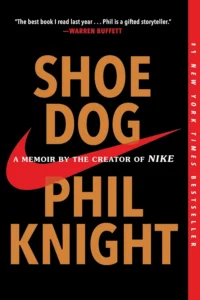
Shoe Dog

Shoe Dog

A Memoir by the Creator of Nike

Book by Phil Knight

Phil Knight's memoir covers the first two decades of building Nike, from borrowing $50 from his father to import Japanese running shoes all the way through the company's IPO. The book is candid about the cash crunches, legal battles, and near-bankruptcy moments that almost ended the company.

View on Amazon
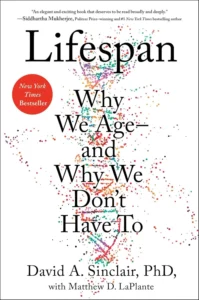
Lifespan

Lifespan

Why We Age and Why We Don't Have To

Book by David Sinclair

Harvard geneticist David Sinclair presents his research on aging as a treatable disease rather than an inevitable decline. The book covers the science behind longevity, including sirtuins, NAD+, and caloric restriction, and argues that extending healthy human lifespan is both possible and desirable.

View on Amazon
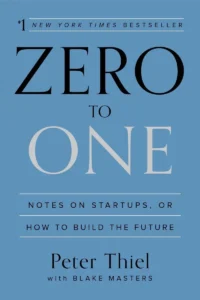
Zero to One

Zero to One

Notes on Startups, or How to Build the Future

Book by Peter Thiel with Blake Masters

Based on Thiel's Stanford lectures, this book argues that the most valuable businesses create something entirely new rather than competing in existing markets. Thiel makes the case that going from zero to one, building something that did not exist before, is the only way to build lasting value.

View on Amazon
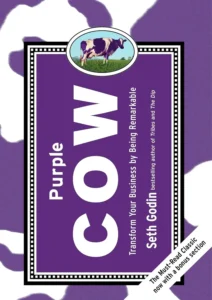
Purple Cow

Purple Cow

Transform Your Business by Being Remarkable

Book by Seth Godin

Godin's argument is simple: in a world of too many choices, the only products that get noticed are the ones that are remarkable, meaning worth remarking about. The book challenges businesses to stop playing it safe and start building things that people cannot help talking about.

View on Amazon
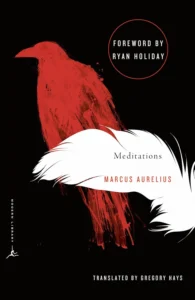
Meditations

Meditations

Book by Marcus Aurelius

Written nearly 2,000 years ago by a Roman emperor, Meditations is a private journal of Stoic philosophy that was never intended for publication. The entries deal with self-discipline, managing emotions, and staying grounded when everything around you is unstable.

View on Amazon
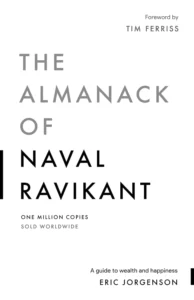
The Almanack of Naval Ravikant

The Almanack of Naval Ravikant

A Guide to Wealth and Happiness

Book by Eric Jorgenson

Eric Jorgenson compiled Naval Ravikant's best ideas on wealth, leverage, judgment, and happiness from podcasts, tweets, and interviews into an organized reference. The book covers how to build wealth without getting lucky, how to use specific knowledge and leverage, and Naval's philosophy on finding peace.

View on Amazon
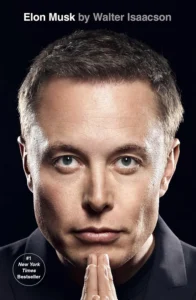
Elon Musk

Elon Musk

Book by Walter Isaacson

Isaacson's biography of Musk is based on two years of shadowing him through the acquisition of Twitter, SpaceX launches, and Tesla production crises. The book does not flinch from Musk's volatility, cruelty, and self-destructive tendencies alongside his genuine accomplishments.

View on Amazon
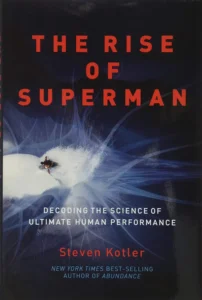
The Rise of Superman

The Rise of Superman

Decoding the Science of Ultimate Human Performance

Book by Steven Kotler

Steven Kotler investigates how extreme athletes, surfers, skiers, climbers, and BASE jumpers, consistently achieve states of peak performance that the rest of us experience rarely if ever. The answer is flow, the state of total absorption, and Kotler traces the neuroscience behind it.

View on Amazon
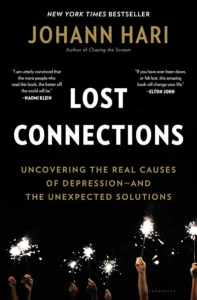
Lost Connections

Lost Connections

Uncovering the Real Causes of Depression and the Unexpected Solutions

Book by Johann Hari

Johann Hari was on antidepressants for thirteen years. When they stopped working, he started investigating the science behind depression and found that much of what he had been told, by doctors and pharmaceutical companies, was incomplete at best. The book reframes depression as largely a response to unmet human needs rather than a chemical imbalance.

View on Amazon
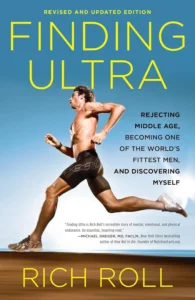
Finding Ultra

Finding Ultra

Rejecting Middle Age, Becoming One of the World's Fittest Men, and Discovering Myself

Book by Rich Roll

Rich Roll was a Stanford swimmer turned corporate lawyer turned recovering alcoholic who, the night before turning 40, found himself fifty pounds overweight and unable to climb the stairs. Within months he had overhauled his diet, started training, and went on to compete in the Ultraman, a 320-mile triathlon that ranks among the hardest endurance events on the planet.

View on Amazon
The Third Door

The Third Door

The Wild Quest to Uncover How the World's Most Successful People Launched Their Careers

Book by Alex Banayan

At 18, college student Alex Banayan hacked The Price Is Right to fund a quest to interview the world's most successful people and find out how they actually got their start. The book covers his multi-year journey and the pattern he discovered: successful people do not enter through the front door or the back door but find a third way in.

View on Amazon
The Art of Possibility

The Art of Possibility

Transforming Professional and Personal Life

Book by Rosamund Stone Zander & Benjamin Zander

Rosamund Stone Zander is a therapist. Benjamin Zander is the conductor of the Boston Philharmonic Orchestra. Together they wrote a book about twelve practices for seeing the world in terms of possibility rather than scarcity. It is part leadership book, part self-help, part love letter to music.

View on Amazon
The Future Is Faster Than You Think

The Future Is Faster Than You Think

How Converging Technologies Are Transforming Business, Industries, and Our Lives

Book by Peter H. Diamandis & Steven Kotler

Peter Diamandis and Steven Kotler argue that the convergence of technologies like AI, robotics, 3D printing, blockchain, and synthetic biology will reshape every major industry within the next decade. The book walks through transportation, retail, healthcare, education, and other sectors, projecting how these overlapping waves of change will compound.

View on Amazon
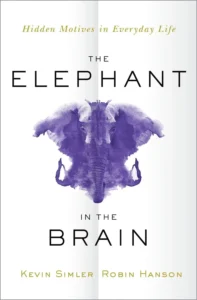
The Elephant in the Brain

The Elephant in the Brain

Hidden Motives in Everyday Life

Book by Robin Hanson & Kevin Simler

An economics professor and a software engineer argue that humans are far less aware of their true motivations than they think. The book applies this lens to laughter, conversation, charity, education, religion, and politics, making the case that much of what we do is about social signaling rather than the reasons we tell ourselves.

View on Amazon
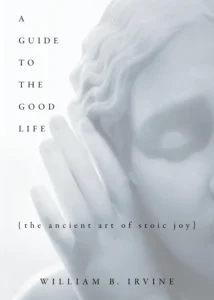
A Guide to the Good Life

A Guide to the Good Life

The Ancient Art of Stoic Joy

Book by William B. Irvine

Philosophy professor William B. Irvine translates Stoic philosophy from Marcus Aurelius, Seneca, and Epictetus into a practical system for modern life. The book focuses on specific techniques, like negative visualization and the dichotomy of control, that reduce anxiety and increase day-to-day satisfaction.

View on Amazon
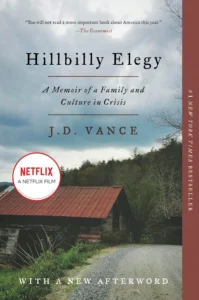
Hillbilly Elegy

Hillbilly Elegy

A Memoir of a Family and Culture in Crisis

Book by J.D. Vance

J.D. Vance grew up in a Rust Belt town in Ohio with roots in Appalachian Kentucky, surrounded by poverty, addiction, and family chaos. His memoir traces the path from that world to Yale Law School and asks hard questions about culture, class, and what it actually takes to break a generational cycle.

View on Amazon
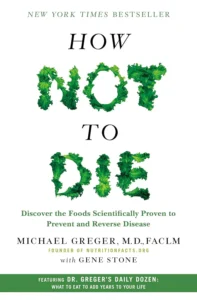
How Not to Die

How Not to Die

Discover the Foods Scientifically Proven to Prevent and Reverse Disease

Book by Michael Greger

Dr. Michael Greger, a physician and nutrition researcher, examines the fifteen leading causes of death in America and presents the scientific evidence for how dietary changes can prevent, arrest, or reverse each one. The second half of the book is a practical guide to incorporating the foods that the research supports.

View on Amazon
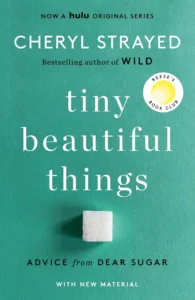
Tiny Beautiful Things

Tiny Beautiful Things

Advice on Love and Life from Dear Sugar

Book by Cheryl Strayed

Cheryl Strayed, writing anonymously as Dear Sugar on the literary website The Rumpus, answered strangers' questions about love, loss, ambition, and failure with a level of honesty that advice columns almost never reach. This collection of those columns doubles as an accidental memoir, since Strayed answered every question by pulling from the wreckage and joy of her own life.

View on Amazon

What Matt D’Avella’s reading list tells you about his approach to life

Look at the list above and you will notice something: almost every book is about removing something. Removing clutter. Removing bad habits. Removing ego. Removing the noise that keeps you from doing the work that matters. For a guy who built his entire career around the idea that less is more, the reading list is remarkably consistent.

But there is a second layer if you look closer. Mixed in with the minimalism and productivity books are picks about endurance athletes, stoic philosophy, loneliness, and a novel about a man stranded on Mars. The list is not just about subtraction. It is about figuring out what is worth keeping once you strip everything else away.

A quick bit of background if you landed here without knowing who D’Avella is. He graduated from film school, racked up $97,000 in debt between student loans and some impulsive purchases (a leather jacket and a new car on graduation day, by his own telling), and spent the next five years living in his parents’ basement learning personal finance and filmmaking. He paid off the debt, moved to New York, and worked as a freelance cinematographer. In 2015 he directed Minimalism: A Documentary About the Important Things alongside Joshua Fields Millburn and Ryan Nicodemus, better known as The Minimalists. Netflix picked it up. His YouTube channel now has over 3.7 million subscribers, mostly built on videos where he tries lifestyle experiments for 30 days: no phone, no coffee, waking up at 5 AM, cold showers. He also runs a course called Master YouTube and a podcast called The Ground Up Show. He and his wife Natalie split their time between the US and Australia.

That debt-to-minimalism pipeline is the key to understanding his book recommendations. He is not someone who read about simplicity as a philosophy and thought it sounded nice. He arrived at it by spending years digging himself out of a hole he created by doing the opposite.

The books that define his core philosophy

Essentialism by Greg McKeown is probably the single book that best represents how D’Avella thinks. McKeown’s argument is that most of us say yes to too many things and end up doing all of them poorly. The alternative is to figure out what actually matters, say no to everything else, and go all in on the few things you keep. D’Avella applied this when he quit freelance cinematography to focus entirely on YouTube. He had a working career filming commercials and corporate projects. He walked away from it because the channel was the thing that mattered most and splitting his attention was making both worse.

Deep Work by Cal Newport connects directly to Essentialism but gets more specific about how to actually protect focused time. Newport argues that the ability to concentrate without distraction is becoming both rarer and more valuable, which means the people who can do it have a massive advantage. D’Avella’s entire production schedule reflects this. He batches his filming days, limits meetings to certain days of the week, and finishes work by mid-afternoon. That structure did not come from nowhere. It came from books like this one.

The War of Art by Steven Pressfield is about creative resistance, that invisible force that keeps you from sitting down and doing the work. Pressfield calls it Resistance with a capital R and treats it like an enemy you have to fight every single day. For someone who publishes videos on a regular schedule and has talked openly about self-doubt and procrastination, this book is less inspiration and more survival manual. D’Avella has mentioned it in multiple videos as one of the books that changed how he approaches his creative process.

The habit books and why there are so many of them

D’Avella’s YouTube channel is basically a public laboratory for habit formation. He has filmed himself trying one new habit per month for an entire year. So it makes sense that his bookshelf is loaded with books about how habits work.

Atomic Habits by James Clear is the most popular book on this list and for good reason. Clear’s framework is simple: make the habit obvious, attractive, easy, and satisfying. D’Avella’s 30-day experiments are essentially Atomic Habits in practice. He picks one change, makes it small enough to stick, and documents what happens. The book gives you the theory. His videos show you what it looks like when someone actually tries it.

Why We Sleep by Matthew Walker changed D’Avella’s relationship with rest. He has talked about this on camera. Early in his career he treated sleep as wasted time, hours he could be spending on work. Walker’s research on what sleep deprivation does to memory, immune function, and decision-making scared him straight. He now avoids caffeine for ten hours before bed and aims for a consistent 10 PM bedtime. For a self-improvement YouTuber to say “the most productive thing I do is sleep” is a counter-cultural statement, and Walker’s book is the reason he makes it.

Can’t Hurt Me by David Goggins sits at the opposite end of the spectrum from sleep optimization. Goggins is a former Navy SEAL who ran ultramarathons on broken legs and treats comfort as the enemy. D’Avella recommending both Walker and Goggins tells you something honest about his worldview. He does not think there is one correct formula. Sometimes you need to rest. Sometimes you need to push through pain. The trick is knowing which situation you are in. That tension between recovery and intensity runs through a lot of his content.

The stoic philosophy thread

Three books on this list come from the same philosophical tradition, and they show up so often in D’Avella’s videos that they are practically part of his brand at this point.

Meditations by Marcus Aurelius is a private journal written by a Roman emperor who spent most of his reign dealing with wars, plagues, and betrayal. He wrote it for himself, not for publication, which is why it reads differently from most philosophy. There is no performance in it. It is a man reminding himself, over and over, to focus on what he can control and let go of everything else. D’Avella gravitates toward this because minimalism and stoicism overlap in a very specific place: both say that most of your suffering comes from wanting things you do not need.

The Obstacle Is the Way and Ego Is the Enemy, both by Ryan Holiday, translate stoic ideas into modern language. The Obstacle Is the Way argues that difficulties are not things that happen on the way to success; they are the way. Ego Is the Enemy makes the case that your own self-importance is usually a bigger threat to your goals than any external competitor. D’Avella quit a stable freelance career to bet on YouTube when the channel had almost no audience. That requires a specific kind of relationship with fear and ego. These books did not create that relationship, but they clearly reinforced it.

The business and entrepreneurship books

D’Avella does not talk about business strategy as often as he talks about habits and minimalism, but the books are there if you look.

The Dip by Seth Godin is tiny, maybe 80 pages, and makes one argument: every worthwhile pursuit goes through a painful middle period where progress stalls and quitting looks reasonable. The people who succeed are the ones who can tell the difference between a dip (temporary, worth pushing through) and a dead end (permanent, worth quitting). D’Avella’s YouTube growth followed exactly this curve. He spent years making videos to small audiences before the channel took off. Knowing the dip is normal does not make it comfortable, but it keeps you from quitting at the wrong time.

Shoe Dog by Phil Knight is the memoir of Nike’s founder, and it reads nothing like a business book. Knight writes about near-bankruptcy, lawsuits, broken partnerships, and years of uncertainty. There is very little triumph in it until the final chapters. D’Avella has recommended it as his favorite business book, and the appeal makes sense. Knight’s story is about persistence and obsession, not about having the right strategy. For someone who spent five years in a basement paying off debt while learning to make films, that narrative probably felt familiar.

I Will Teach You to Be Rich by Ramit Sethi is the most practical financial book on the list. Sethi’s approach is the opposite of traditional frugality advice. Instead of cutting out small pleasures, he argues for automating your finances, negotiating bigger wins, and spending freely on the things you actually care about while cutting ruthlessly on everything else. That is minimalism applied to money, which is probably why D’Avella connects with it. Sethi and D’Avella actually share an audience: people who want to be intentional with their money rather than just cheap.

The picks that show a different side

Not everything on this list is about productivity or self-improvement, and the outliers reveal more about D’Avella than the expected picks do.

Lost Connections by Johann Hari is about depression, and specifically about the argument that depression is not just a chemical imbalance but a response to unmet human needs: meaningful work, connection to other people, a sense of purpose. D’Avella works from home, often alone, making videos about living with less. That lifestyle can get isolating. Recommending this book suggests he has thought seriously about the loneliness that can come with independence, which is not something most creators in the self-improvement space talk about openly.

One Hundred Years of Solitude by Gabriel García Márquez is a novel about seven generations of a family in a fictional Colombian town. It has nothing to do with habits, minimalism, or YouTube. It is just a beautiful, strange, sprawling piece of literature. The fact that it shows up here is a reminder that D’Avella is a filmmaker first. He cares about storytelling. He cares about craft. Not everything he reads has to be useful.

Tiny Beautiful Things by Cheryl Strayed is a collection of advice columns, and it is the most emotionally raw book on this list. Strayed writes about grief, failure, love, and regret with a directness that most self-help authors cannot touch. D’Avella including it signals something important: for all the talk about systems and habits, he knows that the hard parts of life do not get solved by a morning routine.

How the whole list fits together

D’Avella’s reading list follows the same arc as his career. Start with the mess (debt, clutter, no direction). Strip away what does not matter (Essentialism, Minimalism, The Dip). Build better systems for what remains (Atomic Habits, Deep Work, Why We Sleep). Develop the mental toughness to keep going when it gets hard (The War of Art, Can’t Hurt Me, the stoic trilogy). And somewhere in the middle, remember that you are a human being and not an optimization project (Lost Connections, One Hundred Years of Solitude, Tiny Beautiful Things).

If you are looking at 39 books and wondering where to start, pick the problem you are actually dealing with right now. Drowning in stuff and commitments? Essentialism. Know what to do but cannot make yourself do it? The War of Art. Feel productive but weirdly empty? Lost Connections. The list works best when you treat it the way D’Avella treats most things: take what you need, leave the rest.