
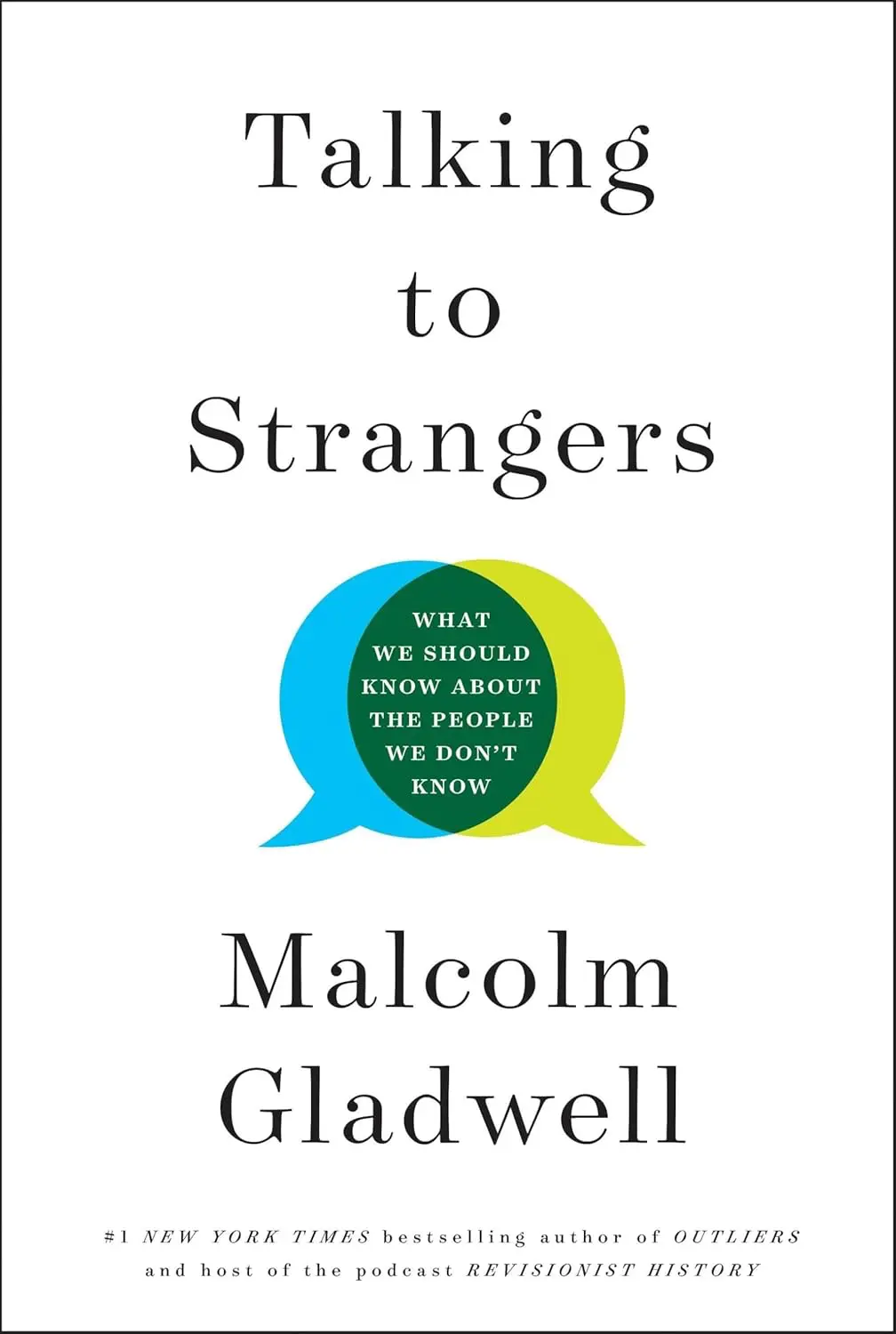
Talking to Strangers is Malcolm Gladwell’s examination of a problem that runs through almost every area of human life: we are consistently bad at understanding people we don’t know, and we don’t realize how bad we are at it.
Gladwell builds the book around a series of high-profile cases. He revisits how the CIA was repeatedly fooled by Cuban double agents, how Neville Chamberlain misjudged Hitler, how the Penn State administration failed to see what was happening with Jerry Sandusky, and how the arrest of Sandra Bland escalated from a routine traffic stop into a tragedy. In each case, the central failure is the same: someone assumed they could read a stranger’s intentions, and they were wrong.
The book introduces a few key concepts. “Default to truth” is the idea that most people, most of the time, assume others are being honest, and that this tendency is actually necessary for society to function, even though it makes us vulnerable to deception. “Transparency” is the mistaken belief that people’s external expressions reliably reflect their internal states. And “coupling” is the idea that behavior is often tied to specific contexts and environments, not just to individual character.
For founders and people in business, the practical takeaway is that your ability to judge character in a meeting, an interview, or a negotiation is probably worse than you think. Gladwell’s examples are a good reminder that confidence in reading people is not the same as accuracy. The book suggests that better outcomes come not from trusting your instincts about strangers but from building systems and processes that don’t rely so heavily on personal judgment.
The writing is classic Gladwell: clear, story-driven, and built around surprising connections between seemingly unrelated events. It is a fast read despite dealing with some dark subject matter. For anyone who regularly makes hiring decisions, negotiates deals, or evaluates partners, it is a useful corrective to overconfidence in personal judgment.
