
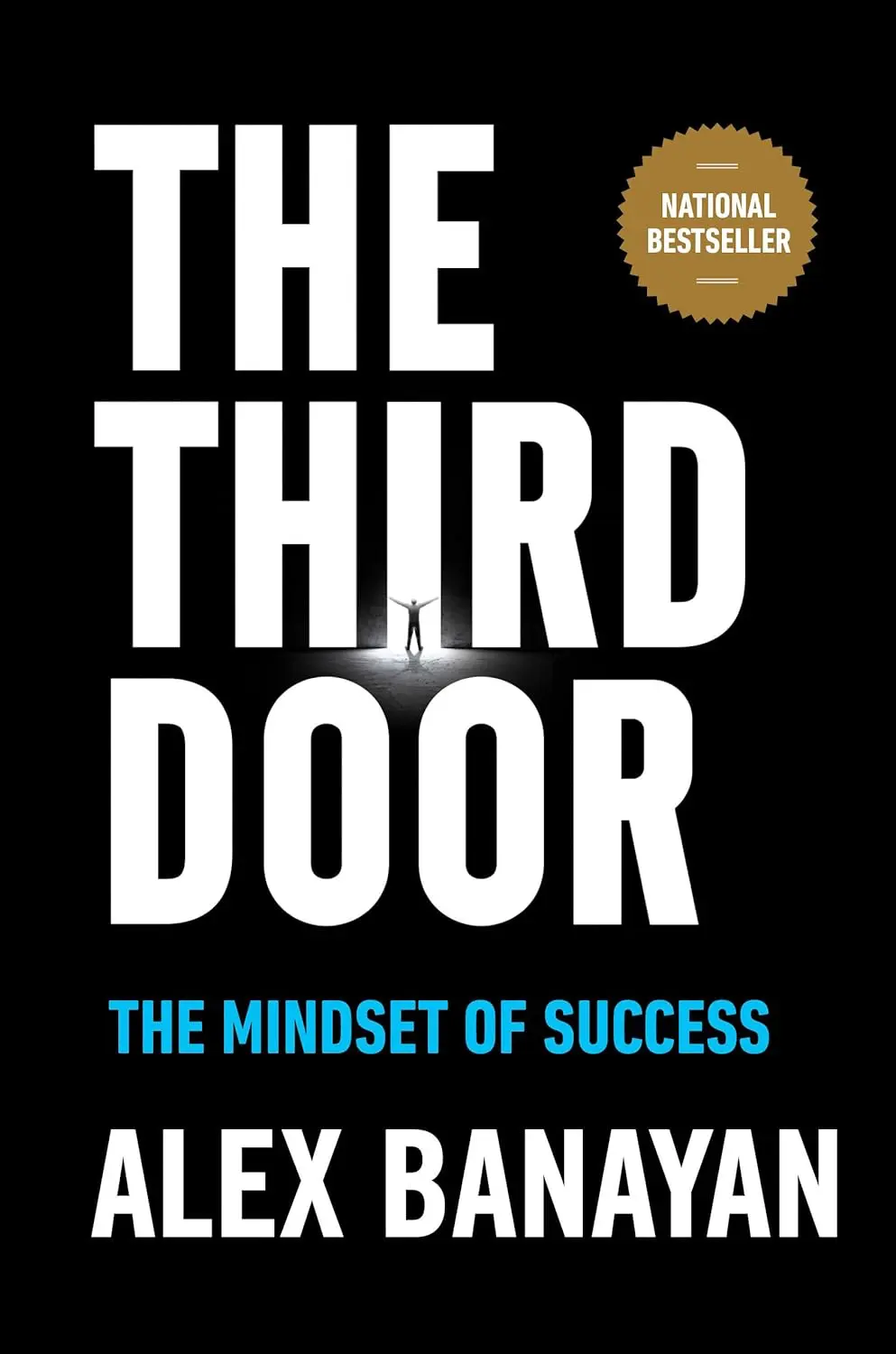
Alex Banayan was a freshman pre-med student at the University of Southern California when he became obsessed with a question: how do the most successful people in the world actually launch their careers? Not the polished origin stories they tell in commencement speeches, but the real, messy, specific steps they took when they were nobody.
To fund his research, Banayan studied the pricing patterns on The Price Is Right, got on the show, and won a sailboat, which he sold for cash. With that money, he spent the next several years tracking down and interviewing Bill Gates, Lady Gaga, Steven Spielberg, Jane Goodall, Larry King, Maya Angelou, Steve Wozniak, Jessica Alba, Pitbull, Tim Ferriss, and dozens of others. The interviews themselves are interesting, but the book’s real engine is Banayan’s journey to get them: the cold emails that went unanswered, the gatekeepers who shut him down, the moments of near-breakthrough followed by humiliating rejection.
The “third door” metaphor comes from Banayan’s observation that every successful person he studied found an unconventional entry point. The first door is the front entrance where everyone lines up and hopes to get in. The second door is the VIP entrance for those with connections or money. The third door is the one nobody sees: the side window, the service entrance, the creative workaround that nobody else thought of. Bill Gates got access to a computer terminal as a teenager through a specific, unlikely sequence of events. Spielberg snuck onto the Universal lot as a young man and just started showing up. The pattern repeated across industries and decades.
The book alternates between the interviews and Banayan’s personal story, which includes dropping out of pre-med, dealing with his immigrant parents’ expectations, and navigating the loneliness and uncertainty that comes with pursuing a project that most people thought was a bad idea.
Matt D’Avella has recommended the book. Published in 2018, it became a bestseller. Banayan was 19 when he started the project and 25 when it was published. The writing has the energy and occasional naivety of someone that age, which is part of its charm. For young founders or anyone early in their career trying to figure out how to get a foot in the door when they have no credentials and no connections, the book is more practical than it initially appears.
