
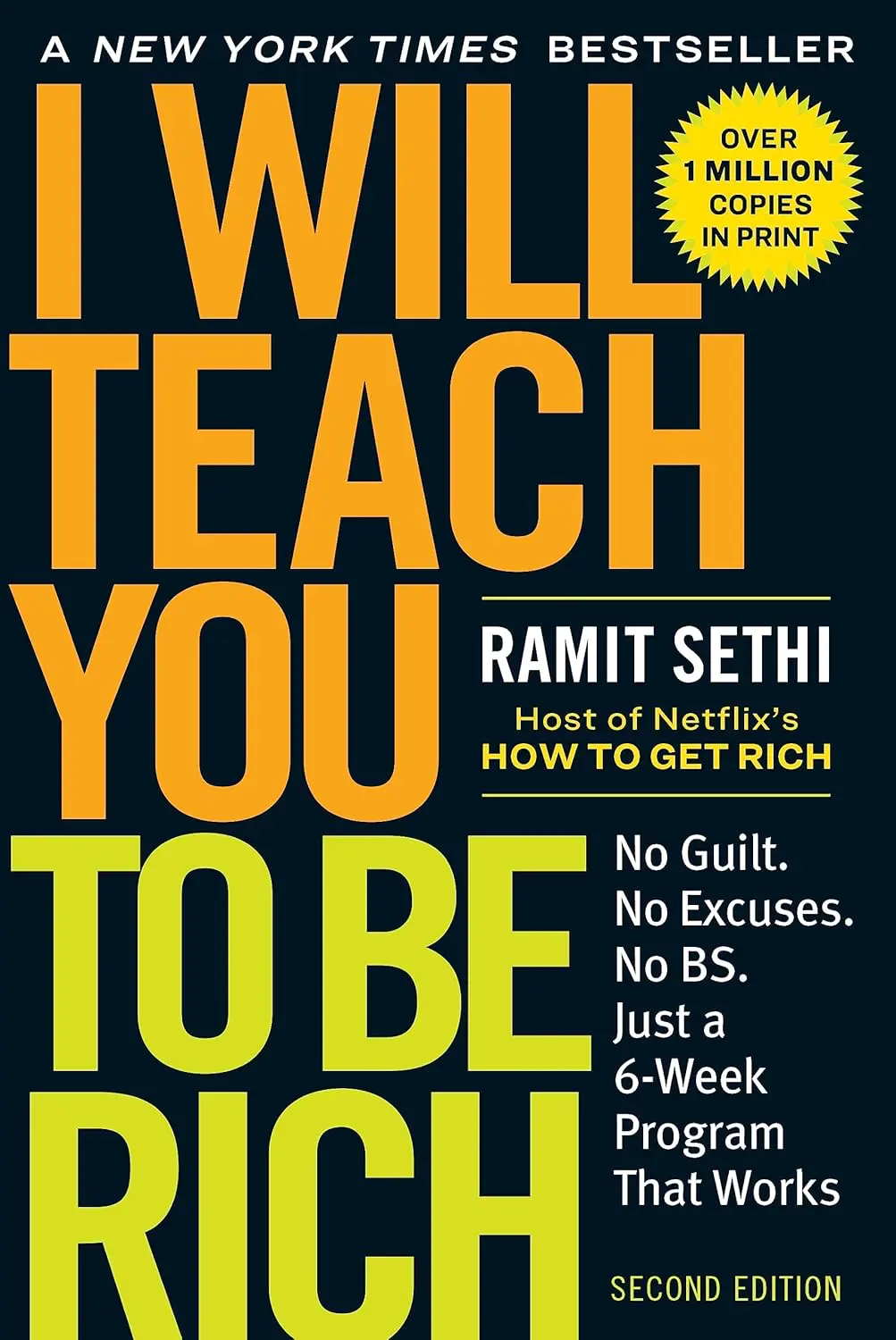
I Will Teach You to Be Rich is Ramit Sethi’s personal finance system, designed primarily for people in their twenties and thirties who want to get their financial lives in order without spending hours tracking every expense. Sethi’s approach is to set up automated systems that handle the boring parts of money management so you can focus your energy on earning more and spending consciously on the things you actually care about.
The book is structured as a six-week program. Week one covers credit cards: how to optimize them for rewards, pay off debt, and use them as a tool rather than a trap. Week two covers bank accounts: how to set up a high-interest savings account and negotiate bank fees. Week three covers investing: how to open a 401(k) and IRA and choose low-cost index funds. Week four covers conscious spending: how to design a spending plan that funds the things you love while cutting ruthlessly on the things you don’t care about. Weeks five and six cover automation and maintenance.
Sethi’s distinctive contribution is his rejection of traditional budgeting. He argues that tracking every purchase is unsustainable for most people and that the better approach is to automate savings and investments on payday, then spend whatever is left guilt-free. His “conscious spending plan” allocates money into four buckets: fixed costs, savings, investments, and guilt-free spending. Once the first three are funded automatically, whatever remains is yours to spend however you want.
For founders, the book is useful in the pre-revenue and early-revenue phases when personal finances and business finances are tangled together. Sethi’s systems for automating personal finance free up mental bandwidth that founders usually can’t afford to waste on managing their own money. His aggressive stance on earning more (rather than cutting back) also resonates with the entrepreneurial mindset.
The second edition, published in 2019, updates the original 2009 version with current account recommendations and expanded sections on student loans and investing. The writing is casual, funny, and occasionally abrasive, which is deliberate: Sethi is trying to cut through the boredom that keeps most people from dealing with their finances.
