







Jensen Huang

Jensen Huang Book Recommendations (25 Books)

Jensen Huang co-founded NVIDIA in 1993 and has been its CEO ever since, making him one of the longest-serving chief executives in the tech sector. Under his leadership, NVIDIA moved from making graphics cards for gamers to building the GPU infrastructure that powers modern AI research. Huang was born in Taiwan, grew up in Oregon, and studied electrical engineering at Oregon State and Stanford. His company's market cap surpassed two trillion dollars in 2024.

Learn more about the founder on Wikipedia

*post may include affiliate links, view our Disclaimer for more info.

Share:

Jensen Huang Reading List:

FREE Notion Book Tracker

+9 recommended books for founders inside

by Unseen Founder

Notion Book Tracker helps you organize what you read, save key insights, and build your personal founder library. It also includes carefully selected books recommended for founders.

Get FREE Now
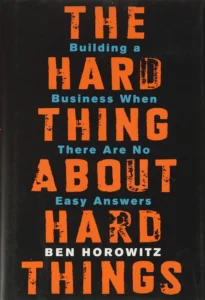
The Hard Thing About Hard Things

The Hard Thing About Hard Things

Building a Business When There Are No Easy Answers

Book by Ben Horowitz

Ben Horowitz, cofounder of Andreessen Horowitz, writes about the problems nobody prepares you for when running a company: layoffs, demotions, dealing with your own psychology under pressure. There is no sugarcoating here, just honest accounts from someone who went through it.

View on Amazon
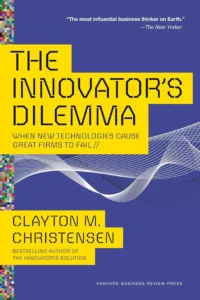
The Innovator's Dilemma

The Innovator’s Dilemma

When New Technologies Cause Great Firms to Fail

Book by Clayton Christensen

Christensen explains why well-managed, successful companies still get blindsided by disruptive technologies. The book uses case studies from the disk drive, steel, and excavator industries to show how doing everything right by current customers can be exactly the wrong strategy.

View on Amazon
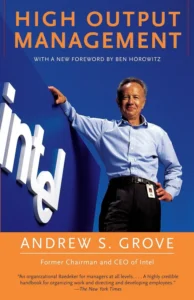
High Output Management

High Output Management

Book by Andrew S. Grove

Andy Grove, former CEO of Intel, wrote this management guide in 1983, and it still circulates widely among startup founders and tech executives. The book treats management as a production process, covering meetings, decision-making, performance reviews, and how to get the most out of your team.

View on Amazon
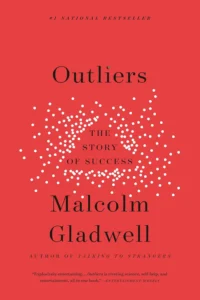
Outliers

Outliers

The Story of Success

Book by Malcolm Gladwell

Gladwell examines why some people succeed far beyond others, arguing that individual talent matters less than timing, culture, accumulated practice, and luck. The book popularized the 10,000-hour rule and challenged the self-made success narrative.

View on Amazon
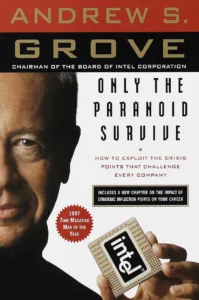
Only the Paranoid Survive

Only the Paranoid Survive

How to Exploit the Crisis Points That Challenge Every Company

Book by Andrew S. Grove

Andy Grove, former CEO of Intel, explains how to recognize and navigate what he calls strategic inflection points, moments when the fundamentals of a business change so dramatically that the company must transform or die. The book draws on Intel's near-death experience when it shifted from memory chips to microprocessors.

View on Amazon
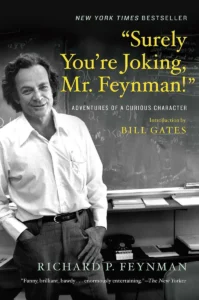
Surely You're Joking, Mr. Feynman!

Surely You’re Joking, Mr. Feynman!

Adventures of a Curious Character

Book by Richard Feynman

Nobel physicist Richard Feynman recounts a life spent chasing curiosity wherever it led, from cracking safes at Los Alamos to learning to draw nudes to playing bongo drums in a samba band. The book reads like a collection of adventures rather than a standard memoir.

View on Amazon
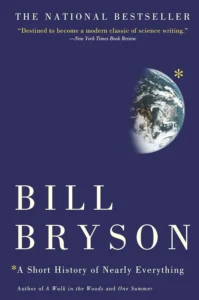
A Short History of Nearly Everything

A Short History of Nearly Everything

Book by Bill Bryson

Bryson set out to understand how we know what we know about the physical world, from the Big Bang to the emergence of civilization. The book covers physics, chemistry, geology, biology, and paleontology, told through the stories of the scientists who figured things out, often by accident.

View on Amazon
The War of Art

The Art of War

Book by Sun Tzu

Written over 2,500 years ago, Sun Tzu's treatise on military strategy has been adopted by business leaders, coaches, and negotiators worldwide. The text covers positioning, timing, information advantage, and knowing when not to fight.

View on Amazon
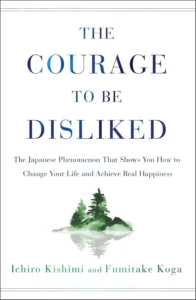
The Courage to Be Disliked

The Courage to Be Disliked

The Japanese Phenomenon That Shows You How to Change Your Life and Achieve Real Happiness

Book by Ichiro Kishimi and Fumitake Koga

Written as a Socratic dialogue between a philosopher and a young man, the book presents the psychology of Alfred Adler as an alternative to Freud. The core argument: your past does not determine your present, other people's opinions are not your problem, and you are free to change at any time.

View on Amazon
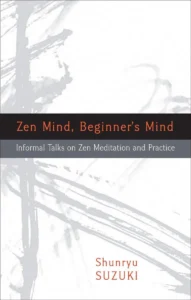
Zen Mind, Beginner's Mind

Zen Mind, Beginner’s Mind

Informal Talks on Zen Meditation and Practice

Book by Shunryu Suzuki

Suzuki, a Zen master who founded the San Francisco Zen Center, presents Zen Buddhism through short, simple talks on posture, breathing, and the practice of maintaining a beginner's openness to experience. Steve Jobs kept a copy by his bed.

View on Amazon
12 Rules for Life

12 Rules for Life

An Antidote to Chaos

Book by Jordan B. Peterson

Clinical psychologist Jordan Peterson presents twelve rules for living with purpose, ranging from "stand up straight with your shoulders back" to "tell the truth, or at least don't lie" to "pet a cat when you encounter one on the street." The book mixes psychology, mythology, personal stories, and philosophy.

View on Amazon
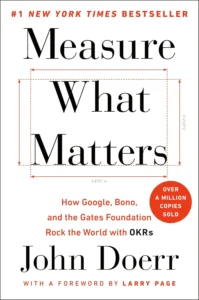
Measure What Matters

Measure What Matters

How Google, Bono, and the Gates Foundation Rock the World with OKRs

Book by John Doerr

Legendary venture capitalist John Doerr explains the OKR (Objectives and Key Results) framework that he introduced to Google in 1999 and that has since been adopted by companies from Intel to Spotify. The book shows how setting ambitious goals with measurable results keeps organizations focused and aligned.

View on Amazon
The Lord of the Rings

The Lord of the Rings

Book by J.R.R. Tolkien

Tolkien's epic follows a hobbit named Frodo who must carry a powerful ring across Middle-earth to destroy it. Beneath the fantasy, the story explores themes of ordinary people shouldering burdens beyond their size, the corrupting nature of power, and the value of loyalty and persistence.

View on Amazon
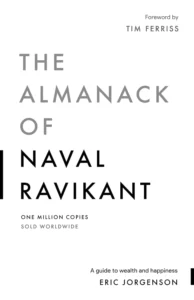
The Almanack of Naval Ravikant

The Almanack of Naval Ravikant

A Guide to Wealth and Happiness

Book by Eric Jorgenson

Eric Jorgenson compiled Naval Ravikant's best ideas on wealth, leverage, judgment, and happiness from podcasts, tweets, and interviews into an organized reference. The book covers how to build wealth without getting lucky, how to use specific knowledge and leverage, and Naval's philosophy on finding peace.

View on Amazon
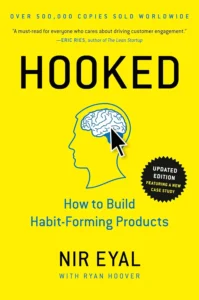
Hooked

Hooked

How to Build Habit-Forming Products

Book by Nir Eyal

Eyal presents the Hook Model, a four-step cycle that successful products use to create habits: trigger, action, variable reward, and investment. The book explains why some products become part of daily routine while others are used once and forgotten.

View on Amazon
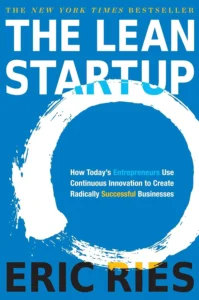
The Lean Startup

The Lean Startup

How Today's Entrepreneurs Use Continuous Innovation to Create Radically Successful Businesses

Book by Eric Ries

Ries introduces a method for building startups based on rapid experimentation, validated learning, and short feedback loops. Instead of spending months on a product nobody wants, the book advocates shipping a minimum viable product early and iterating based on real customer data.

View on Amazon
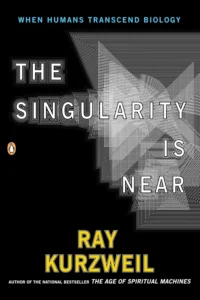
The Singularity Is Near

The Singularity Is Near

When Humans Transcend Biology

Book by Ray Kurzweil

Ray Kurzweil predicts that by the 2040s, artificial intelligence will surpass human intelligence, humans will merge with machines, and biological limitations will become optional. He has been making these predictions since the 1990s, and his track record on specific technology forecasts is better than most futurists'.

View on Amazon
Hillbilly Elegy

Hillbilly Elegy

A Memoir of a Family and Culture in Crisis

Book by J.D. Vance

J.D. Vance grew up in a Rust Belt town in Ohio with roots in Appalachian Kentucky, surrounded by poverty, addiction, and family chaos. His memoir traces the path from that world to Yale Law School and asks hard questions about culture, class, and what it actually takes to break a generational cycle.

View on Amazon
Sex at Dawn

Sex at Dawn

How We Mate, Why We Stray, and What It Means for Modern Relationships

Book by Christopher Ryan & Cacilda Jetha

Christopher Ryan and Cacilda Jetha challenge the standard story about human sexuality, arguing that monogamy is not our species' natural state. Drawing from anthropology, primatology, and anatomy, they make the case that humans evolved for a more communal approach to sex and relationships than modern society assumes.

View on Amazon
Eating Animals

Eating Animals

Book by Jonathan Safran Foer

Jonathan Safran Foer, a novelist, spent three years investigating factory farming after the birth of his first child. The resulting book mixes personal narrative, investigative reporting, and moral argument to ask a question most people would rather not think about: what are we actually doing when we eat animals?

View on Amazon
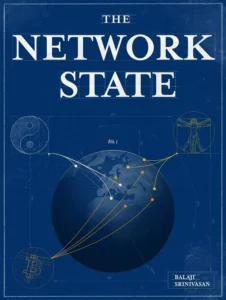
The Network State

The Network State

How to Start a New Country

Book by Balaji Srinivasan

Former Coinbase CTO and a16z partner Balaji Srinivasan argues that the internet makes it possible to create new countries, starting as online communities that eventually acquire physical territory. The book is part political theory, part technology manifesto, and part practical blueprint for building what he calls a network state.

View on Amazon
We Are the Weather

We Are the Weather

Saving the Planet Begins at Breakfast

Book by Jonathan Safran Foer

Jonathan Safran Foer's second nonfiction book makes a specific, uncomfortable argument: the single most impactful thing individuals can do about climate change is eat fewer animal products, particularly before dinner. The book is as much about why people fail to act on what they already know as it is about the climate itself.

View on Amazon
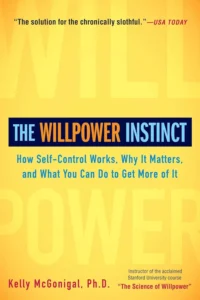
The Willpower Instinct

The Willpower Instinct

How Self-Control Works, Why It Matters, and What You Can Do to Get More of It

Book by Kelly McGonigal

Based on Stanford psychologist Kelly McGonigal's popular course "The Science of Willpower," this book breaks down the neuroscience and psychology of self-control into concrete strategies that actually work. It covers why willpower is a biological function, not a moral virtue, and how sleep, exercise, and stress directly affect your ability to stick to decisions.

View on Amazon
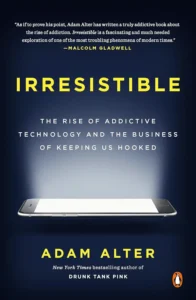
Irresistible

Irresistible

The Rise of Addictive Technology and the Business of Keeping Us Hooked

Book by Adam Alter

NYU marketing professor Adam Alter explores why screens, apps, and games have become so hard to put down. The book examines the psychological mechanisms that make technology addictive and asks uncomfortable questions about what happens when the people designing our products know more about our weaknesses than we do.

View on Amazon
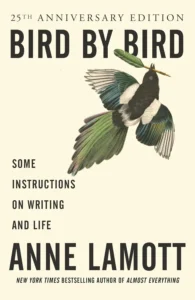
Bird by Bird

Bird by Bird

Some Instructions on Writing and Life

Book by Anne Lamott

Anne Lamott's writing guide is really a book about the emotional experience of making things. She covers shitty first drafts, perfectionism, jealousy, and the slow process of sitting down every day to do work that might be terrible. It has sold over a million copies and remains one of the most recommended books on creative work.

View on Amazon

What Jensen Huang’s book recommendations reveal about the NVIDIA CEO

Twenty-five books from a man who has been CEO of the same company for over thirty years. That fact alone tells you something. Jensen Huang co-founded NVIDIA in 1993 at a Denny’s in Silicon Valley, the same Denny’s where he had worked as a teenage dishwasher and toilet cleaner years earlier. He has run the company every day since. No sabbaticals. No stepping aside for a “professional CEO” the way so many founders do. Just three decades of showing up, making decisions, and occasionally nearly going bankrupt.

NVIDIA almost died in the mid-1990s. Huang has described that period as a 50/50 survival gamble. The company pulled through, launched the GeForce GPU in 1999, and spent the next two decades building the hardware infrastructure that now powers virtually all serious AI research. By 2024, NVIDIA’s market cap passed two trillion dollars. Huang went from a kid who was sent from Taiwan to the US at age nine, barely speaking English and getting bullied at a boarding school in Kentucky, to one of the ten wealthiest people alive.

His reading list makes more sense once you know that trajectory. It is heavy on survival, strategy, and the question of what happens when the world changes faster than anyone expected.

Jensen Huang’s top books on leadership and management

Three books on this list come from Intel’s orbit, and that is not a coincidence. Huang worked at AMD early in his career and spent eight years at LSI Logic before founding NVIDIA. He grew up professionally inside the semiconductor industry, and the people who shaped that industry shaped his thinking.

High Output Management by Andrew Grove is the book that most closely mirrors how Huang actually runs NVIDIA. Grove treated management as engineering: measure inputs, optimize throughput, eliminate bottlenecks. Huang operates the same way. He has sixty direct reports, does not hold regular one-on-one meetings, and asks employees across the company to email him their five most important tasks each week. That is a Grove-style system, flat, information-dense, and designed to keep the CEO connected to what is actually happening rather than filtered through layers of middle management.

Only the Paranoid Survive, also by Grove, introduced the idea of strategic inflection points, moments when a fundamental shift makes your current business model obsolete. Huang lived through several of these. The shift from memory chips to microprocessors was Grove’s inflection point. Huang’s was recognizing that GPUs designed for gaming could be repurposed for parallel computing, and later, that parallel computing was exactly what AI researchers needed. The decision to build CUDA, NVIDIA’s parallel computing platform, was not an obvious bet when it was made. It only looks obvious now because it worked. Grove’s framework for recognizing and acting on inflection points is basically a manual for how Huang has operated his entire career.

The Hard Thing About Hard Things by Ben Horowitz completes the trio. Horowitz writes about the moments in a CEO’s life when there is no good option, when you have to lay people off, fire friends, or admit publicly that your strategy was wrong. NVIDIA came close to running out of money more than once. Huang has said that suffering and struggle are not side effects of building something great. They are the process. Horowitz puts that idea on paper with specific examples from his own career, and the tone is closer to a war journal than a business book.

Books on innovation and disruption that Jensen Huang recommends

The Innovator’s Dilemma by Clayton Christensen explains why successful companies fail. The answer is not that they get lazy or stupid. It is that they keep doing exactly what made them successful, serving existing customers with incremental improvements, while a cheaper, worse product enters the market from below and gradually takes over. Huang has avoided this trap by deliberately walking away from commoditized businesses. He has said publicly that NVIDIA should always be working on something that has never been done before. The moment a product line becomes a commodity, it is time to move on. That philosophy is Christensen’s thesis applied as operating principle.

The Singularity Is Near by Ray Kurzweil is the most futuristic book on the list. Kurzweil argues that technological progress is accelerating exponentially and that we are approaching a point where artificial intelligence surpasses human intelligence. Huang does not need convincing on this point. NVIDIA’s entire business is built on the assumption that AI compute demand will keep growing at a pace that most people underestimate. Whether you find Kurzweil’s predictions inspiring or alarming, Huang is clearly building for the world Kurzweil describes.

The Network State by Balaji Srinivasan is the most unconventional pick in this category. Srinivasan argues that internet communities could eventually form new kinds of nations, organized around shared values and digital infrastructure rather than geography. It is a speculative book, and not everyone takes it seriously. But Huang runs a company whose products are being purchased by sovereign nations building their own AI infrastructure. The idea that technology is reshaping political organization, not just business, is directly relevant to where NVIDIA sits in 2025.

Jensen Huang’s books on psychology, habits, and mindset

The Courage to Be Disliked is a Japanese bestseller that presents Alfred Adler’s psychology through a dialogue between a philosopher and a young man. Adler’s central argument is that your past does not determine your future, and that seeking approval from others is the source of most unhappiness. Huang is famous for being comfortable with being demanding. Employees have called him a “perfectionist” who is “not easy to work for.” He responded by saying that is exactly how it should be. A book about being okay with not being liked fits a CEO who has never softened his standards to be more popular.

Zen Mind, Beginner’s Mind by Shunryu Suzuki is about approaching everything, including things you have done thousands of times, with the openness of someone doing it for the first time. This connects to something Huang has said about NVIDIA’s culture: the company should always be working on problems where the answer is genuinely unknown. A beginner’s mind is not about humility for its own sake. It is about staying open to information that contradicts what you think you know, which is the only way to spot the next inflection point before your competitors do.

The Willpower Instinct by Kelly McGonigal is the practical counterpart to the Zen philosophy. McGonigal’s research is about self-control: why we fail at it, what depletes it, and how to build it back. Huang’s work ethic is well documented. He has been running the same company for over thirty years at a pace that would burn out most people in five. Sustained discipline over decades is not just a personality trait. It is a skill, and McGonigal’s book is about how that skill works at a neurological level.

The unexpected books on Jensen Huang’s reading list

Sex at Dawn by Christopher Ryan and Cacilda Jethá is the book on this list that makes people do a double take. It challenges conventional assumptions about human mating behavior by arguing that monogamy is not the evolutionary default, and that pre-agricultural human societies were far more sexually fluid than we tend to assume. It is a controversial book, and plenty of evolutionary biologists have pushed back on its claims. But Huang recommending it suggests he reads things that challenge mainstream assumptions, even in areas completely outside his professional domain. A CEO who only reads business books is a CEO with blind spots.

Eating Animals by Jonathan Safran Foer and We Are the Weather by the same author are both about the ethical and environmental costs of industrial animal agriculture. Foer’s argument is that what we eat is one of the most consequential decisions we make, and that most people avoid thinking about it seriously. Huang recommending two books by the same author on this topic suggests it is something he has genuinely thought about, not just a casual read.

Bird by Bird by Anne Lamott is a book about writing. Lamott’s advice is to take things one small piece at a time (the title comes from her father telling her brother, overwhelmed by a school report on birds, to take it “bird by bird”). It is also about dealing with self-doubt, perfectionism, and the fear that what you create will not be good enough. Huang co-founded NVIDIA before he turned thirty-one. He has been making high-stakes decisions with incomplete information for decades. A book that says “just start, do the next small thing, and stop waiting for certainty” is more applicable to running a company than it might look from the cover.

How Jensen Huang’s reading list connects to his career at NVIDIA

The pattern across these twenty-five books is a mind that is always preparing for the next version of the world. The Grove and Christensen books are about recognizing when the current version is ending. Kurzweil and Srinivasan are about imagining what comes next. The psychology books are about maintaining the personal operating system, discipline, openness, comfort with discomfort, that lets you keep functioning while everything around you changes.

And then there are the books that have nothing to do with technology at all. A book about writing. Two books about food ethics. A controversial take on human sexuality. A Zen meditation manual. These are the picks that keep the reading list from being a CEO performance optimization syllabus. They are the books of someone who is genuinely curious, not just strategically curious.

Huang once said that if he could go back in time and talk to his thirty-year-old self at the moment he founded NVIDIA, knowing how hard the next three decades would be, he would not do it again. He said it would have been too painful to start if he had known what was coming. He did it anyway because he did not know. That mix of accidental courage and deliberate endurance runs through every book on this list. The reading tells you to prepare, to stay paranoid, to keep learning. The career tells you that none of that preparation fully protects you. You do it anyway.