
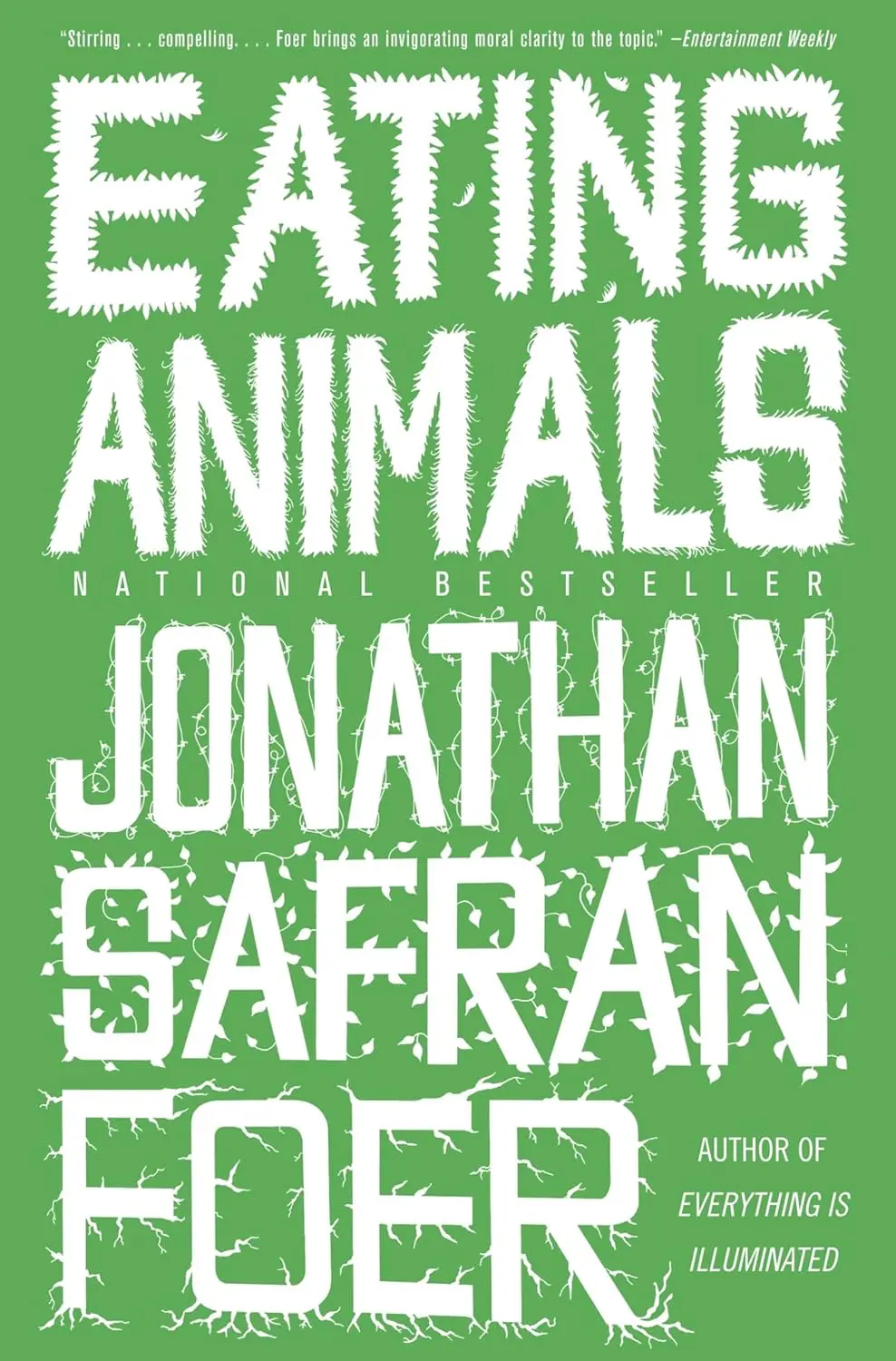
Jonathan Safran Foer is a novelist. He wrote Everything Is Illuminated and Extremely Loud and Incredibly Close. He is not a scientist, not an activist, and not a vegetarian by conviction. He was the kind of person who ate meat sometimes and avoided it other times without thinking too hard about either choice. Then his son was born, and the question of what to feed a child forced him to actually investigate what he had been putting in his own body.
He spent three years on the investigation. He visited factory farms, some legally and some by sneaking in at night with animal welfare activists. He interviewed ranchers, slaughterhouse workers, animal rights philosophers, and representatives of the meat industry. He read the scientific literature on the environmental impact of industrial animal agriculture. He studied the history of how Americans went from eating animals raised on small farms to eating animals processed through an industrial system that most consumers never see.
The result is not a polemic. Foer writes with the questioning, self-doubting voice of a person working through a problem rather than someone who has already reached a conclusion. He includes the perspectives of farmers who raise animals humanely and explains why their operations represent a tiny fraction of the market. He talks to a vegetarian rancher. He talks to a turkey farmer who genuinely cares about his birds but operates within a system designed to maximize output at the expense of animal welfare.
The environmental data is where the book hits hardest for many readers. The United Nations has identified animal agriculture as one of the largest contributors to greenhouse gas emissions, water pollution, and deforestation. Foer does not invent this data. He compiles it in one place and forces the reader to sit with it.
The book is also about stories. Foer opens with his grandmother, a Holocaust survivor who was offered pork by a Russian farmer when she was starving. She refused. When Foer asks why, she says: “If nothing matters, there’s nothing to save.” That line anchors the entire book. What we choose to eat, Foer argues, is one of the few daily decisions where our values and our actions either align or do not.
The book does not tell anyone what to do. It asks what is actually happening, presents the evidence, and leaves the reader to decide. That restraint is what makes it effective.
