
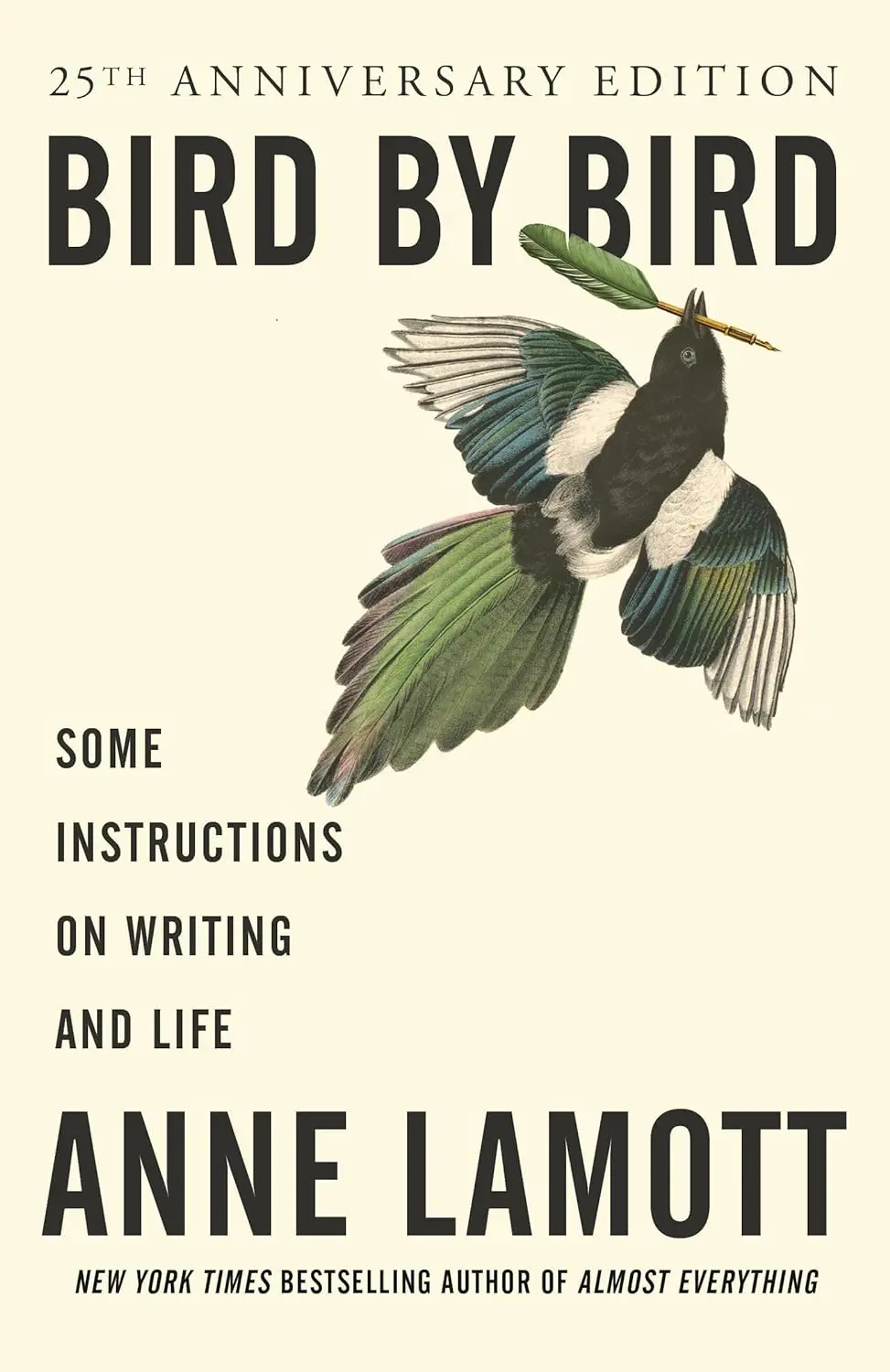
The title comes from a story about Lamott’s brother. He was ten years old, staring at a school report on birds that was due the next day. He had three months to write it and hadn’t started. Their father sat down next to him, put his arm around him, and said: “Bird by bird, buddy. Just take it bird by bird.”
That advice runs through the entire book. Lamott, a novelist and writing teacher in Northern California, is not interested in the mechanics of perfect sentences. She is interested in how to keep going when the work feels impossible, which for most writers and creators is most of the time.
Her most quoted chapter is about shitty first drafts. The idea is simple: all good writers write terrible first drafts. The difference between good writers and everyone else is that good writers know this and write the terrible draft anyway. They do not try to get it right on the first pass. They give themselves permission to produce garbage, then fix it later. This sounds obvious when stated plainly, but Lamott is talking about a psychological barrier that stops most people from writing at all.
She covers the practical side of the craft too, with chapters on character development, dialogue, plot, and how to know when a piece is finished. But even these chapters circle back to the emotional reality of the work: the jealousy you feel when a friend publishes something good, the voice in your head that says you are a fraud, the conviction at 3 a.m. that everything you have written is worthless.
Lamott writes the way she talks. The prose is loose, funny, sometimes self-deprecating to the point of discomfort, and full of the kind of tangents that make you feel like you are sitting in her kitchen while she makes coffee. She is religious in a way that shows up occasionally but never takes over. She swears freely.
The book is not only for writers. Anyone building something, whether it is a company, a product, or a career, will recognize the paralysis Lamott describes. The fear of the blank page is the same as the fear of the blank business plan or the empty product roadmap. Her advice boils down to: start small, accept that it will be bad at first, and keep showing up.
First published in 1994, Bird by Bird has sold over a million copies. The New York Times called it one of the funniest books on writing ever published.
