



What Sergey Brin’s book recommendations tell you about Google’s co-founder
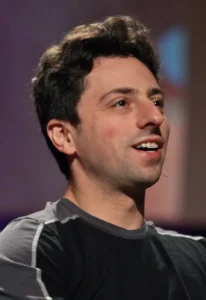
Sergey Brin was six years old when his family left the Soviet Union. His father, a mathematics professor, had been fired after applying for an exit visa. His mother, a researcher, lost her job too. They waited eight months, afraid the visa would be denied, before finally emigrating to the United States in 1979. Brin grew up in Maryland, studied mathematics and computer science, went to Stanford for a PhD, met Larry Page, and together they built the search engine that became Google. He never finished the PhD.
Brin stepped back from day-to-day operations at Alphabet in 2019, then came back in 2023 because artificial intelligence was too exciting to watch from the outside. He has been at Google’s offices “pretty much every day” since, working on Gemini and telling interviewers he has never seen anything as thrilling as the recent progress in AI. He is deep in the technical details, convening weekly research discussions and contributing code. He admitted publicly that Google Glass failed because he did not understand consumer hardware supply chains, which is a rare confession from a co-founder worth $135 billion.
His reading list looks different from his co-founder Larry Page’s. Where Page’s bookshelf leans toward first-principles physics and business strategy, Brin’s is more philosophical and literary. Both recommend Feynman and Snow Crash. After that, the lists diverge into what feels like two different minds that happened to build the same company.
Sergey Brin’s books on science, curiosity, and how things work
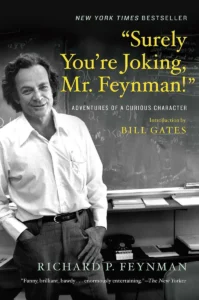
Surely You’re Joking, Mr. Feynman! is on both Brin’s and Page’s lists, and the reasons are the same. Feynman was a physicist who refused to accept anything on authority, derived everything from first principles, and treated every field as equally interesting. Brin and Page built Google the same way: starting from the question of how to measure the importance of a web page rather than accepting the existing approaches. Feynman’s playful, anti-authoritarian approach to knowledge is embedded in Google’s DNA.
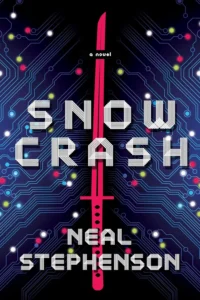
Snow Crash by Neal Stephenson invented the word “metaverse” and depicted a future where computing, linguistics, and neuroscience collide. Brin studied computer science with a mathematical bent, but his interests have always been broader than code. Snow Crash treats information as a virus, language as a programming language for the brain, and the internet as a space where reality and fiction blur. For someone who built the world’s most powerful information retrieval system, a novel about information as a force of nature is not entertainment. It is occupational reading.
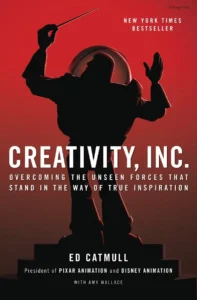
Creativity, Inc. by Ed Catmull describes how Pixar maintained creative quality while scaling. Catmull’s central insight is that creative teams need candor and psychological safety more than they need process. Brin came back to Google specifically because the AI race required the kind of creative urgency that bureaucracy kills. Catmull’s book is about how to keep that urgency alive inside a large organization, which is exactly the challenge Brin faces working on Gemini inside a company with over 180,000 employees.
Books on philosophy and meaning Sergey Brin recommends
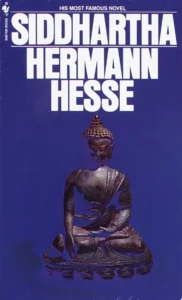
Siddhartha by Hermann Hesse is a novel about a young man who searches for enlightenment through asceticism, wealth, pleasure, and eventually finds it by sitting beside a river and listening. Brin has lived multiple versions of his own career: researcher, entrepreneur, billionaire, retiree, and now hands-on AI engineer again. Siddhartha’s message is that wisdom does not come from any single phase of life. It comes from living through all of them and paying attention to what each one teaches you.
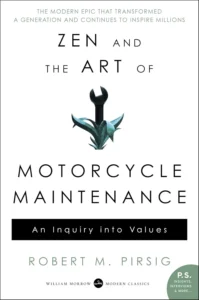
Zen and the Art of Motorcycle Maintenance by Robert Pirsig is about quality, the thing you recognize when you encounter it but cannot define. Brin’s return to Google was driven by recognizing quality in the AI work being done. He has said he is drawn to the “scientific interest” of the field. Pirsig would call that an encounter with quality so strong it pulls you out of retirement.
The Stranger by Albert Camus is the darkest book on this list. A man feels nothing at his mother’s funeral and later kills someone without understanding why. Camus was exploring absurdism, the idea that life has no inherent meaning. Brin, whose family fled Soviet antisemitism and who built one of the most consequential companies in history, recommending a book about meaninglessness is not nihilism. It is the reading of someone who has thought seriously about whether organizing the world’s information actually answers the question of what the information is for.
The personal and unexpected picks on Sergey Brin’s reading list
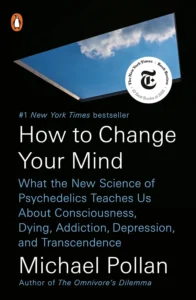
How to Change Your Mind by Michael Pollan is about psychedelic research and what it reveals about consciousness and the dissolution of ego. Brin has always been the more experimental of the two Google founders, the one who championed Google Glass, who showed up at the AGI House in Silicon Valley, who went skydiving at Google I/O to demo wearable computing. A book about expanding the boundaries of perception fits someone who has spent his career trying to see things that other people have not seen yet.
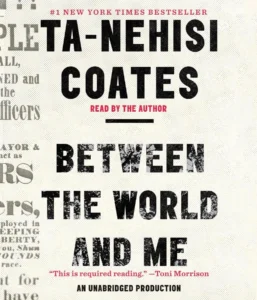
Between the World and Me by Ta-Nehisi Coates and Tiny Beautiful Things by Cheryl Strayed are the most emotionally grounded picks on a list otherwise dominated by science and philosophy. Coates writes about race and the body. Strayed writes about grief and the hard work of being alive. Brin grew up as a Soviet Jewish immigrant in America. He knows what it means to be an outsider in a system that was not built for you. These books are about different forms of that experience, and recommending them suggests he reads to understand lives that are nothing like his own.
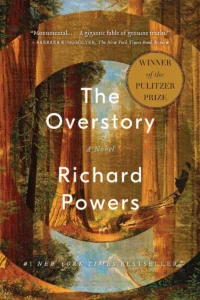
The Overstory by Richard Powers is a novel about trees and the people who try to protect them. It is sweeping, interconnected, and fundamentally about systems that operate on timescales humans struggle to perceive. Brin builds systems that process billions of queries per second. Powers writes about systems that grow one ring per year. The contrast is the point. Not everything worth understanding moves at the speed of a search query.
How Sergey Brin’s reading list connects to his return to Google
Brin left Google because the company was mature and running fine without him. He came back because AI made it feel like a startup again. His reading list captures both modes. The science books and Feynman reflect the curious, playful mind that built Google in a dorm room. The philosophy books reflect someone who has spent enough time away to ask what any of it means. And the fiction, Siddhartha and The Overstory and The Stranger, reflects a mind that knows the most important patterns are not always in the data.
He left the Soviet Union at six, co-built the largest information system in human history, stepped away, and came back because the next version of that system was too interesting to miss. His reading list is the library of someone who has never stopped being curious, even when he could afford to stop everything else.
