






What Tim Cook’s book recommendations tell you about Apple’s CEO
Look at this list and count how many books are about technology. There is one, maybe, depending on how you define it. The rest are about civil rights leaders, moral philosophy, human psychology, food ethics, and a Cold War-era novel about weight and meaning. This is the reading list of the CEO of the most valuable technology company on earth, and it barely mentions technology at all.
That tells you almost everything you need to know about how Tim Cook thinks.
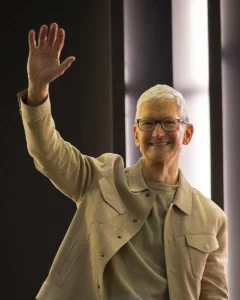
Cook grew up in Robertsdale, Alabama, a small town in the rural south during the 1960s and 70s. He has talked about witnessing the violent end of the segregation era as a child, including seeing a cross burned on the lawn of a Black family’s home. He went to Auburn for undergrad, got an MBA from Duke, and then spent twelve years at IBM learning operations and supply chain management. He worked briefly at Compaq before Steve Jobs recruited him to Apple in 1998. Cook overhauled Apple’s supply chain so thoroughly that it became the model for the entire hardware industry. When Jobs resigned in August 2011 due to his failing health, Cook became CEO. Jobs died six weeks later.
In 2014, Cook became the first Fortune 500 CEO to publicly come out as gay. He has since used his position to advocate for LGBTQ rights, privacy legislation, environmental sustainability, and immigration reform. He has said he plans to give away his entire fortune. His reading list reflects all of this: a person whose values were formed long before he arrived in Silicon Valley and who has never fully adopted the Valley’s usual preoccupations.
Tim Cook’s books on civil rights and social justice
The most revealing cluster on this list is the civil rights books. There are four of them, and they span from Mahatma Gandhi to Bobby Kennedy to the modern experience of being Black in America.
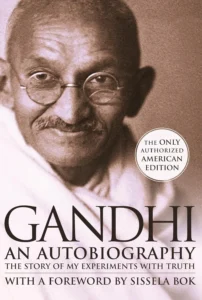
The Story of My Experiments with Truth is Gandhi’s autobiography. It is not a political manifesto. It is a deeply personal account of a man trying to live according to his principles and failing repeatedly before getting closer. Gandhi writes about his struggles with ego, anger, and self-discipline with a candor that most public figures avoid. Cook has cited Gandhi’s influence on his own thinking about leadership and the responsibility that comes with power. For a CEO who has taken Apple into public fights over encryption, user privacy, and environmental policy, a book about the cost of standing on principle is not academic.
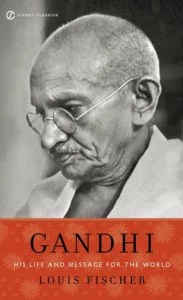
Gandhi by an unspecified author (likely the biography by Louis Fischer or another prominent biographer) gives the external view of the same life. Reading it alongside the autobiography gives you both the inside and outside of how a person’s actions look when they are driven by moral conviction rather than market dynamics.
March by John Lewis is a graphic novel memoir about Lewis’s experience as a young civil rights activist, including his role in organizing the Freedom Rides and the march across the Edmund Pettus Bridge in Selma. Cook grew up in Alabama. He knows the geography of these events personally. Lewis’s book is about what it costs, physically and emotionally, to resist injustice when the people in power want you to stop. Cook has talked about Lewis’s influence on his decision to come out publicly, framing it as an obligation to use his platform for something that mattered more than his own comfort.
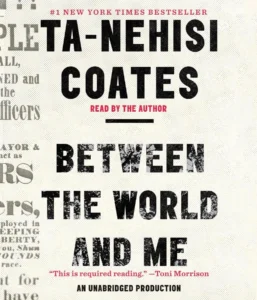
Between the World and Me by Ta-Nehisi Coates is written as a letter from Coates to his teenage son about what it means to live in a Black body in America. It is personal, angry, and uninterested in offering white readers reassurance. Cook recommending this book is a statement. It is not a book that tells you how to fix racism. It is a book that tells you what racism feels like from the inside. For a white CEO from Alabama who runs a company with operations in dozens of countries, choosing to recommend this book over a more comfortable option says something about what he thinks his audience needs to hear.
Books on leadership and strategy Tim Cook recommends
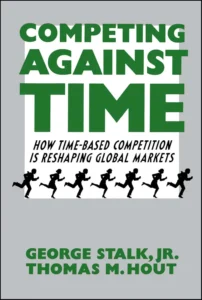
Competing Against Time by George Stalk and Thomas Hout is the most technical business book on this list, and it is directly connected to what Cook did at Apple before becoming CEO. The book’s argument is that speed, specifically the speed at which a company can move products from concept to customer, is the most undervalued competitive advantage. Cook’s entire career at Apple was built on this idea. He reduced Apple’s inventory from months to days. He negotiated exclusive deals with suppliers that locked competitors out of critical components. He turned the supply chain from a back-office function into a strategic weapon. This book is the intellectual foundation for that work.
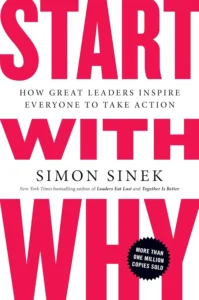
Start with Why by Simon Sinek argues that the most successful organizations are driven by a clear sense of purpose, not just by what they make or how they make it. Jobs was Apple’s “why” for decades. When Cook took over, the question everyone asked was whether Apple’s purpose would survive without its founder. Cook’s answer has been to anchor Apple’s identity in values: privacy, sustainability, accessibility, and education. Whether those values are as compelling as Jobs’s product obsession is debatable, but the strategy of leading with purpose rather than products comes straight from Sinek’s framework.
The Art of War by Sun Tzu is on a lot of CEO reading lists, but Cook’s version of it is worth noting. Cook does not run Apple like a general launching attacks. He runs it like a general managing supply lines. Sun Tzu’s most famous insight is not about combat. It is about winning without fighting, about positioning yourself so well that your opponent cannot compete. Cook’s supply chain strategy, locking up component supply years in advance so rivals could not access the same parts at the same price, is one of the best modern examples of this principle in practice.
Tim Cook’s books on psychology and personal development
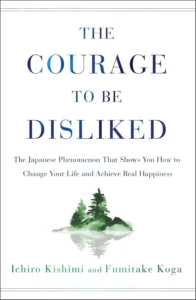
The Courage to Be Disliked is a Japanese book that presents Alfred Adler’s psychology as a conversation between a philosopher and a young student. Adler’s central idea is that you are not determined by your past and that seeking approval from others is the root of most unhappiness. Cook came out publicly in a culture, both Silicon Valley and corporate America, where that was still considered risky in 2014. A book about rejecting the need for approval resonates differently when you have actually done something you knew some people would not approve of.
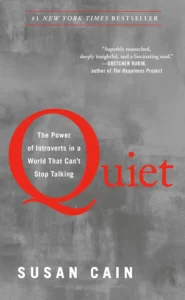
Quiet by Susan Cain is about the power of introverts. Cook is famously understated. He does not give fiery keynotes or dramatic product reveals the way Jobs did. He speaks calmly, listens carefully, and builds consensus rather than issuing orders. Employees have described his style as democratic, the opposite of Jobs’s autocratic approach. Cain’s book validates the idea that quiet leadership is not weak leadership, which is something Cook had to prove every single quarter during his first years as CEO while people compared him unfavorably to his predecessor.
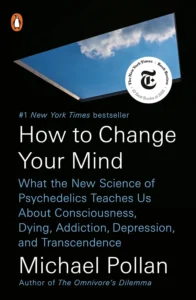
How to Change Your Mind by Michael Pollan is about psychedelic research and what it reveals about consciousness, ego dissolution, and mental health. It is a surprising pick for a Fortune 500 CEO, but Cook has always been more open-minded than his buttoned-up reputation suggests. Pollan’s book is ultimately about questioning assumptions you did not know you had, which is a useful skill for anyone running a company that needs to reinvent itself every few years.
The unexpected books on Tim Cook’s reading list
Eating Animals by Jonathan Safran Foer is about the moral and environmental consequences of industrial farming. Cook has pushed Apple toward carbon neutrality and hired the former head of the EPA to lead the company’s environmental initiatives. A book about the ethics of food production connects to the broader theme of corporate responsibility that defines Cook’s tenure.
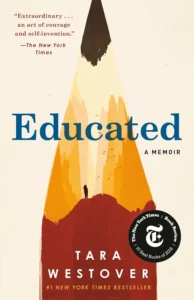
Educated by Tara Westover is a memoir about a woman who grew up in a survivalist family in Idaho, never attended school, and eventually earned a PhD from Cambridge. It is a book about the power of education to transform a life, and about the painful process of leaving behind a family and community that does not want you to change. Cook, who grew up in a small southern town and ended up running the world’s most valuable company, presumably sees something of his own trajectory in Westover’s story, even if the specifics are different.
The Unbearable Lightness of Being by Milan Kundera is the most literary pick on the list. Set in Prague during the Soviet invasion, it is a novel about love, freedom, and the question of whether our choices matter if we only live once. Kundera argues that without repetition, our decisions have no weight, a concept he calls “lightness.” It is a strange book for a CEO to recommend, and that is exactly why it stands out. It suggests Cook thinks about questions that have nothing to do with quarterly earnings or product roadmaps.
How Tim Cook’s reading list connects to his leadership at Apple
Most tech CEO reading lists are heavy on strategy, innovation, and optimization. Cook’s is heavy on justice, conscience, and what it means to live a good life. The civil rights books tell you where his moral compass was set. The psychology books tell you how he manages himself. The business books are there, but they are outnumbered by books about values, and that ratio is the whole story of his tenure at Apple.
Cook took over a company defined by one man’s taste and vision and turned it into something more institutional, more values-driven, and more openly political than Jobs would probably have allowed. You can argue about whether that has been good or bad for the products. But his reading list makes clear that the shift was not accidental. It was the natural result of a person who reads Gandhi and John Lewis and Ta-Nehisi Coates being given the most powerful platform in consumer technology and deciding to use it for more than selling phones.
