
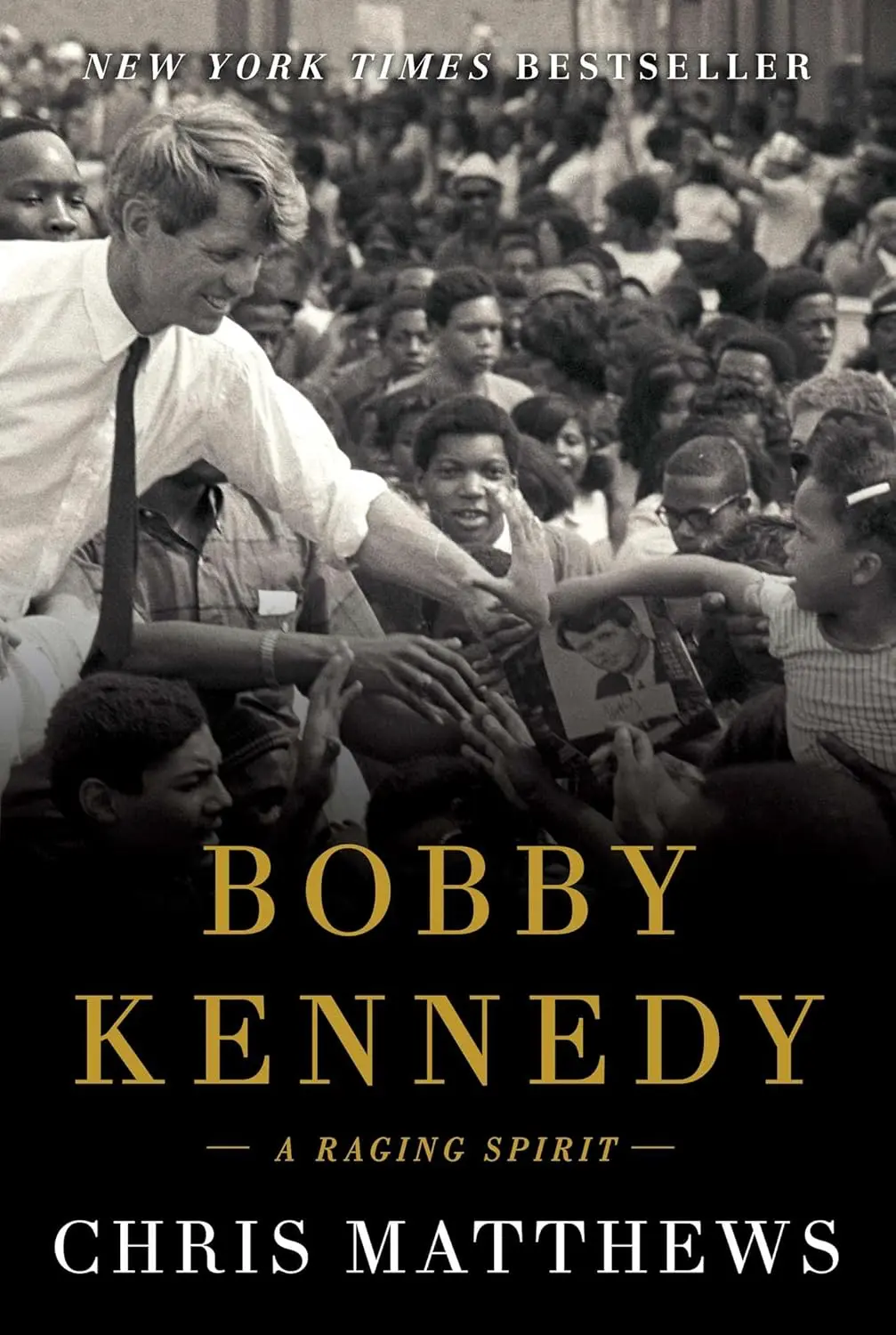
Robert F. Kennedy was the seventh of nine children, the runt of a family that prized physical toughness and competitive fire. His father Joe Sr. favored the older sons, Joe Jr. and Jack. Bobby was smaller, quieter, and less obviously talented. He was also the most determined of all of them. When he had the chance to become a naval officer like Jack, he turned it down and enlisted as a common seaman, a decision that would shape his politics for the rest of his life.
Chris Matthews, who spent twenty years hosting Hardball on MSNBC and previously served as a speechwriter for President Carter and a top aide to House Speaker Tip O’Neill, has spent decades studying the Kennedy family. Bobby Kennedy draws on extensive interviews and archival research to trace RFK’s evolution from a shy, devout Catholic kid to the ruthless campaign manager who got his brother elected president, to the grief-stricken man who emerged from JFK’s assassination as something no one expected: a political leader who could reach across racial and economic lines in ways that no one else in American politics could manage.
The book covers Bobby’s early career as counsel to Senator Joe McCarthy’s committee, a chapter that has always complicated his legacy. Matthews does not shy away from it. He follows Bobby into the Justice Department under JFK, where as attorney general he took on organized crime and, more reluctantly at first, the cause of civil rights. The Bay of Pigs, the Cuban Missile Crisis, and the complicated relationship between the Kennedys and J. Edgar Hoover all get detailed treatment.
The strongest chapters cover the period after JFK’s assassination. Bobby was destroyed by it. He retreated into grief, reading Greek tragedies and Albert Camus, trying to make sense of suffering on a personal level before he could return to public life. When he did return, first as a senator from New York and then as a presidential candidate, he had changed. The man who ran for president in 1968 was not the calculating operative who had managed his brother’s campaigns. He was someone who could speak to Black audiences in inner cities and white working-class voters in Appalachia, and both groups believed he meant what he said.
Matthews writes with the energy of a political journalist who has watched hundreds of campaigns and knows what makes them work. His descriptions of Bobby’s campaign stops, the crowds, the intensity of the response, the physical danger that was visible to everyone around him, read like dispatches from someone who was there.
Tim Cook has cited the book. For readers interested in leadership, political courage, and how personal transformation can reshape a public career, Bobby Kennedy offers a portrait of someone who became a better leader by going through the worst experience of his life.
