



Tim Cook

Tim Cook Book Recommendations (25 Books)

Tim Cook became CEO of Apple in August 2011, succeeding Steve Jobs. Before joining Apple in 1998, he worked at IBM for 12 years and briefly at Compaq. Cook is credited with overhauling Apple's supply chain, which turned the company into one of the most efficient hardware operations in the world.

Learn more about the founder on Wikipedia

*post may include affiliate links, view our Disclaimer for more info.

Share:

Tim Cook Reading List:

FREE Notion Book Tracker

+9 recommended books for founders inside

by Unseen Founder

Notion Book Tracker helps you organize what you read, save key insights, and build your personal founder library. It also includes carefully selected books recommended for founders.

Get FREE Now
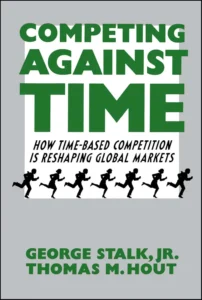
Competing Against Time

Competing Against Time

How Time-Based Competition Is Reshaping Global Markets

Book by George Stalk Jr. and Thomas M. Hout

Stalk and Hout, both Boston Consulting Group consultants, argue that the companies that compress time in their operations, from product development to order fulfillment, gain advantages that competitors cannot easily replicate. The book uses case studies from Toyota, Walmart, and others.

View on Amazon
The War of Art

The Art of War

Book by Sun Tzu

Written over 2,500 years ago, Sun Tzu's treatise on military strategy has been adopted by business leaders, coaches, and negotiators worldwide. The text covers positioning, timing, information advantage, and knowing when not to fight.

View on Amazon
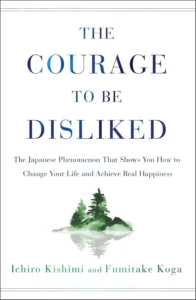
The Courage to Be Disliked

The Courage to Be Disliked

The Japanese Phenomenon That Shows You How to Change Your Life and Achieve Real Happiness

Book by Ichiro Kishimi and Fumitake Koga

Written as a Socratic dialogue between a philosopher and a young man, the book presents the psychology of Alfred Adler as an alternative to Freud. The core argument: your past does not determine your present, other people's opinions are not your problem, and you are free to change at any time.

View on Amazon
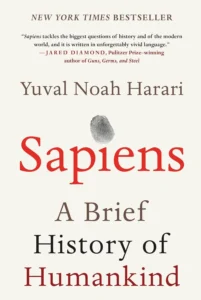
Sapiens

Sapiens

A Brief History of Humankind

Book by Yuval Noah Harari

Harari traces 70,000 years of human history through three turning points: the Cognitive Revolution, the Agricultural Revolution, and the Scientific Revolution. The book challenges standard narratives about how Homo sapiens came to dominate the planet.

View on Amazon
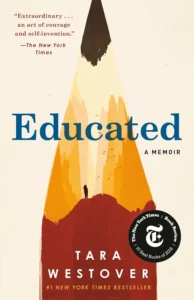
Educated

Educated

A Memoir

Book by Tara Westover

Westover grew up in rural Idaho with survivalist parents who did not send their children to school. She taught herself enough to enter Brigham Young University at 17, and eventually earned a PhD from Cambridge. The memoir is about the price of reinventing yourself when your family and past resist every step.

View on Amazon
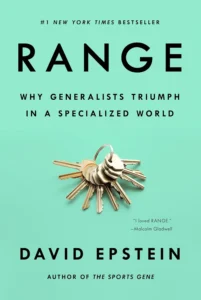
Range

Range

Why Generalists Triumph in a Specialized World

Book by David Epstein

Epstein argues against the popular idea that early specialization is the path to success. Using evidence from sports, music, science, and business, the book makes the case that people who explore broadly before committing tend to be more creative, more adaptable, and more successful long-term.

View on Amazon
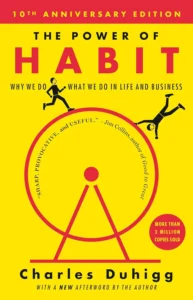
The Power of Habit

The Power of Habit

Why We Do What We Do in Life and Business

Book by Charles Duhigg

Duhigg explains the science behind how habits form, using a three-part loop: cue, routine, reward. The book covers individual habits, organizational habits, and societal habits, showing how understanding this loop allows you to change behavior at every level.

View on Amazon
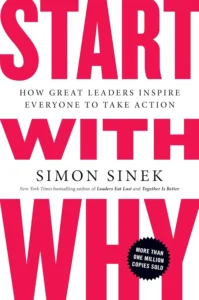
Start with Why

Start with Why

How Great Leaders Inspire Everyone to Take Action

Book by Simon Sinek

Sinek argues that the most inspiring leaders and companies communicate by starting with why they do what they do, not what they do or how they do it. The book introduces the Golden Circle framework and uses examples from Apple, Martin Luther King Jr., and the Wright brothers.

View on Amazon
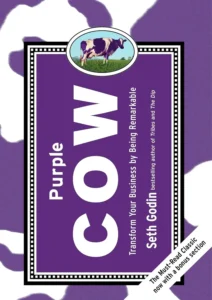
Purple Cow

Purple Cow

Transform Your Business by Being Remarkable

Book by Seth Godin

Godin's argument is simple: in a world of too many choices, the only products that get noticed are the ones that are remarkable, meaning worth remarking about. The book challenges businesses to stop playing it safe and start building things that people cannot help talking about.

View on Amazon
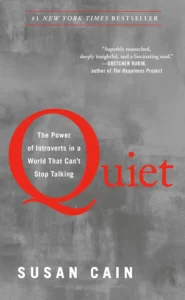
Quiet

Quiet

The Power of Introverts in a World That Can't Stop Talking

Book by Susan Cain

Cain argues that Western culture, especially American business culture, is biased toward extroversion in ways that waste the strengths of the one-third to one-half of the population that is introverted. The book draws on neuroscience, psychology, and case studies to make the case for quiet leadership.

View on Amazon
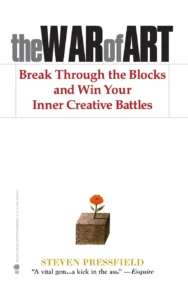
The War of Art

The War of Art

Break Through the Blocks and Win Your Inner Creative Battles

Book by Steven Pressfield

Pressfield identifies the internal force that stops people from doing their work and calls it Resistance. The book is a short, blunt manual on recognizing procrastination, self-doubt, and distraction for what they are, and showing up anyway.

View on Amazon
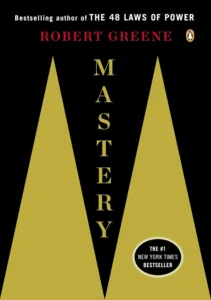
Mastery

Mastery

Book by Robert Greene

Greene studies the lives of historical and contemporary masters, from Leonardo da Vinci to Paul Graham, to identify the common pattern behind achieving the highest level of skill. The path involves an apprenticeship phase, a creative-active phase, and eventually a period where intuition and skill merge.

View on Amazon
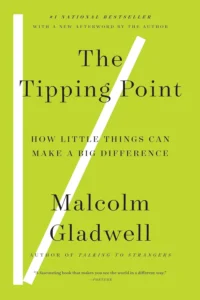
The Tipping Point

The Tipping Point

How Little Things Can Make a Big Difference

Book by Malcolm Gladwell

Malcolm Gladwell's debut explores why some ideas, products, and behaviors spread like epidemics while others fade. The book introduces the concepts of Connectors, Mavens, and Salesmen, and explains how small, targeted changes can trigger large-scale social shifts.

View on Amazon
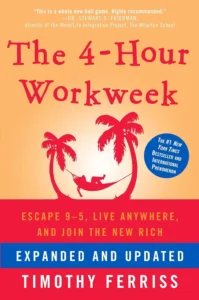
The 4-Hour Workweek

The 4-Hour Workweek

Escape 9-5, Live Anywhere, and Join the New Rich

Book by Tim Ferriss

Ferriss lays out a system for escaping the conventional 9-to-5 by automating income, outsourcing tasks, and designing a lifestyle around freedom rather than retirement. The book is part manifesto, part tactical playbook for people who want to work less and live more.

View on Amazon
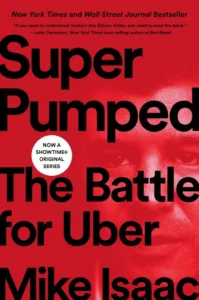
Super Pumped

Super Pumped

The Battle for Uber

Book by Mike Isaac

New York Times reporter Mike Isaac documents Uber's rise under Travis Kalanick, from scrappy startup to the most valuable private company in the world, and the scandals that eventually forced Kalanick out. The book is a study in how aggressive culture can both build and destroy a company.

View on Amazon
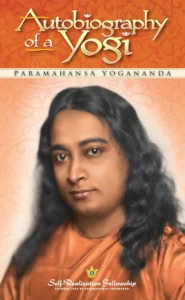
Autobiography of a Yogi

Autobiography of a Yogi

Book by Paramahansa Yogananda

Yogananda's 1946 memoir introduced Indian spirituality and meditation to Western audiences. Steve Jobs read it every year and had copies given to everyone who attended his memorial service. The book covers the author's spiritual journey from childhood in India through founding a yoga school in America.

View on Amazon
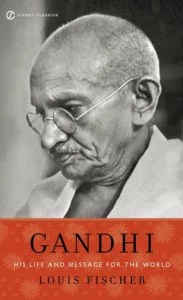
Gandhi

Gandhi

His Life and Message for the World

Book by Louis Fischer

Louis Fischer's short biography of Mahatma Gandhi, first published in 1954, remains one of the most widely read introductions to Gandhi's life and philosophy. Fischer, an American journalist, knew Gandhi personally and had access to him during the Indian independence movement.

View on Amazon
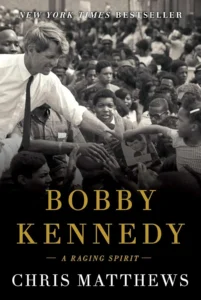
Bobby Kennedy

Bobby Kennedy

A Raging Spirit

Book by Chris Matthews

MSNBC's Chris Matthews, a former presidential speechwriter and longtime Kennedy biographer, traces Bobby Kennedy's arc from overlooked younger brother to attorney general to the 1968 presidential candidate whose 82-day campaign, cut short by assassination, became one of the most electrifying runs in American political history.

View on Amazon

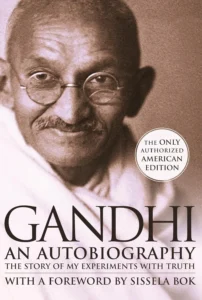
The Story of My Experiments with Truth

Book by Mahatma Gandhi

Gandhi's autobiography, written in the 1920s while he was already leading India's independence movement, covers his early life in Gujarat, his legal career in South Africa, his discovery of nonviolent resistance, and his experiments with diet, celibacy, and communal living. The book is less a political memoir than a record of one person's relentless effort to align his actions with his principles.

View on Amazon
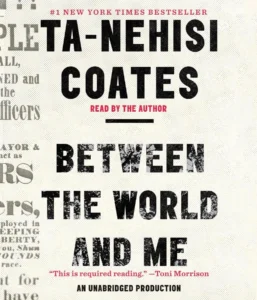
Between the World and Me

Between the World and Me

Book by Ta-Nehisi Coates

Written as a letter to his teenage son, Ta-Nehisi Coates reflects on what it means to live in a Black body in America. The book draws from history, personal experience, and the death of a college friend to confront questions about race, fear, and the American myth. It won the National Book Award in 2015.

View on Amazon
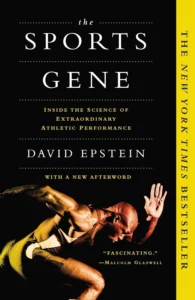
The Sports Gene

The Sports Gene

Inside the Science of Extraordinary Athletic Performance

Book by David Epstein

David Epstein investigates whether elite athletes are born or made, traveling from Jamaica to Kenya to the Arctic to answer the question. The book dismantles the 10,000-hour rule and reveals how genetics, training, culture, and body type interact to produce extraordinary performance.

View on Amazon
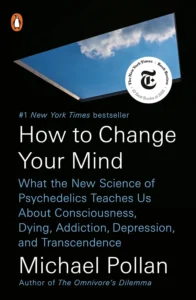
How to Change Your Mind

How to Change Your Mind

What the New Science of Psychedelics Teaches Us About Consciousness, Dying, Addiction, Depression, and Transcendence

Book by Michael Pollan

Michael Pollan traces the history of psychedelic research from the 1950s through its suppression and current revival, then volunteers as a subject himself. The book is part scientific journalism, part memoir of altered states, and part argument for taking consciousness more seriously.

View on Amazon

The Unbearable Lightness of Being

Book by Milan Kundera

Milan Kundera's 1984 novel follows two couples in Prague during the Soviet invasion of Czechoslovakia, but the real subject is the weight of choices in a life that only happens once. Part love story, part philosophical essay, part political novel, it resists fitting neatly into any single category.

View on Amazon
Eating Animals

Eating Animals

Book by Jonathan Safran Foer

Jonathan Safran Foer, a novelist, spent three years investigating factory farming after the birth of his first child. The resulting book mixes personal narrative, investigative reporting, and moral argument to ask a question most people would rather not think about: what are we actually doing when we eat animals?

View on Amazon

What Tim Cook’s book recommendations tell you about Apple’s CEO

Look at this list and count how many books are about technology. There is one, maybe, depending on how you define it. The rest are about civil rights leaders, moral philosophy, human psychology, food ethics, and a Cold War-era novel about weight and meaning. This is the reading list of the CEO of the most valuable technology company on earth, and it barely mentions technology at all.

That tells you almost everything you need to know about how Tim Cook thinks.

Cook grew up in Robertsdale, Alabama, a small town in the rural south during the 1960s and 70s. He has talked about witnessing the violent end of the segregation era as a child, including seeing a cross burned on the lawn of a Black family’s home. He went to Auburn for undergrad, got an MBA from Duke, and then spent twelve years at IBM learning operations and supply chain management. He worked briefly at Compaq before Steve Jobs recruited him to Apple in 1998. Cook overhauled Apple’s supply chain so thoroughly that it became the model for the entire hardware industry. When Jobs resigned in August 2011 due to his failing health, Cook became CEO. Jobs died six weeks later.

In 2014, Cook became the first Fortune 500 CEO to publicly come out as gay. He has since used his position to advocate for LGBTQ rights, privacy legislation, environmental sustainability, and immigration reform. He has said he plans to give away his entire fortune. His reading list reflects all of this: a person whose values were formed long before he arrived in Silicon Valley and who has never fully adopted the Valley’s usual preoccupations.

Tim Cook’s books on civil rights and social justice

The most revealing cluster on this list is the civil rights books. There are four of them, and they span from Mahatma Gandhi to Bobby Kennedy to the modern experience of being Black in America.

The Story of My Experiments with Truth is Gandhi’s autobiography. It is not a political manifesto. It is a deeply personal account of a man trying to live according to his principles and failing repeatedly before getting closer. Gandhi writes about his struggles with ego, anger, and self-discipline with a candor that most public figures avoid. Cook has cited Gandhi’s influence on his own thinking about leadership and the responsibility that comes with power. For a CEO who has taken Apple into public fights over encryption, user privacy, and environmental policy, a book about the cost of standing on principle is not academic.

Gandhi by an unspecified author (likely the biography by Louis Fischer or another prominent biographer) gives the external view of the same life. Reading it alongside the autobiography gives you both the inside and outside of how a person’s actions look when they are driven by moral conviction rather than market dynamics.

March by John Lewis is a graphic novel memoir about Lewis’s experience as a young civil rights activist, including his role in organizing the Freedom Rides and the march across the Edmund Pettus Bridge in Selma. Cook grew up in Alabama. He knows the geography of these events personally. Lewis’s book is about what it costs, physically and emotionally, to resist injustice when the people in power want you to stop. Cook has talked about Lewis’s influence on his decision to come out publicly, framing it as an obligation to use his platform for something that mattered more than his own comfort.

Between the World and Me by Ta-Nehisi Coates is written as a letter from Coates to his teenage son about what it means to live in a Black body in America. It is personal, angry, and uninterested in offering white readers reassurance. Cook recommending this book is a statement. It is not a book that tells you how to fix racism. It is a book that tells you what racism feels like from the inside. For a white CEO from Alabama who runs a company with operations in dozens of countries, choosing to recommend this book over a more comfortable option says something about what he thinks his audience needs to hear.

Books on leadership and strategy Tim Cook recommends

Competing Against Time by George Stalk and Thomas Hout is the most technical business book on this list, and it is directly connected to what Cook did at Apple before becoming CEO. The book’s argument is that speed, specifically the speed at which a company can move products from concept to customer, is the most undervalued competitive advantage. Cook’s entire career at Apple was built on this idea. He reduced Apple’s inventory from months to days. He negotiated exclusive deals with suppliers that locked competitors out of critical components. He turned the supply chain from a back-office function into a strategic weapon. This book is the intellectual foundation for that work.

Start with Why by Simon Sinek argues that the most successful organizations are driven by a clear sense of purpose, not just by what they make or how they make it. Jobs was Apple’s “why” for decades. When Cook took over, the question everyone asked was whether Apple’s purpose would survive without its founder. Cook’s answer has been to anchor Apple’s identity in values: privacy, sustainability, accessibility, and education. Whether those values are as compelling as Jobs’s product obsession is debatable, but the strategy of leading with purpose rather than products comes straight from Sinek’s framework.

The Art of War by Sun Tzu is on a lot of CEO reading lists, but Cook’s version of it is worth noting. Cook does not run Apple like a general launching attacks. He runs it like a general managing supply lines. Sun Tzu’s most famous insight is not about combat. It is about winning without fighting, about positioning yourself so well that your opponent cannot compete. Cook’s supply chain strategy, locking up component supply years in advance so rivals could not access the same parts at the same price, is one of the best modern examples of this principle in practice.

Tim Cook’s books on psychology and personal development

The Courage to Be Disliked is a Japanese book that presents Alfred Adler’s psychology as a conversation between a philosopher and a young student. Adler’s central idea is that you are not determined by your past and that seeking approval from others is the root of most unhappiness. Cook came out publicly in a culture, both Silicon Valley and corporate America, where that was still considered risky in 2014. A book about rejecting the need for approval resonates differently when you have actually done something you knew some people would not approve of.

Quiet by Susan Cain is about the power of introverts. Cook is famously understated. He does not give fiery keynotes or dramatic product reveals the way Jobs did. He speaks calmly, listens carefully, and builds consensus rather than issuing orders. Employees have described his style as democratic, the opposite of Jobs’s autocratic approach. Cain’s book validates the idea that quiet leadership is not weak leadership, which is something Cook had to prove every single quarter during his first years as CEO while people compared him unfavorably to his predecessor.

How to Change Your Mind by Michael Pollan is about psychedelic research and what it reveals about consciousness, ego dissolution, and mental health. It is a surprising pick for a Fortune 500 CEO, but Cook has always been more open-minded than his buttoned-up reputation suggests. Pollan’s book is ultimately about questioning assumptions you did not know you had, which is a useful skill for anyone running a company that needs to reinvent itself every few years.

The unexpected books on Tim Cook’s reading list

Eating Animals by Jonathan Safran Foer is about the moral and environmental consequences of industrial farming. Cook has pushed Apple toward carbon neutrality and hired the former head of the EPA to lead the company’s environmental initiatives. A book about the ethics of food production connects to the broader theme of corporate responsibility that defines Cook’s tenure.

Educated by Tara Westover is a memoir about a woman who grew up in a survivalist family in Idaho, never attended school, and eventually earned a PhD from Cambridge. It is a book about the power of education to transform a life, and about the painful process of leaving behind a family and community that does not want you to change. Cook, who grew up in a small southern town and ended up running the world’s most valuable company, presumably sees something of his own trajectory in Westover’s story, even if the specifics are different.

The Unbearable Lightness of Being by Milan Kundera is the most literary pick on the list. Set in Prague during the Soviet invasion, it is a novel about love, freedom, and the question of whether our choices matter if we only live once. Kundera argues that without repetition, our decisions have no weight, a concept he calls “lightness.” It is a strange book for a CEO to recommend, and that is exactly why it stands out. It suggests Cook thinks about questions that have nothing to do with quarterly earnings or product roadmaps.

How Tim Cook’s reading list connects to his leadership at Apple

Most tech CEO reading lists are heavy on strategy, innovation, and optimization. Cook’s is heavy on justice, conscience, and what it means to live a good life. The civil rights books tell you where his moral compass was set. The psychology books tell you how he manages himself. The business books are there, but they are outnumbered by books about values, and that ratio is the whole story of his tenure at Apple.

Cook took over a company defined by one man’s taste and vision and turned it into something more institutional, more values-driven, and more openly political than Jobs would probably have allowed. You can argue about whether that has been good or bad for the products. But his reading list makes clear that the shift was not accidental. It was the natural result of a person who reads Gandhi and John Lewis and Ta-Nehisi Coates being given the most powerful platform in consumer technology and deciding to use it for more than selling phones.