
Larry Page

Larry Page Book Recommendations (27 Books)

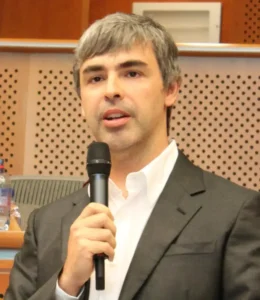
Larry Page co-founded Google in 1998 with Sergey Brin while both were PhD students at Stanford. He served as CEO of Google and later as CEO of its parent company Alphabet until stepping down in 2019. Page led the development of Google's original search algorithm, PageRank, which ranked web pages by their link structure. He is one of the wealthiest people in the world.

Learn more about the founder on Wikipedia

*post may include affiliate links, view our Disclaimer for more info.

Share:

Larry Page Reading List:

FREE Notion Book Tracker

+9 recommended books for founders inside

by Unseen Founder

Notion Book Tracker helps you organize what you read, save key insights, and build your personal founder library. It also includes carefully selected books recommended for founders.

Get FREE Now
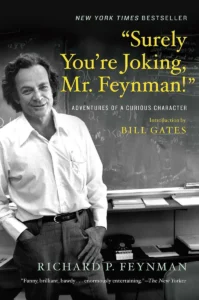
Surely You're Joking, Mr. Feynman!

Surely You’re Joking, Mr. Feynman!

Adventures of a Curious Character

Book by Richard Feynman

Nobel physicist Richard Feynman recounts a life spent chasing curiosity wherever it led, from cracking safes at Los Alamos to learning to draw nudes to playing bongo drums in a samba band. The book reads like a collection of adventures rather than a standard memoir.

View on Amazon
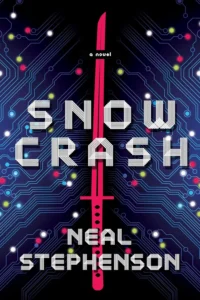
Snow Crash

Snow Crash

Book by Neal Stephenson

Stephenson's 1992 science fiction novel predicted virtual reality, avatars, digital currencies, and the fragmentation of government decades before these concepts became real. The story follows a hacker/pizza deliveryman through a fractured America where corporations have replaced the federal government.

View on Amazon
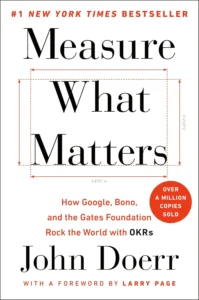
Measure What Matters

Measure What Matters

How Google, Bono, and the Gates Foundation Rock the World with OKRs

Book by John Doerr

Legendary venture capitalist John Doerr explains the OKR (Objectives and Key Results) framework that he introduced to Google in 1999 and that has since been adopted by companies from Intel to Spotify. The book shows how setting ambitious goals with measurable results keeps organizations focused and aligned.

View on Amazon
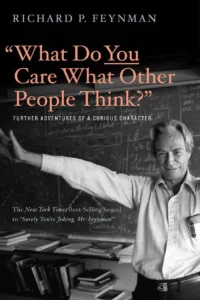
What Do You Care What Other People Think?

What Do You Care What Other People Think?

Further Adventures of a Curious Character

Book by Richard Feynman

Richard Feynman's second memoir combines personal stories about his first wife Arlene with his account of investigating the Challenger shuttle disaster. The book shows Feynman's independent thinking in action, both in his personal life and in his refusal to accept institutional explanations.

View on Amazon
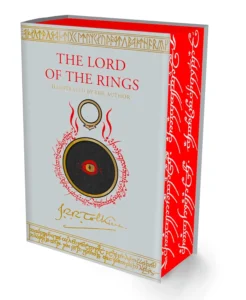
The Lord of the Rings

The Lord of the Rings

Book by J.R.R. Tolkien

Tolkien's epic follows a hobbit named Frodo who must carry a powerful ring across Middle-earth to destroy it. Beneath the fantasy, the story explores themes of ordinary people shouldering burdens beyond their size, the corrupting nature of power, and the value of loyalty and persistence.

View on Amazon
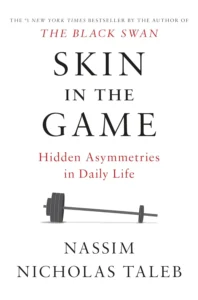
Skin in the Game

Skin in the Game

Hidden Asymmetries in Daily Life

Book by Nassim Nicholas Taleb

Taleb's argument is simple: never trust anyone who does not bear the consequences of their own advice. The book examines how risk asymmetry, where one party bears the downside while another collects the upside, corrupts systems from finance to politics to medicine.

View on Amazon
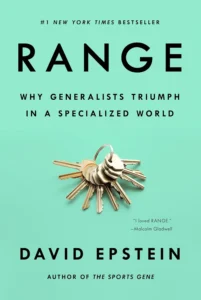
Range

Range

Why Generalists Triumph in a Specialized World

Book by David Epstein

Epstein argues against the popular idea that early specialization is the path to success. Using evidence from sports, music, science, and business, the book makes the case that people who explore broadly before committing tend to be more creative, more adaptable, and more successful long-term.

View on Amazon
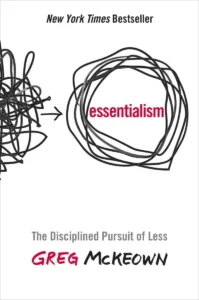
Essentialism

Essentialism

The Disciplined Pursuit of Less

Book by Greg McKeown

McKeown argues that most people spread themselves too thin by saying yes to everything, and that the highest performers are ruthless about doing fewer things better. The book offers a system for figuring out what actually matters and eliminating the rest.

View on Amazon
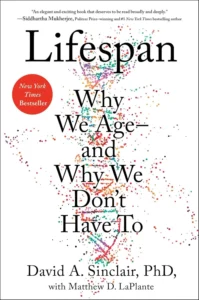
Lifespan

Lifespan

Why We Age and Why We Don't Have To

Book by David Sinclair

Harvard geneticist David Sinclair presents his research on aging as a treatable disease rather than an inevitable decline. The book covers the science behind longevity, including sirtuins, NAD+, and caloric restriction, and argues that extending healthy human lifespan is both possible and desirable.

View on Amazon
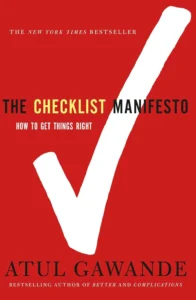
The Checklist Manifesto

The Checklist Manifesto

How to Get Things Right

Book by Atul Gawande

Surgeon and writer Atul Gawande makes the case that simple checklists can prevent errors in complex situations, from surgery to construction to aviation. The book argues that in a world of increasing complexity, the humble checklist is one of the most underused tools available.

View on Amazon
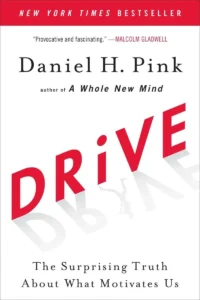
Drive

Drive

The Surprising Truth About What Motivates Us

Book by Daniel Pink

Daniel Pink draws on decades of behavioral science to argue that the traditional carrot-and-stick approach to motivation is wrong. The book makes the case that autonomy, mastery, and purpose are what actually drive people to do their best work.

View on Amazon
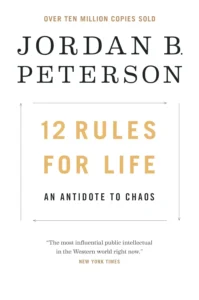
12 Rules for Life

12 Rules for Life

An Antidote to Chaos

Book by Jordan B. Peterson

Clinical psychologist Jordan Peterson presents twelve rules for living with purpose, ranging from "stand up straight with your shoulders back" to "tell the truth, or at least don't lie" to "pet a cat when you encounter one on the street." The book mixes psychology, mythology, personal stories, and philosophy.

View on Amazon
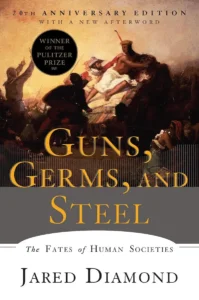
Guns, Germs, and Steel

Guns, Germs, and Steel

The Fates of Human Societies

Book by Jared Diamond

Diamond asks why European civilizations colonized the world rather than the other way around, and argues that the answer lies in geography and ecology, not in differences between peoples. The book traces how access to domesticable crops and animals determined which societies industrialized first.

View on Amazon
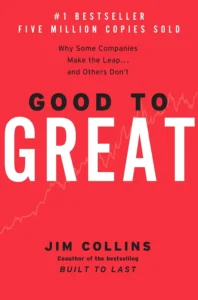
Good to Great

Good to Great

Why Some Companies Make the Leap and Others Don't

Book by Jim Collins

Collins and his research team studied companies that made the jump from average performance to sustained greatness, then compared them to similar companies that did not. The findings challenge a lot of popular management thinking, especially about the role of celebrity CEOs and dramatic turnarounds.

View on Amazon
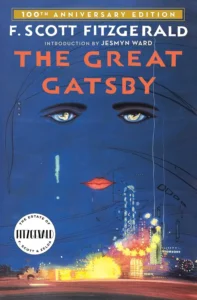
The Great Gatsby

The Great Gatsby

Book by F. Scott Fitzgerald

Fitzgerald's novel follows a mysterious millionaire who throws elaborate parties to win back a former love. Set in the 1920s, the story is about the allure and emptiness of wealth, the American dream's dark side, and the gap between who we are and who we pretend to be.

View on Amazon
Atomic Habits

Atomic Habits

An Easy & Proven Way to Build Good Habits & Break Bad Ones

Book by James Clear

A clear, actionable framework for building good habits and breaking bad ones by focusing on small, consistent changes that lead to remarkable results over time.

View on Amazon
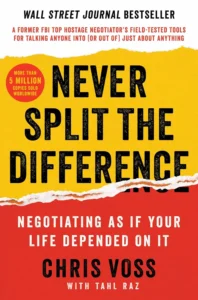
Never Split the Difference

Never Split the Difference

Negotiating As If Your Life Depended On It

Book by Chris Voss

Former FBI hostage negotiator Chris Voss shares the techniques he used in kidnapping cases and adapts them for business negotiations. The book focuses on emotional intelligence, calibrated questions, and tactical empathy rather than the rational, split-the-pie model taught in business schools.

View on Amazon
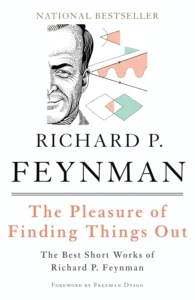
The Pleasure of Finding Things Out

The Pleasure of Finding Things Out

The Best Short Works of Richard P. Feynman

Book by Richard P. Feynman

A collection of the best interviews, lectures, and articles by Richard Feynman, the Nobel Prize-winning physicist who investigated the Challenger disaster, played bongo drums, cracked safes at Los Alamos, and explained quantum electrodynamics with diagrams he drew on napkins. Feynman was the rarest kind of genius: one who could explain what he knew.

View on Amazon
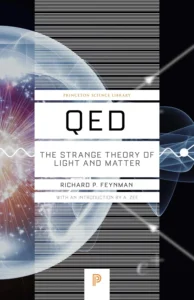
QED

QED

The Strange Theory of Light and Matter

Book by Richard Feynman

Nobel Prize-winning physicist Richard Feynman delivered four public lectures at UCLA explaining quantum electrodynamics, the theory of how light and matter interact, to a non-scientific audience using no mathematics. QED is the published version of those lectures, and it remains one of the clearest explanations of fundamental physics ever written.

View on Amazon
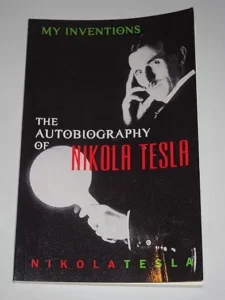
My Inventions

My Inventions

The Autobiography of Nikola Tesla

Book by Nikola Tesla

Nikola Tesla's brief autobiography, originally published as a series of magazine articles in 1919, describes his childhood in Croatia, his obsessive visualization practice, the development of the alternating current motor, and the mental processes behind his most famous inventions. It reads like a window into one of the strangest and most productive minds in engineering history.

View on Amazon
The Stranger

The Stranger

Book by Albert Camus

Albert Camus's 1942 novel opens with one of the most famous lines in literature: "Mother died today. Or maybe yesterday; I can't be sure." The narrator, Meursault, moves through life without the emotional reactions people expect of him, and that detachment eventually destroys him.

View on Amazon
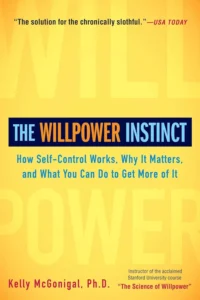
The Willpower Instinct

The Willpower Instinct

How Self-Control Works, Why It Matters, and What You Can Do to Get More of It

Book by Kelly McGonigal

Based on Stanford psychologist Kelly McGonigal's popular course "The Science of Willpower," this book breaks down the neuroscience and psychology of self-control into concrete strategies that actually work. It covers why willpower is a biological function, not a moral virtue, and how sleep, exercise, and stress directly affect your ability to stick to decisions.

View on Amazon
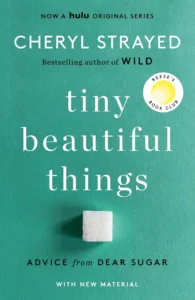
Tiny Beautiful Things

Tiny Beautiful Things

Advice on Love and Life from Dear Sugar

Book by Cheryl Strayed

Cheryl Strayed, writing anonymously as Dear Sugar on the literary website The Rumpus, answered strangers' questions about love, loss, ambition, and failure with a level of honesty that advice columns almost never reach. This collection of those columns doubles as an accidental memoir, since Strayed answered every question by pulling from the wreckage and joy of her own life.

View on Amazon
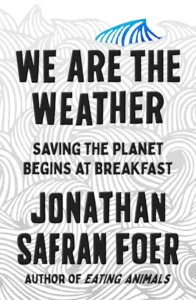
We Are the Weather

We Are the Weather

Saving the Planet Begins at Breakfast

Book by Jonathan Safran Foer

Jonathan Safran Foer's second nonfiction book makes a specific, uncomfortable argument: the single most impactful thing individuals can do about climate change is eat fewer animal products, particularly before dinner. The book is as much about why people fail to act on what they already know as it is about the climate itself.

View on Amazon
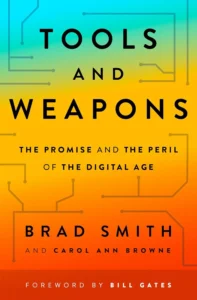
Tools and Weapons

Tools and Weapons

The Promise and the Peril of the Digital Age

Book by Brad Smith & Carol Ann Browne

Microsoft's president Brad Smith and communications head Carol Ann Browne examine how technology can serve as both a tool for progress and a weapon for harm. The book draws on behind-the-scenes accounts of Microsoft's battles with governments, cybercriminals, and its own internal debates over privacy, AI, and surveillance.

View on Amazon
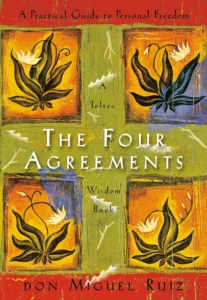
The Four Agreements

The Four Agreements

A Practical Guide to Personal Freedom

Book by Don Miguel Ruiz

Don Miguel Ruiz distills Toltec wisdom into four deceptively simple rules: be impeccable with your word, don't take anything personally, don't make assumptions, and always do your best. The book has sold over fifteen million copies and spent nearly a decade on the New York Times bestseller list.

View on Amazon

What Larry Page’s book recommendations reveal about Google’s co-founder

Twenty-seven books is a short list for someone who once described his childhood home as a mess of computers, science magazines, and Popular Science issues scattered across every surface. Larry Page has said he spent a “huge amount of time” reading as a kid. His parents were both computer science professors at Michigan State. Books were not a hobby in that house. They were the furniture.

But the list above is not a childhood reading list. It is the reading list of someone who co-founded Google, ran it as CEO, restructured the entire company into Alphabet, and then quietly stepped away in 2019 to pursue personal projects including flying cars. The books reflect that arc. There is physics, fiction, business strategy, and a handful of picks that only make sense once you know the specific obsessions that have driven Page since he was twelve years old.

That is the year he read a biography of Nikola Tesla and cried at the ending. Tesla invented alternating current, the Tesla coil, and contributed foundational work to radio, but he died broke and alone in a New York hotel room. The lesson Page took from that story was not “inventing things is great.” It was “inventing things is pointless if you cannot get them out into the world.” He has repeated that line in interviews for decades. It explains Google’s entire culture of shipping products fast, and it explains why his reading list has as many business books as science books.

Larry Page’s favorite science and physics books

The most personal picks on this list are the Richard Feynman books, and there are three of them: Surely You’re Joking, Mr. Feynman!, What Do You Care What Other People Think?, and The Pleasure of Finding Things Out. That is not casual fandom. That is someone who found a role model.

Feynman was a Nobel Prize-winning physicist who picked locks at Los Alamos for fun, taught himself to draw, played bongo drums in a samba band, and famously refused to take anything on authority. He insisted on deriving things from first principles even when the textbook answer was sitting right there. Page built Google the same way. PageRank did not improve an existing search algorithm. It started from a completely different question: what if you ranked web pages not by how many times they contained a search term, but by how many other pages linked to them? That is first-principles thinking applied to information retrieval.

Feynman’s books are also funny, which matters. They are not dry physics lectures. They are stories about a brilliant person who found everything interesting and refused to be bored. Page grew up in a Montessori school where kids were encouraged to follow their curiosity wherever it led. He has credited that education with shaping his “training of not following rules and orders, and being self-motivated.” Feynman’s books are basically Montessori for adults.

QED, also by Feynman, is the more technical one. It is a series of lectures on quantum electrodynamics written for a general audience, and it is remarkably clear for a subject that most physicists struggle to explain. Page studied computer engineering and computer science, not physics, but his interest in how things work at a fundamental level clearly extends beyond code.

The Nikola Tesla connection and why My Inventions is on the list

My Inventions by Nikola Tesla is the autobiography that started everything for Page. Tesla wrote it as a series of magazine articles in 1919, and it reads like a stream of consciousness from a mind that never turned off. Tesla describes visualizing inventions in complete detail before building them, testing them mentally until he found flaws, and only then constructing physical prototypes. He also describes his eccentric habits, his obsessive tendencies, and his total inability to commercialize his own work.

Page read this at twelve and walked away with a very specific conclusion: being a great inventor is not enough. You also need to be a great businessman, or your inventions die with you. Google’s obsession with scale, with making products available to billions of people rather than keeping them in a lab, traces directly back to this book. So does Page’s decision, reported in a 2014 Charlie Rose interview, that he would rather leave his fortune to a technology company than to a traditional charity. He believes companies that build things create more lasting change than foundations that write checks. You can disagree with that, but the logic comes straight from watching Tesla’s story play out.

Books about business strategy Larry Page recommends

Good to Great by Jim Collins studied companies that made the leap from average to exceptional and tried to figure out what they had in common. Collins found it was rarely a single brilliant strategy. It was usually disciplined people making disciplined decisions over a long period. Page ran Google with a version of this philosophy. He did not chase trends. He invested in search, advertising infrastructure, and platforms (Android, YouTube, Maps) and let them compound over years.

Measure What Matters by John Doerr is about OKRs, the goal-setting framework that Google adopted early and still uses. Doerr introduced OKRs to Page and Brin when Google had fewer than 50 employees. The system asks you to define a small number of objectives and then attach measurable key results to each one. Page’s “10X” mentality, the idea that you should aim to make something ten times better rather than ten percent better, fits naturally inside the OKR framework because it forces you to define what “ten times better” actually looks like in concrete terms.

Never Split the Difference by Chris Voss is an unusual pick for someone as private as Page. Voss is a former FBI hostage negotiator, and the book is about tactical empathy: understanding what the other side actually wants, not just what they say they want. Page is famously quiet, partly due to a vocal cord condition that makes sustained speaking difficult. Being a careful listener who chooses words precisely is not just a personality trait for him. It is a physical necessity. A book about the power of listening and strategic communication probably resonated on multiple levels.

Larry Page’s science fiction and literature picks

Snow Crash by Neal Stephenson is a 1992 novel that invented the word “metaverse” and depicted a future where people spend much of their lives in a virtual world accessed through personal avatars. It also features a protagonist who is a hacker and pizza delivery driver for the Mafia. The book is satirical, violent, and wildly imaginative. Google’s early engineers passed it around like required reading. It shaped how an entire generation of Silicon Valley builders thought about virtual worlds, digital identity, and the structure of online spaces. Page recommending it is less a personal preference and more a cultural artifact of the world he built Google inside of.

The Lord of the Rings by J.R.R. Tolkien and The Great Gatsby by F. Scott Fitzgerald are the two straight fiction picks, and they could not be more different. Tolkien is about a small person carrying an impossible burden across a hostile landscape. Fitzgerald is about a man who builds an empire to impress someone who does not care. Both are, in their own way, about obsession. Page does not talk publicly about why these books matter to him, and guessing would be projection. But they suggest a reading life that is not purely functional, which is worth noting for someone often described as robotic or purely analytical.

The Stranger by Albert Camus is the darkest book on the list. It is a short novel about a man who feels nothing at his mother’s funeral and later kills someone for no clear reason. Camus wrote it as an exploration of absurdism, the philosophical position that life has no inherent meaning and that the search for meaning is itself absurd. For a man who has spent his career organizing the world’s information, recommending a book that questions whether information leads to meaning is a genuinely interesting contradiction.

Books on health, longevity, and decision-making

Page has invested in life extension research and helped set up Singularity University, a think tank focused on exponential technologies. Lifespan by David Sinclair, which argues that aging is a treatable disease, fits squarely into that interest. So does The Checklist Manifesto by Atul Gawande, which makes the case that even the most skilled professionals make fewer errors when they use simple checklists. Gawande is a surgeon. Page is a systems builder. The overlap is that both care about reducing failure rates in complex environments.

Skin in the Game by Nassim Nicholas Taleb argues that people make better decisions when they bear the consequences of being wrong. Taleb’s point is that many of the worst decisions in finance, politics, and business are made by people who profit from upside but are insulated from downside. Page and Brin structured Google’s IPO and Alphabet’s share classes in ways that gave them permanent control over the company’s direction. Whether you see that as visionary or autocratic, it is a form of skin in the game. They cannot be fired by shareholders. Their reputations and fortunes rise or fall with the company’s long-term performance.

Range by David Epstein argues that generalists often outperform specialists, especially in complex and unpredictable environments. Page went from computer engineering to search algorithms to running a conglomerate that spans self-driving cars, life sciences, and drone delivery. His career is an argument for range, not depth. Epstein’s book gives that argument an evidence base.

How Larry Page’s reading list connects to his worldview

There is a through-line if you read this list in order. Start with the Feynman books and My Inventions: be curious, think from first principles, but make sure your ideas reach people. Add Good to Great and Measure What Matters: build disciplined organizations that can execute at scale. Mix in Snow Crash and Lifespan: think about where the world is going, not where it is now. And underneath all of it, keep The Stranger and The Great Gatsby on the shelf as quiet reminders that building empires does not automatically answer the question of what any of it means.

Page is one of the most private billionaires alive. He rarely gives interviews. He has not posted publicly in years. This reading list is one of the few windows into how he thinks. Twenty-seven books is not many, but the ones he picked say a lot. A twelve-year-old boy read about Tesla and decided that invention without distribution was a tragedy. Everything else followed from there.