



What Rick Rubin’s book recommendations tell you about the legendary producer
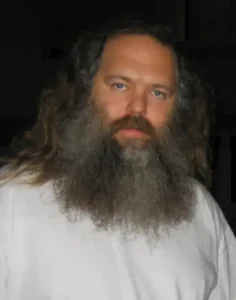
Rick Rubin does not play an instrument. He does not write songs. He does not engineer recordings. When artists ask him what he does, his answer is that he listens. He closes his eyes during sessions and feels whether something is working or not. He has described his job as being a “reducer,” someone who strips away everything that does not belong until what is left is the thing itself. He has produced records for LL Cool J, the Beastie Boys, Johnny Cash, Jay-Z, Red Hot Chili Peppers, Adele, Metallica, and Slayer. He has won nine Grammys. Rolling Stone called him the most successful producer in any genre.
His reading list looks exactly the way you would expect it to look once you understand that philosophy. Twenty-three books about awareness, subtraction, presence, and what happens when you stop trying to control things and start paying attention to what is already there.
Some background. Rubin grew up on Long Island and started Def Jam Recordings out of his NYU dorm room in 1984 with Russell Simmons. He was twenty-one. Def Jam launched hip hop into the mainstream. But Rubin did not stay in hip hop. He left Def Jam in 1988, moved to Los Angeles, and started American Recordings, where he produced the late-career Johnny Cash albums that are now considered some of the greatest records ever made. Cash was in his sixties, dropped by his label, largely forgotten by the music industry. Rubin put him alone in a room with a guitar and recorded what came out. The result stripped away decades of Nashville production and found the raw, broken voice underneath. That approach, finding what is real by removing what is not, is what Rubin does with every artist he works with, and it is what every book on this list is about.
Rick Rubin’s books on creativity and the artistic process
The Creative Act: A Way of Being is Rubin’s own book, published in 2023. He spent years working on it, starting from over a thousand pages of transcribed conversations about creativity and distilling them into a book of seventy-eight short chapters. The process of making the book mirrored the process it describes: gather everything, then subtract until only what matters remains. The book argues that creativity is not a talent some people have and others do not. It is a way of paying attention to the world, and everyone has access to it. Rubin wrote that he set out to write a book about making great art, and it turned into a book about how to be.
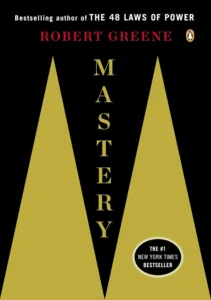
Mastery by Robert Greene traces the lives of historical masters, from Leonardo da Vinci to Charles Darwin, and identifies the patterns in how they developed their skills. Greene’s argument is that mastery is not about innate genius. It is about deep engagement over a long period, usually a decade or more, combined with the willingness to look foolish during the learning phase. Rubin has been producing records for over forty years. His skill is not technical knowledge. It is the accumulated sensitivity of someone who has listened to thousands of hours of music and learned to hear what most people miss.
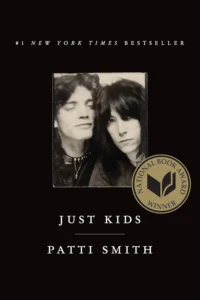
Just Kids by Patti Smith is a memoir about her early years in New York with Robert Mapplethorpe, when both were unknown artists trying to survive and make work. It is a book about what creativity looks like before success, when there is no money, no audience, and no guarantee that anyone will ever care about what you are making. Rubin arrived in New York as a college student and started a record label in his dorm room. Smith’s book captures the feeling of that period, the mixture of poverty, ambition, and the conviction that what you are doing matters even when no one else can see it yet.
Rick Rubin’s philosophy and mindfulness book picks
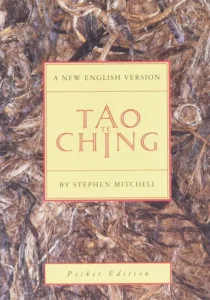
The Tao Te Ching by Lao Tzu is the most Rubin book on this list. Taoist philosophy is about acting without forcing, leading without dominating, and achieving through yielding rather than pushing. Rubin has talked about the Tao Te Ching’s influence on his production style for decades. His Malibu recording studio, Shangri-La, is designed with no art on the walls, open to nature, sparse and minimal. The space itself embodies Taoist principles: create emptiness and let something fill it. When Rubin sits in a session with his eyes closed, not directing the artist, not offering technical instructions, just listening, he is doing what Lao Tzu described two thousand years ago. The master acts by doing nothing.
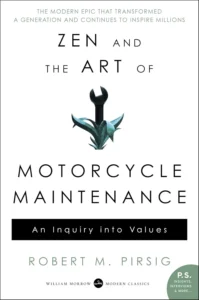
Zen and the Art of Motorcycle Maintenance by Robert Pirsig is about quality, what it is and how you recognize it when you cannot define it. Pirsig spent the entire book trying to pin down what “quality” means and concluded that it is not a property of objects but a relationship between the observer and the observed. Rubin works the same way. He does not have a technical vocabulary for what makes a recording work. He has a feeling. When he closes his eyes and something clicks, that is quality. When it does not, he asks the artist to try again. Pirsig’s book provides the philosophical framework for trusting that feeling over analysis.
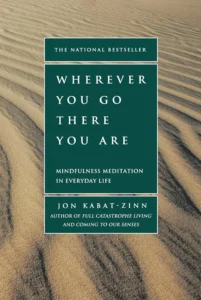
Wherever You Go, There You Are by Jon Kabat-Zinn is about mindfulness meditation. Rubin is a longtime meditator, and his production process depends on the kind of sustained, non-judgmental attention that meditation trains. Kabat-Zinn’s book is not about achieving a special state. It is about being fully present in whatever moment you are in. For a producer who works by paying attention more carefully than anyone else in the room, meditation is not a wellness practice. It is the core skill.
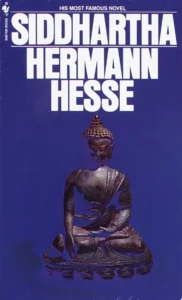
Siddhartha by Hermann Hesse is a novel about a young man in ancient India who leaves everything he knows to search for enlightenment. He tries asceticism, wealth, pleasure, and study before realizing that wisdom cannot be taught. It can only be experienced. Rubin has said something similar about creativity: you cannot explain to an artist how to make a great record. You can only create the conditions where they discover it themselves. Hesse’s book is the spiritual version of what Rubin does in the studio every day.
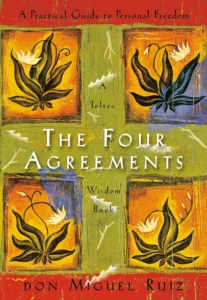
The Four Agreements by Don Miguel Ruiz distills Toltec wisdom into four principles: be impeccable with your word, do not take anything personally, do not make assumptions, and always do your best. These sound simple, and they are. Rubin’s production philosophy is also simple in a way that makes people suspicious. “Just listen” does not sound like a production technique. “Strip away what doesn’t belong” does not sound like expertise. But simplicity that comes after decades of practice is different from simplicity that comes from not having tried. Ruiz’s book operates at the same level.
Books on resilience and endurance Rick Rubin recommends
Endurance by Alfred Lansing tells the story of Ernest Shackleton’s 1914 Antarctic expedition, where his ship became trapped in ice and his crew survived for nearly two years in conditions that should have killed them all. Nobody died. Shackleton held the group together through force of will, resourcefulness, and an almost irrational refusal to accept that the situation was hopeless. The parallels to Rubin’s production style are indirect but real. When an artist is stuck, when a recording session has gone nowhere for days, when the album feels like it will never come together, the job is to keep going. Not to force a solution, but to maintain the conditions where one can emerge.
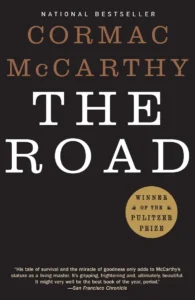
The Road by Cormac McCarthy is a novel about a father and son walking through a destroyed world. It is about survival at its most elemental: keep moving, protect what matters, do not give up. Rubin recommending this alongside his meditation and Taoism picks adds a necessary edge to the reading list. The philosophy of yielding and emptiness works when conditions are safe. The Road asks what you do when they are not. The answer, for both McCarthy’s characters and for artists in the middle of a difficult creative process, is the same: you keep walking.
The unexpected books on Rick Rubin’s reading list
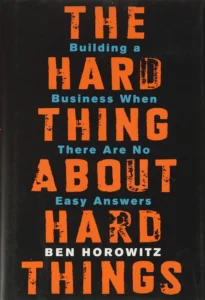
The Hard Thing About Hard Things by Ben Horowitz is a business book, which is surprising on a list otherwise dominated by philosophy and spirituality. But Rubin is also a businessman. He co-founded two record labels. He has navigated contracts, budgets, and industry politics for forty years. Horowitz writes about the decisions that have no good option, the moments when you have to fire someone or admit a strategy failed. Rubin has been in rooms where an artist’s career depended on whether the album worked. That is a hard thing about a hard thing.
The Paleo Solution by Robb Wolf is about ancestral nutrition, and it reflects Rubin’s well-documented interest in health and diet. Rubin went through a significant physical transformation in his forties, moving from a period of poor health to a disciplined regimen of diet, exercise, and cold exposure. His approach to health mirrors his approach to creativity: strip away what is artificial, return to what is natural, and see what the body can do when you stop interfering with it.
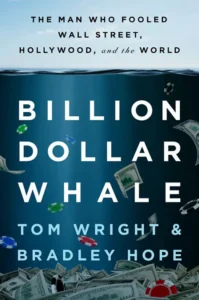
Billion Dollar Whale by Tom Wright and Bradley Hope, about the Malaysian financial fraud scandal, is the most unexpected pick on the entire list. It has nothing to do with creativity, philosophy, or health. It is a story about deception on a massive scale, about someone who convinced the world he was something he was not. For a man whose entire career is built on detecting what is authentic and stripping away what is fake, a book about the biggest con in modern financial history is strangely on brand.
How Rick Rubin’s reading list connects to his creative philosophy
Every book on this list is about the same thing: getting out of the way. The Tao Te Ching says stop forcing. Pirsig says stop analyzing. Kabat-Zinn says stop thinking and start noticing. Hesse says stop seeking and start being. Rubin’s own book says stop trying to make great art and start paying attention to what is already there.
Rubin once said that when he produced Johnny Cash, he did not add anything. He just removed what was hiding the voice. His reading list works the same way. Strip away the business books, strip away the health books, strip away the unexpected picks, and what you are left with is a library about presence. A collection of books by a man who has spent forty years learning to sit in a room, close his eyes, and hear what other people miss.
