
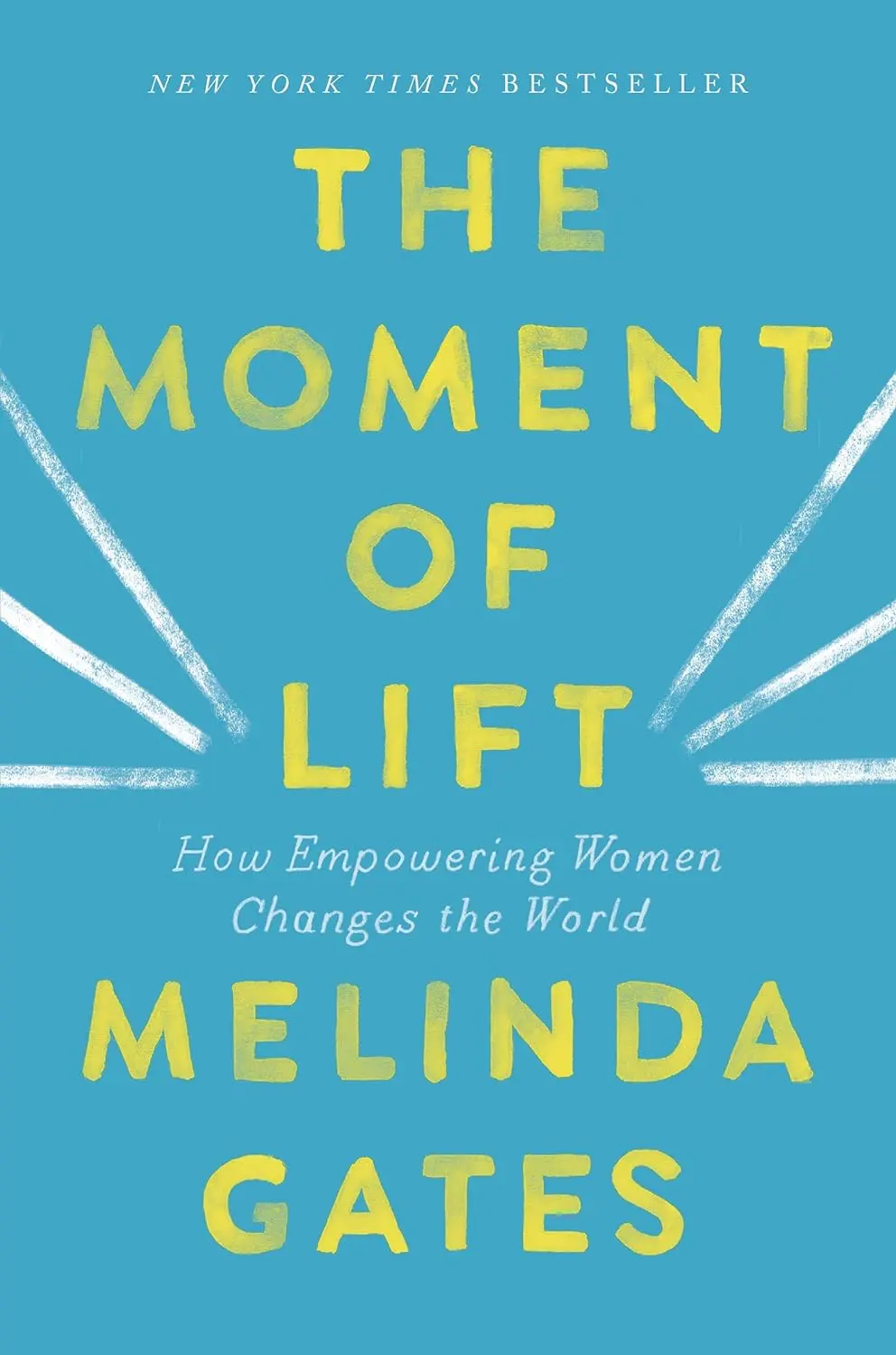
The Moment of Lift is part memoir, part argument, and part field report. Melinda French Gates spent two decades co-chairing the Gates Foundation, one of the largest philanthropic organizations in the world. During that time, she visited dozens of countries, met thousands of women, and arrived at a conclusion she kept coming back to: if you want to improve a society, start by removing the barriers that hold women back.
The book does not make this case abstractly. Gates tells specific stories. There is the woman in Senegal who walked twelve miles a day for water until her community organized a different approach. There are girls in India pulled out of school by their families at puberty. There are women in East Africa who gained economic independence through access to mobile banking and contraceptive services. Each story puts a face on problems that are easy to reduce to statistics.
Gates is candid about her own evolution. She grew up Catholic in Dallas, studied computer science and economics, and spent her early career at Microsoft. She writes about how her views on contraception changed through direct exposure to women in developing countries who had no access to family planning and no control over the timing and number of their pregnancies. For many of them, access to contraception was the difference between poverty and stability.
The book also addresses gender dynamics in Gates’s own marriage and in Western workplaces. She writes about the unequal distribution of unpaid labor at home, the impact this has on women’s careers, and what needs to change at a structural level. These passages are more personal and more vulnerable than the international chapters.
For founders and business leaders, the book offers a data-backed perspective on why gender equity is not a side issue but an economic one. The research Gates cites consistently shows that when women have access to education, healthcare, and financial services, entire economies grow. Countries that exclude women from economic participation leave measurable GDP on the table.
The New York Times called it a bestseller. Barack Obama, Brene Brown, and Malala Yousafzai endorsed it. The book reads quickly and does not require prior knowledge of development economics or philanthropy to follow.
