




What Susan Wojcicki’s book recommendations tell you about YouTube’s former CEO
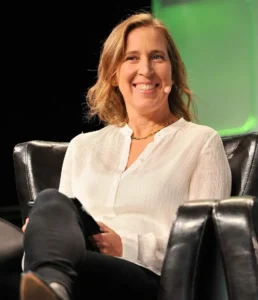
Susan Wojcicki grew up on the Stanford campus, surrounded by mathematicians and physicists, and chose to study history and literature at Harvard. She did not take her first computer science class until her senior year. Her first business was selling handmade spice ropes door-to-door at age eleven. She went on to lead the platform where two billion people watch a billion hours of video every day. That range, from humanities student to tech executive, from craft seller to CEO, runs through every book on this list.
The garage story is famous by now but worth remembering. In 1998, Wojcicki rented out her Menlo Park garage to two Stanford graduate students named Larry Page and Sergey Brin who were building a search engine. She joined the company as its sixteenth employee and first marketing manager in 1999. Over the next fifteen years she built Google’s advertising business, the revenue engine that turned the company into what it is. She was the person who spotted YouTube as a competitor that Google should buy rather than fight, and she managed the $1.65 billion acquisition in 2006. In 2014 she became YouTube’s CEO.
Under her leadership, YouTube grew to over 2.6 billion monthly users and paid more than $30 billion to creators. She was also Google’s first employee to take maternity leave, and she used that experience to advocate for paid family leave policies that became an industry standard. She had five children. She stepped down as CEO in February 2023 to focus on family and health. She died in August 2024, at fifty-six, after two years of living with lung cancer. A posthumous message from Wojcicki was released months later, reflecting on creativity, collaboration, and the importance of staying true to your values.
Her reading list is the library of someone who led at the intersection of technology and culture, and who cared as much about the people inside the system as the system itself.
Susan Wojcicki’s books on leadership and company culture
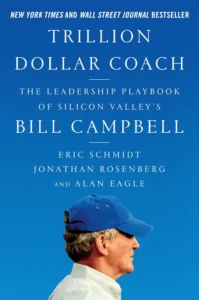
Trillion Dollar Coach by Eric Schmidt, Jonathan Rosenberg, and Alan Eagle is about Bill Campbell, the executive coach who quietly advised Steve Jobs, Larry Page, Sergey Brin, and Wojcicki herself. Campbell was not a technologist. He was a former football coach who believed that trust, team chemistry, and honest feedback mattered more than strategy. Wojcicki worked with Campbell directly for years, and his influence is visible in how she ran YouTube: emphasizing team dynamics, maintaining personal relationships with creators, and being present rather than distant. This book is on her list not because she read about Campbell. She knew him.
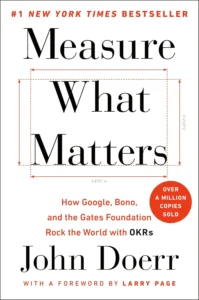
Measure What Matters by John Doerr describes the OKR framework that Google adopted in its early days. Wojcicki was there when Doerr first introduced the system to a company with fewer than fifty employees. She used OKRs for the rest of her career. The framework asks you to define a small number of objectives and attach measurable key results to each one. For someone managing a platform as large and chaotic as YouTube, with billions of videos, millions of creators, and constant content moderation controversies, having a structured way to decide what actually matters and what to ignore is not optional.
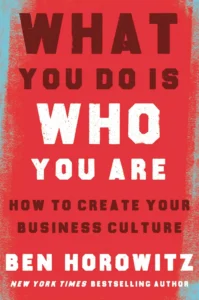
What You Do Is Who You Are by Ben Horowitz argues that culture is not defined by posters on the wall but by the actions people take when things get hard. Wojcicki ran YouTube through content moderation crises, advertiser boycotts, misinformation scandals, and the challenge of balancing free expression with platform safety. Her response to those situations, how she communicated with creators, how she handled advertiser pressure, what she chose to prioritize and what she chose to accept criticism for, defined YouTube’s culture more than any mission statement could.
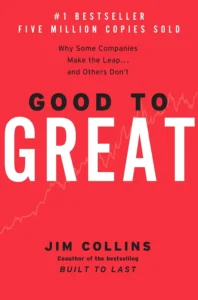
Good to Great by Jim Collins studied companies that made the leap from average to exceptional and found that the common thread was not charisma but disciplined people, disciplined thought, and disciplined action. Wojcicki was not a flashy executive. She was steady, methodical, and focused on long-term growth rather than dramatic moves. YouTube’s revenue grew from a fraction of Google’s business to $29 billion under her watch. That did not come from grand gestures. It came from consistent execution over nine years.
Books on psychology and human behavior Susan Wojcicki recommended
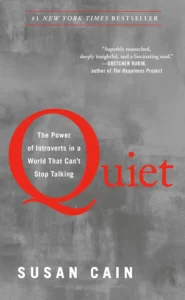
Quiet by Susan Cain is about the power of introverts. Wojcicki has been described as thoughtful and measured rather than commanding, a style that worked differently from the louder, more aggressive leadership models common in Silicon Valley. She led by listening, by asking questions, and by creating space for other people to contribute. Cain’s book validates that approach and provides the research to back it up.
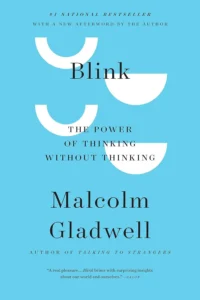
Blink by Malcolm Gladwell is about the power and danger of snap judgments. Gladwell argues that first impressions can be remarkably accurate, but also that they can be distorted by bias in ways we do not notice. Wojcicki spent years making decisions about which content to promote, which policies to implement, and which creators to support. Those decisions affected billions of people and were often made under time pressure. Understanding when to trust your intuition and when to override it is a practical skill at that scale.
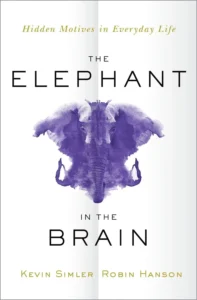
The Elephant in the Brain by Robin Hanson and Kevin Simler argues that most human behavior is driven by hidden motives we do not acknowledge. We say we watch educational videos to learn, but status signaling and entertainment play a larger role than we admit. Wojcicki ran a platform whose entire business model depends on understanding why people actually watch what they watch, not why they say they watch it. The gap between stated preferences and revealed behavior is the space where YouTube’s recommendation algorithm operates.
The Inner Game of Tennis by Timothy Gallwey is not really about tennis. It is about the interference between knowing what to do and actually doing it, the internal voice that second-guesses, overthinks, and creates anxiety that blocks performance. Wojcicki ran YouTube while raising five children, navigating some of the most difficult content policy debates in technology, and eventually managing her own health crisis. A book about quieting the internal noise so you can perform under pressure is not abstract reading for someone living at that intensity.
Susan Wojcicki’s books on family, women, and society
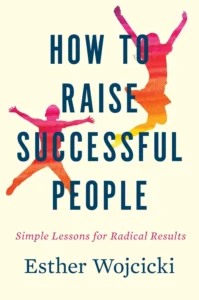
How to Raise Successful People by Esther Wojcicki is written by Susan’s mother, who was a journalism teacher at Palo Alto High School for decades. Esther’s framework, which she calls TRICK (Trust, Respect, Independence, Collaboration, Kindness), is based on how she raised three daughters who all became leaders in their fields: Susan at YouTube, Janet in medicine, and Anne at 23andMe. Susan recommending her mother’s book is personal, obviously, but it also connects to her public advocacy for parental leave and work-life balance. She believed that how you raise your children matters at least as much as how you run your company.
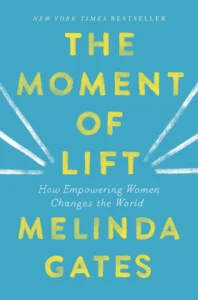
The Moment of Lift by Melinda Gates argues that empowering women and girls is the most effective way to improve societies. Wojcicki was one of the most senior women in technology for over two decades. She increased the percentage of women at YouTube from 24 to nearly 30 percent during her tenure. She sat on the board of Room to Read, an organization focused on literacy and gender equality in education. Gates’s book provided the global framework for the kind of change Wojcicki was pursuing within her own organization.
The fiction and personal picks on Susan Wojcicki’s reading list
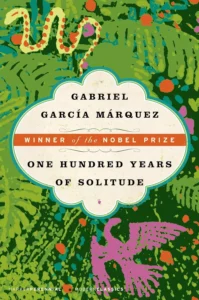
One Hundred Years of Solitude by Gabriel García Márquez is a sprawling novel about seven generations of a family in a fictional Colombian town. It is about time, memory, repetition, and the way patterns recur across generations whether people recognize them or not. Wojcicki studied history and literature at Harvard. She knew how to read a novel for more than plot. This is the book of someone who sees the world in layers.
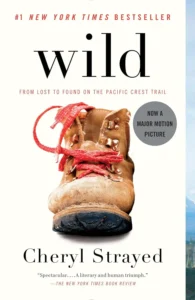
Wild by Cheryl Strayed is a memoir about hiking the Pacific Crest Trail alone after losing her mother and watching her life fall apart. It is about grief, endurance, and rebuilding yourself step by step through physical effort. Wojcicki lost her nineteen-year-old son Marco in February 2024, six months before her own death. The timeline makes this recommendation hard to read without feeling its weight. Wild is a book about surviving loss by putting one foot in front of the other. Sometimes that is all there is.
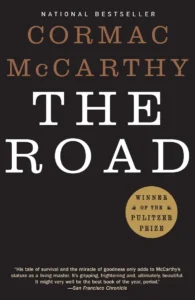
The Road by Cormac McCarthy and The Stranger by Albert Camus round out the fiction section. One is about a father trying to protect his child in a world without safety. The other is about a man disconnected from the meaning everyone around him takes for granted. Both are about what happens when the normal structures of life are stripped away. Wojcicki spent her final years dealing with extraordinary personal loss and her own mortality. These books were not decoration on a shelf. They were companions for the kind of questions that do not have answers.
How Susan Wojcicki’s reading list reflects her life and career
Wojcicki’s reading list is the library of someone who understood that running a technology platform is ultimately a human problem. The leadership books are about trust and presence, not command and control. The psychology books are about understanding behavior honestly, including your own. The books about women and family are not side interests; they are central to how she led. And the fiction is not escapism. It is the reading of a person who thought deeply about time, loss, and what remains when everything else falls away.
She rented a garage to two graduate students, helped build the most valuable advertising business in history, convinced Google to buy YouTube, ran it for nearly a decade, raised five children, fought for parental leave, and spent her final years giving away her time and resources while dealing with private grief that would have broken most people. Her reading list is not a curriculum for success. It is a record of what mattered to a person who made the most of the time she had.
