
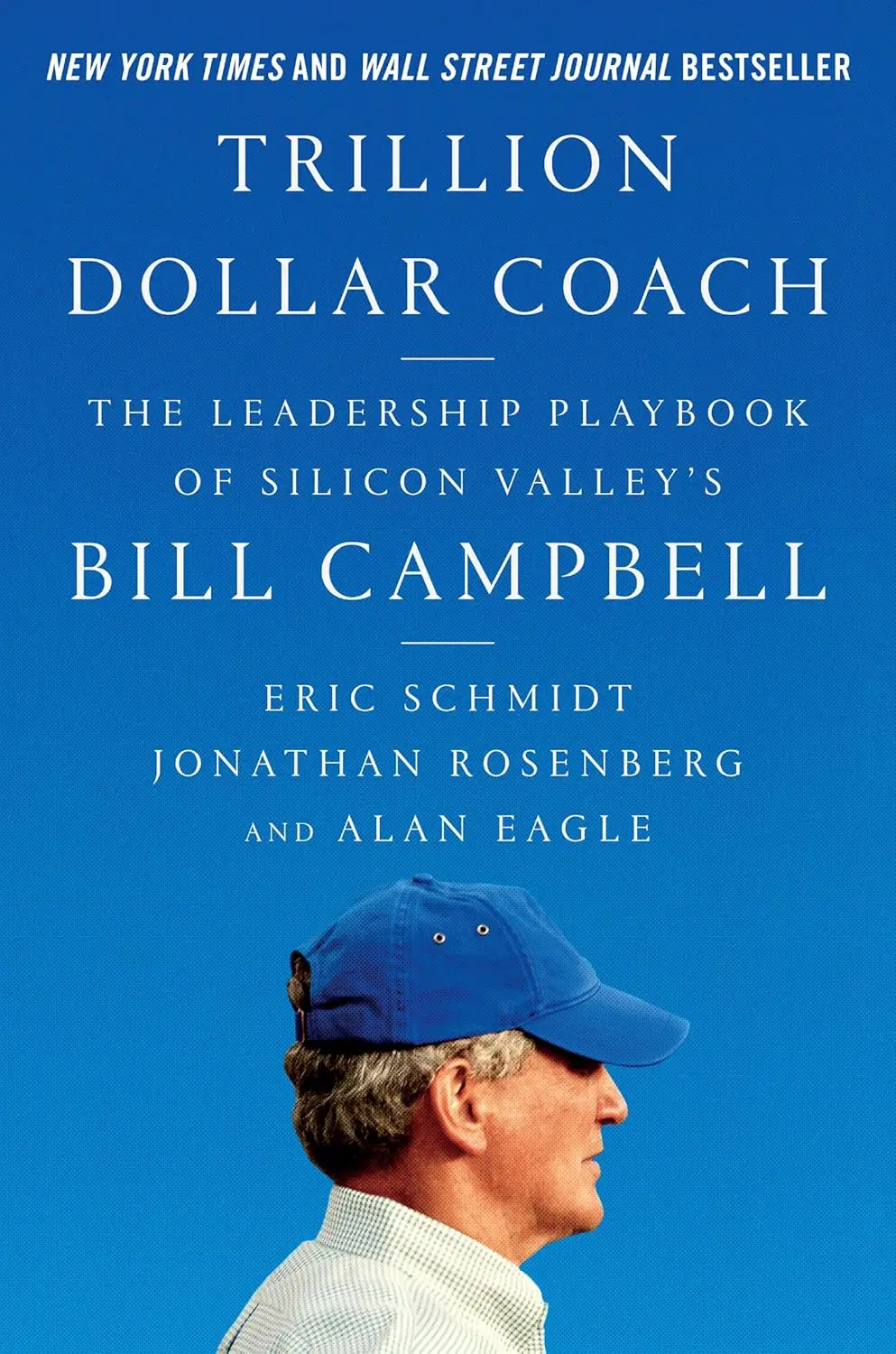
Trillion Dollar Coach is a tribute to Bill Campbell, a former Columbia University football coach who became the most influential behind-the-scenes advisor in Silicon Valley. Campbell coached (in the business sense) Steve Jobs at Apple, Eric Schmidt and Larry Page at Google, Sheryl Sandberg at Facebook, and many others. The “trillion dollar” in the title refers to the combined market value of the companies he influenced.
The book was written by Eric Schmidt, Jonathan Rosenberg, and Alan Eagle, all former Google executives who worked with Campbell for years. After Campbell’s death in 2016, they interviewed over 80 people who knew him and distilled his coaching philosophy into a set of principles.
Campbell’s approach was built around a few ideas that sound simple but are hard to execute. He believed that people are the most important thing in any company, and that a manager’s primary job is to make sure the team is working well together. He focused on trust: building it, maintaining it, and being willing to have uncomfortable conversations when trust was at risk. He insisted that meetings should start with personal check-ins, that managers should give honest feedback even when it was painful, and that teams should solve problems collectively rather than through political maneuvering.
For founders, the book is most useful as a model for what good coaching looks like. Campbell didn’t tell people what to do. He asked questions, listened, gave direct feedback, and then let people make their own decisions. His approach to board meetings, executive coaching, and team conflict offers a template that any leader can adapt.
The writing is straightforward and organized around clear themes. The book can feel somewhat hagiographic at times, as the authors clearly admired Campbell and the tone stays reverential throughout. But the specific stories and direct quotes make the principles feel grounded rather than abstract. It reads fast and leaves you with a clear picture of what it looks like to prioritize people over everything else in a company.
