
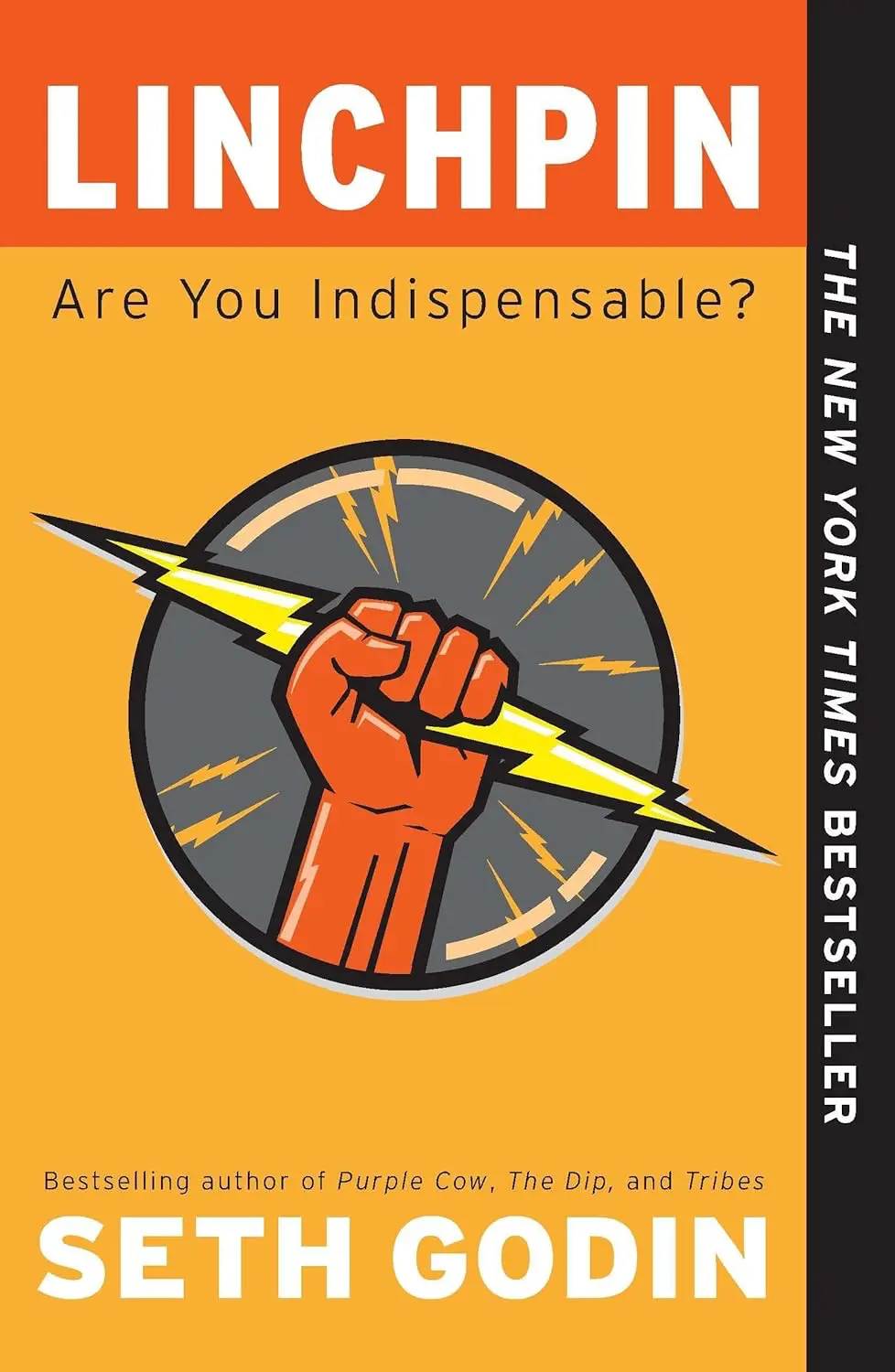
Linchpin is Seth Godin’s argument that the economic contract between employers and workers has fundamentally changed. For most of the 20th century, the deal was simple: show up, follow instructions, do what you’re told, and you’ll be rewarded with a steady paycheck and job security. Godin argues that this deal is over. Automation, globalization, and technology have made instruction-following work increasingly cheap and replaceable. The people who thrive going forward will be the ones who do work that can’t be reduced to a manual.
Godin calls these people linchpins. A linchpin is someone who brings judgment, creativity, and genuine human connection to their work. They don’t just complete tasks; they solve problems that don’t have obvious solutions, they build relationships that make organizations function, and they create things that didn’t exist before. They’re irreplaceable not because they hold a monopoly on some technical skill but because they bring something irreplaceable: their full selves.
The book’s main obstacle, which Godin spends several chapters on, is what he calls the “resistance” (borrowing from Steven Pressfield’s The War of Art). The resistance is the voice in your head that tells you to play it safe, follow the rules, don’t stick your neck out. Godin argues that this voice is a survival mechanism from an era when standing out could get you killed, and that in the modern economy, playing it safe is actually the riskiest strategy.
For founders, the message applies both personally and to hiring. Personally, starting a company is the ultimate linchpin move: you’re creating something new rather than following someone else’s instructions. For hiring, the implication is that you should look for people who bring creativity and initiative rather than people who are good at following processes. The best early employees at any startup are linchpins by nature.
The writing is energetic and repetitive in the way all Godin books are. The core idea could probably fit in a long essay, but Godin circles it from enough angles that something usually clicks for most readers. The book is more motivational than tactical. If you’re looking for specific career advice, Godin’s Cal Newport counterpart (So Good They Can’t Ignore You) offers a more structured approach. But as a reframing of what valuable work looks like, Linchpin is effective.
