









What Jessica Livingston’s book recommendations tell you about Y Combinator’s co-founder
There are no coding books on this list. No technical manuals. No books about algorithms or system design. That is worth noticing, because Jessica Livingston co-founded the most influential startup accelerator in the world, a place that has funded Airbnb, Dropbox, Stripe, Reddit, and over five thousand other companies. You would expect her reading list to lean technical. It does not. It leans human.
That actually explains a lot about why Y Combinator works.
Livingston did not follow the standard Silicon Valley path. She grew up near Boston, raised mostly by her father and grandmother. She studied English at Bucknell, not computer science at Stanford. After college she worked a string of unrelated jobs: Fidelity, Food & Wine magazine, an automotive consulting firm, a wedding planning service. She eventually became vice president of marketing at an investment bank in Boston. None of this pointed toward becoming one of the most important people in startup history.
Then she went to a party in Cambridge and met Paul Graham, Robert Morris, and Trevor Blackwell, the co-founders of Viaweb, a company they had sold to Yahoo. They talked about creating a new kind of startup funding model. In 2005, the four of them launched Y Combinator. Nobody cared. Reporters would not return her calls. Their own lawyers tried to talk them out of it. They funded their first batch of startups anyway, hosting weekly dinners for founders at her and Graham’s apartment.
Livingston’s role at YC was specific and unusual. While her technical co-founders evaluated products and code, she evaluated people. She became known internally as the “social radar,” the person who could sit across from two founders during a ten-minute interview and tell you whether their partnership would survive the stress of building a company. She watched how co-founders interacted, who dominated the conversation, who got defensive when challenged, who was honest about what they did not know. That skill, reading people quickly and accurately, is what her reading list is built around.
Jessica Livingston’s books on startups and business strategy
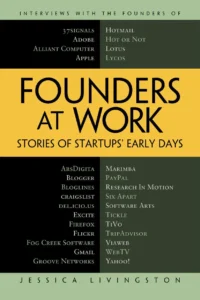
Founders at Work is Livingston’s own book, published in 2007. It is a collection of interviews with the founders of companies like Apple, PayPal, Flickr, and Hotmail, conducted during the earliest days of their startups. The book does not try to extract principles or build frameworks. It just lets founders tell their stories in their own words, including the parts that went wrong. Paul Graham wrote in the foreword that startups are “business reduced to its essence,” and the interviews show that the essence is usually messier, luckier, and more improvised than the origin myths suggest. Livingston’s instinct to let people talk and listen carefully for what mattered is the same instinct she brought to YC interviews.
Good to Great by Jim Collins studied companies that made the jump from average to exceptional performance. Collins found that the common factor was not a brilliant strategy or a charismatic CEO. It was getting the right people in the right seats first, then figuring out the direction. Livingston’s entire job at YC was a version of this: find the right founders, back them early, and trust that good people will figure out the product even if their initial idea is wrong. YC has funded many companies that pivoted completely from their original concept and still succeeded. The bet was always on the people, not the plan.
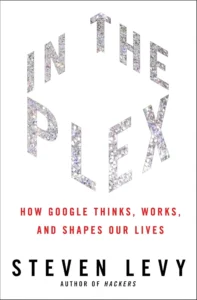
In the Plex by Steven Levy is an inside history of Google. Levy had unusual access to the company during its growth years and wrote about the internal culture, the technical decisions, and the personalities that shaped how Google operated. For someone at YC who watched hundreds of startups try to become the next Google, understanding what actually happened inside the one that succeeded, not the myth but the reality, would be useful context for evaluating which founders had a shot.
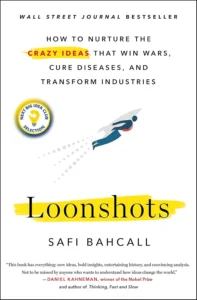
Loonshots by Safi Bahcall is about why good ideas get killed inside organizations and how to structure teams so fragile, early-stage projects survive long enough to prove themselves. Bahcall’s argument is that the problem is usually structural, not personal. Smart people in badly designed organizations will reject breakthrough ideas. YC’s entire batch model is essentially a structural solution to this problem: give founders a small amount of money, a short timeline, and a peer group, then get out of the way.
Books on psychology and human behavior Jessica Livingston recommends
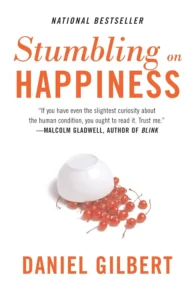
Stumbling on Happiness by Daniel Gilbert is about how bad humans are at predicting what will make them happy. Gilbert’s research shows that we consistently overestimate the emotional impact of future events, both positive and negative. We think getting funded will feel amazing. We think getting rejected will be devastating. Neither feeling lasts as long as we expect. For someone who has watched thousands of founders ride the emotional roller coaster of starting a company, this book provides a useful corrective. The founders who survive are usually the ones who do not let the highs get too high or the lows get too low.
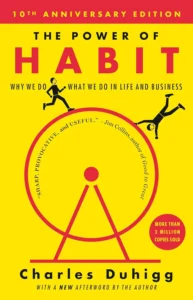
The Power of Habit by Charles Duhigg explains the cue-routine-reward loop that drives habitual behavior, both in individuals and organizations. Livingston has talked about how the early days of YC were about building habits and routines that would scale: the weekly dinners, the batch structure, the office hours format, the demo day cadence. Those routines were not bureaucracy. They were the infrastructure that allowed YC to fund more companies without losing the personal attention that made the early batches work.
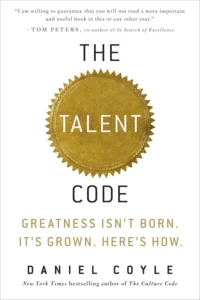
The Talent Code by Daniel Coyle argues that talent is not born but built through a specific kind of practice: deep practice, where you push yourself to the edge of your ability, fail, correct, and repeat. Livingston spent years watching founders improve in real time during YC’s three-month program. Some arrived barely able to explain their product and left able to pitch a room full of investors. Coyle’s framework for how skill develops quickly under the right conditions maps directly onto what YC does.
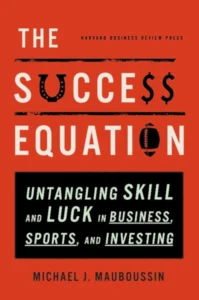
The Success Equation by Michael Mauboussin separates the roles of skill and luck in outcomes. Mauboussin’s point is that in activities where luck plays a large role, like startup investing, even the best decision-makers will have a low hit rate. What matters is the process, not any individual outcome. For a co-founder of an accelerator that has funded over five thousand companies, most of which failed, this distinction is not academic. It is the only way to stay sane.
Jessica Livingston’s philosophy and personal growth book picks
Zen and the Art of Motorcycle Maintenance by Robert Pirsig is about quality, what it is and how you recognize it when you cannot define it. Pirsig’s answer is that quality is not a property of objects. It is a relationship between the person and the work. You feel it when something is done right, even if you cannot explain why. Livingston’s ability to read founders, to feel whether a team had the right dynamic without being able to point to a checklist item, is essentially Pirsig’s idea of quality applied to people.
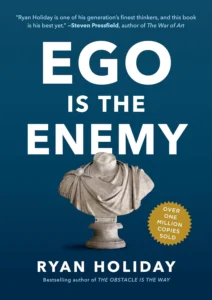
Ego Is the Enemy by Ryan Holiday is about how your own sense of importance can sabotage your work. Holiday’s argument is that ego makes you stop learning, stop listening, and start performing instead of producing. Livingston has talked about how the founders she backed most confidently were often the least flashy. Earnestness, she has said, is one of the strongest signals. Ego is its opposite. The founders who showed up trying to impress her during interviews were usually worse bets than the ones who showed up trying to solve a problem.
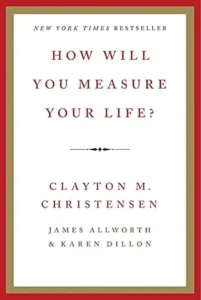
How Will You Measure Your Life by Clayton Christensen applies business strategy frameworks to personal decisions about career, relationships, and integrity. Christensen was a Harvard Business School professor who also wrote The Innovator’s Dilemma, and this book is his attempt to help people avoid the trap of optimizing for professional success while letting everything else fall apart. Livingston took a sabbatical from YC in 2016 to spend time with her family. For someone who helped build an institution that celebrates relentless work, choosing to step back is its own kind of signal about what she values.
The fiction and unexpected picks on Jessica Livingston’s reading list
Livingston has a BA in English, and her fiction picks reflect that background. Little Women by Louisa May Alcott, The Catcher in the Rye by J.D. Salinger, The Lord of the Rings by Tolkien, and The Inimitable Jeeves by P.G. Wodehouse are a mix of coming-of-age stories, adventure, and comedy. They are not thematically connected to startups in any obvious way, and that is the point. They are the books of someone who reads for pleasure, not just for professional advantage.
A Little Life by Hanya Yanagihara is the most emotionally intense book on this list. It follows four college friends through decades of adulthood, centering on one character’s history of severe abuse and its long aftermath. It is a book about how people carry pain, how friendships sustain people through suffering, and how some wounds do not heal no matter how much success or love surrounds them. Livingston recommending it says something about the depth of her interest in what people carry beneath the surface, which is exactly the skill that made her effective at YC.
Tribe by Sebastian Junger argues that humans are wired for small, tightly bonded communities and that modern life, with its comfort and isolation, has stripped that away. YC’s batch model recreates something like a tribe: a small group of founders going through the same intense experience at the same time, eating together, working near each other, and sharing the stress of building something from nothing. Whether Livingston designed it that way consciously or recognized the pattern after the fact, Junger’s book describes the dynamic that makes YC’s community so sticky long after demo day ends.
How Jessica Livingston’s reading list connects to her work at Y Combinator
The thread through these twenty-five books is not strategy or technology. It is people. How they form habits. How they develop talent. How luck and skill interact. How ego destroys and earnestness builds. How tribes form. How pain shapes character. How quality feels even when you cannot measure it.
Livingston did not write code or design products. She read people. And her reading list is, in a sense, the syllabus for that skill. The startup books give her context. The psychology books give her frameworks. The philosophy books give her patience. And the fiction gives her the kind of empathy that no business book can teach, the ability to understand what someone is carrying that they have not told you about yet.
YC has funded over five thousand companies. Livingston sat across from a meaningful fraction of those founders in their earliest, most uncertain days and decided whether to bet on them. Her reading list is the library of someone who spent two decades getting better at one question: can I trust these people to figure it out?
