
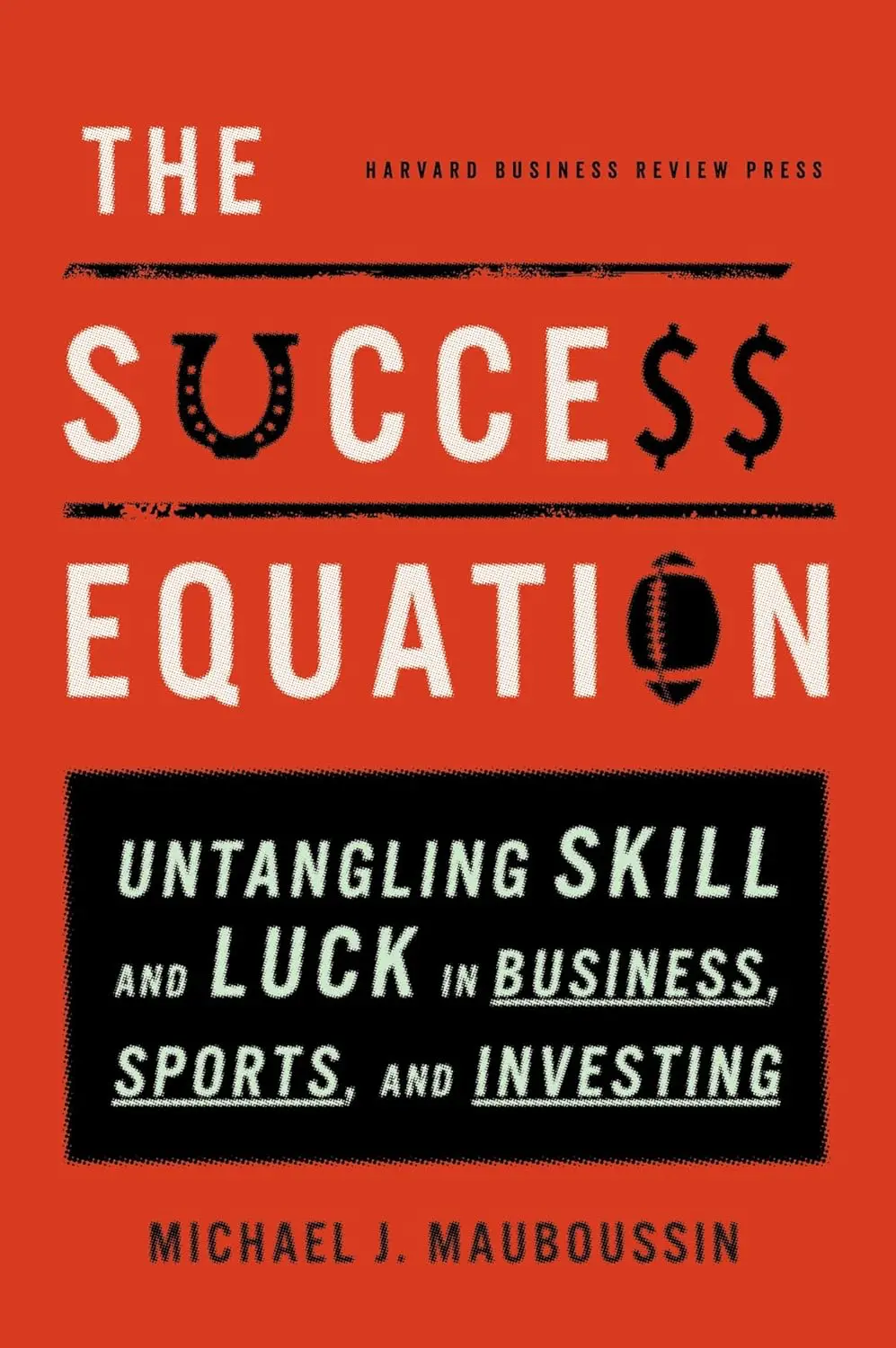
Most people are bad at distinguishing skill from luck. A fund manager who beats the market for three years might be talented or might be fortunate. A startup that takes off might have a great product or might have caught a lucky break in timing. A basketball team on a winning streak might be peaking or might be riding variance. Mauboussin wants to give you the tools to tell the difference.
He starts with a useful framework called the skill-luck continuum. On one end, you have pure skill activities like chess, where luck plays almost no role. On the other end, you have pure luck activities like roulette. Most things we care about, including business, investing, sports, and hiring, fall somewhere in between. Where an activity sits on this continuum determines how you should evaluate results, how large your sample size needs to be, and whether past performance predicts future outcomes.
The practical implications are significant. In activities where luck plays a large role, small samples tell you almost nothing. A hedge fund’s three-year track record is close to meaningless as a predictor of future returns, because investing sits closer to the luck end of the continuum than most investors want to believe. In activities dominated by skill, like chess or tennis, performance stabilizes quickly and rankings are reliable. Knowing where your domain sits changes how you should think about talent evaluation, compensation, and strategy.
Mauboussin introduces the concept of reversion to the mean and explains why it trips people up. When someone performs exceptionally well in a domain with significant luck, you should expect their next performance to be closer to average. This is not a statement about their ability. It is a statistical reality. Failure to account for it leads to overpaying for hot streaks and firing people after cold ones.
The book also covers the paradox of skill. As the average skill level in a field rises, luck becomes a larger determinant of who wins. In professional baseball, the difference between the best and worst hitters has narrowed over decades because coaching and training have improved across the board. When everyone is good, small differences in luck determine outcomes. This same dynamic plays out in business, where increasingly professionalized management means competitive advantages shrink and chance has more room to operate.
Mauboussin writes clearly and uses examples from sports, business, and investing to keep the material grounded. The book is analytical but accessible to readers without a statistics background.
