






Mary Meeker

Mary Meeker Book Recommendations (20 Books)

Mary Meeker is a venture capitalist at Bond Capital and previously spent 20 years at Kleiner Perkins. She is best known for her annual Internet Trends Report, which became one of the most widely cited presentations in the tech industry. Before venture capital, she was a managing director at Morgan Stanley, where she earned the nickname "Queen of the Net" during the dot-com era. Her research on internet adoption patterns influenced how a generation of investors thought about technology.

Learn more about the founder on Wikipedia

*post may include affiliate links, view our Disclaimer for more info.

Share:

Mary Meeker Reading List:

FREE Notion Book Tracker

+9 recommended books for founders inside

by Unseen Founder

Notion Book Tracker helps you organize what you read, save key insights, and build your personal founder library. It also includes carefully selected books recommended for founders.

Get FREE Now
Endurance

Endurance

Shackleton's Incredible Voyage

Book by Alfred Lansing

Lansing reconstructs Ernest Shackleton's 1914 Antarctic expedition, in which his ship was crushed by ice and he led all 27 crew members to safety over 22 months through some of the most hostile conditions on Earth. The book is a study in leadership when everything goes wrong.

View on Amazon
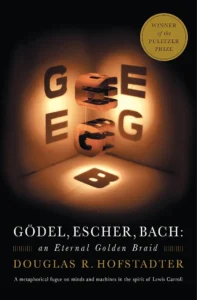
Godel, Escher, Bach

Godel, Escher, Bach

An Eternal Golden Braid

Book by Douglas Hofstadter

Douglas Hofstadter's Pulitzer Prize-winning book explores how self-reference and formal systems give rise to consciousness and meaning. The book weaves together the mathematics of Godel, the art of Escher, and the music of Bach to investigate the nature of intelligence, minds, and machines.

View on Amazon
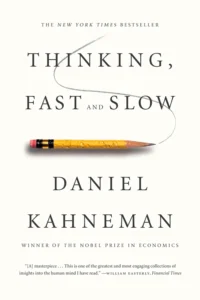
Thinking, Fast and Slow

Thinking, Fast and Slow

Book by Daniel Kahneman

Nobel laureate Daniel Kahneman explains the two systems that drive how people think: a fast, intuitive system and a slow, deliberate one. The book catalogues dozens of cognitive biases that distort judgment, backed by decades of research in behavioral economics.

View on Amazon
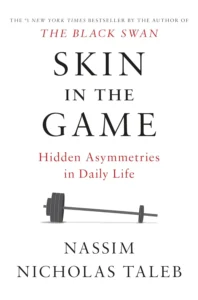
Skin in the Game

Skin in the Game

Hidden Asymmetries in Daily Life

Book by Nassim Nicholas Taleb

Taleb's argument is simple: never trust anyone who does not bear the consequences of their own advice. The book examines how risk asymmetry, where one party bears the downside while another collects the upside, corrupts systems from finance to politics to medicine.

View on Amazon
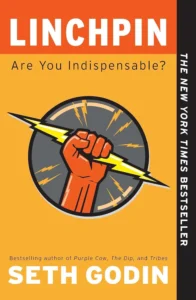
Linchpin

Linchpin

Are You Indispensable?

Book by Seth Godin

Seth Godin argues that the factory model of work, where people follow instructions and fit into replaceable roles, is dying, and that the future belongs to "linchpins" who bring creativity, emotional labor, and human connection to their work. The book is a call to stop being a cog and start being someone the organization can't replace.

View on Amazon
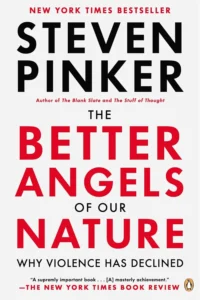
The Better Angels of Our Nature

The Better Angels of Our Nature

Why Violence Has Declined

Book by Steven Pinker

Pinker makes the case, with extensive data, that violence has declined over centuries and millennia, from tribal warfare to homicide to interstate conflict. The book examines the psychological and institutional forces behind this decline.

View on Amazon
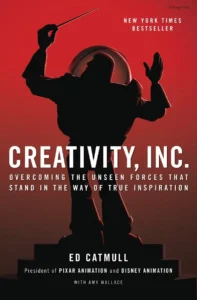
Creativity, Inc.

Creativity, Inc.

Overcoming the Unseen Forces That Stand in the Way of True Inspiration

Book by Ed Catmull

Ed Catmull, cofounder of Pixar, describes how the studio built a culture that consistently produces original work. The book covers how to manage creative teams, deal with failure productively, and protect new ideas from the organizational forces that tend to kill them.

View on Amazon
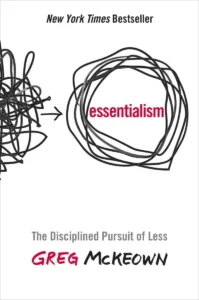
Essentialism

Essentialism

The Disciplined Pursuit of Less

Book by Greg McKeown

McKeown argues that most people spread themselves too thin by saying yes to everything, and that the highest performers are ruthless about doing fewer things better. The book offers a system for figuring out what actually matters and eliminating the rest.

View on Amazon
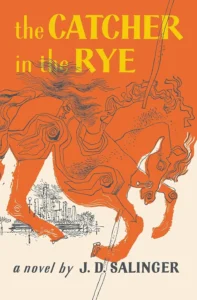
The Catcher in the Rye

The Catcher in the Rye

Book by J.D. Salinger

J.D. Salinger's 1951 novel follows teenager Holden Caulfield through a few days wandering New York City after being expelled from prep school. The book captures adolescent alienation and the discomfort of growing up in a world that feels false, and remains one of the most widely read American novels.

View on Amazon
The War of Art

The War of Art

Break Through the Blocks and Win Your Inner Creative Battles

Book by Steven Pressfield

Pressfield identifies the internal force that stops people from doing their work and calls it Resistance. The book is a short, blunt manual on recognizing procrastination, self-doubt, and distraction for what they are, and showing up anyway.

View on Amazon
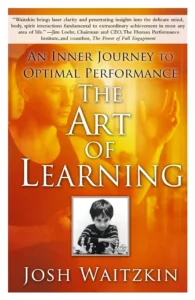
The Art of Learning

The Art of Learning

An Inner Journey to Optimal Performance

Book by Josh Waitzkin

Waitzkin, who was a chess prodigy (the subject of the film Searching for Bobby Fischer) and later a world champion in martial arts, writes about the process of mastering complex skills. The book focuses on how to learn rather than what to learn.

View on Amazon
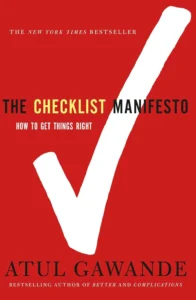
The Checklist Manifesto

The Checklist Manifesto

How to Get Things Right

Book by Atul Gawande

Surgeon and writer Atul Gawande makes the case that simple checklists can prevent errors in complex situations, from surgery to construction to aviation. The book argues that in a world of increasing complexity, the humble checklist is one of the most underused tools available.

View on Amazon
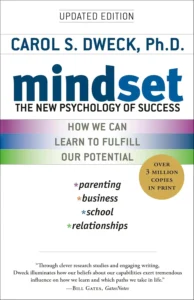
Mindset

Mindset

The New Psychology of Success

Book by Carol Dweck

Stanford psychologist Carol Dweck distinguishes between a fixed mindset (believing your abilities are set in stone) and a growth mindset (believing abilities can be developed through effort). The research shows that which mindset you hold predicts how you respond to failure, feedback, and challenges.

View on Amazon
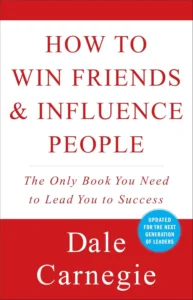
How to Win Friends and Influence People

How to Win Friends and Influence People

Book by Dale Carnegie

First published in 1936, Carnegie's book remains one of the most practical guides on persuasion, communication, and getting people to cooperate with you. The advice is simple but easy to forget: listen more, criticize less, and make the other person feel important.

View on Amazon
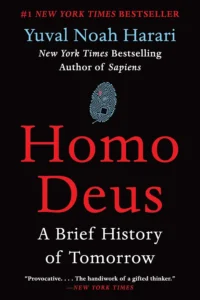
Homo Deus

Homo Deus

A Brief History of Tomorrow

Book by Yuval Noah Harari

Harari's follow-up to Sapiens looks forward instead of backward, asking what happens when humanity conquers famine, plague, and war and turns its attention to immortality, happiness engineering, and upgrading humans into something beyond Homo sapiens.

View on Amazon
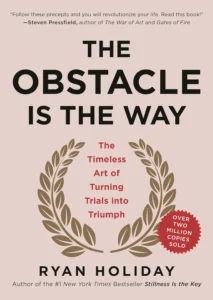
The Obstacle Is the Way

The Obstacle Is the Way

The Timeless Art of Turning Trials into Triumph

Book by Ryan Holiday

Holiday applies Stoic philosophy to modern challenges, arguing that obstacles are not things to avoid but raw material for growth. The book uses historical examples from Amelia Earhart to Steve Jobs to show how adversity can become advantage when approached correctly.

View on Amazon
Tiny Beautiful Things

Tiny Beautiful Things

Advice on Love and Life from Dear Sugar

Book by Cheryl Strayed

Cheryl Strayed, writing anonymously as Dear Sugar on the literary website The Rumpus, answered strangers' questions about love, loss, ambition, and failure with a level of honesty that advice columns almost never reach. This collection of those columns doubles as an accidental memoir, since Strayed answered every question by pulling from the wreckage and joy of her own life.

View on Amazon
Sex at Dawn

Sex at Dawn

How We Mate, Why We Stray, and What It Means for Modern Relationships

Book by Christopher Ryan & Cacilda Jetha

Christopher Ryan and Cacilda Jetha challenge the standard story about human sexuality, arguing that monogamy is not our species' natural state. Drawing from anthropology, primatology, and anatomy, they make the case that humans evolved for a more communal approach to sex and relationships than modern society assumes.

View on Amazon
The Inner Game of Tennis

The Inner Game of Tennis

The Classic Guide to the Mental Side of Peak Performance

Book by W. Timothy Gallwey

W. Timothy Gallwey's classic, first published in 1974 and now in a 50th anniversary edition with a foreword by Bill Gates, argues that peak performance in any field depends on quieting your conscious mind and trusting your body's intelligence. The book uses tennis as the vehicle, but the real subject is how to get out of your own way.

View on Amazon
A Little Life

A Little Life

A Novel

Book by Hanya Yanagihara

Hanya Yanagihara's novel follows four college friends through decades of life in New York City, but it is really about one of them, a man named Jude whose past is slowly revealed to be more terrible than anyone around him suspects. It is one of those books that readers either cannot put down or cannot finish. There is no middle ground.

View on Amazon

What Mary Meeker’s book recommendations tell you about the Queen of the Internet

Every year from 1995 to 2019, Mary Meeker published a presentation that the entire technology industry stopped to read. Her Internet Trends Report, typically three hundred slides of data, charts, and analysis, was the closest thing Silicon Valley had to an annual state-of-the-union address. CEOs rearranged schedules to read it the day it dropped. Founders built pitch decks around its conclusions. In May 2025, after a six-year break, she published a 340-page AI Trends report and the reaction was the same: mandatory reading.

Meeker grew up in Portland, Indiana, and credits her competitive father, a serious golfer, for her type-A personality. She studied at DePauw University, got her MBA from Cornell, and started her career as a stockbroker at Merrill Lynch before becoming a technology analyst at Morgan Stanley. She was the lead analyst on the Netscape IPO in 1995 and later on Google’s IPO in 2004. She championed Dell, Microsoft, Amazon, and eBay before most investors took internet companies seriously. Barron’s nicknamed her the “Queen of the Net.” In 2010 she moved to Kleiner Perkins, and in 2018 she founded her own venture firm, BOND Capital, which raised over a billion dollars.

Her reading list is the library of someone who has spent thirty years synthesizing enormous amounts of information into clear conclusions, and who reads as widely as she researches.

Mary Meeker’s books on thinking, patterns, and decision-making

Thinking, Fast and Slow by Daniel Kahneman is the book that best explains how Meeker processes information. Kahneman’s framework of System 1 (fast, intuitive) and System 2 (slow, analytical) describes the tension Meeker navigates every day: absorbing thousands of data points intuitively while forcing herself to verify conclusions analytically before committing capital. Her Internet Trends Reports are System 2 made visible, hundreds of pages of structured analysis that take the raw noise of the internet economy and turn it into signal.

Skin in the Game by Nassim Nicholas Taleb argues that people make better predictions when they bear the consequences of being wrong. Meeker moved from Wall Street analysis, where you recommend stocks but do not personally buy them, to venture capital, where your own fund’s money is at stake. That transition is literally moving from no skin in the game to full skin in the game. Taleb would approve.

Godel, Escher, Bach by Douglas Hofstadter is a 777-page exploration of self-reference, recursion, and how meaning emerges from systems. Meeker’s reports are themselves an example of the phenomenon Hofstadter describes: data about the internet, distributed via the internet, shaping the decisions of the people who build the internet. The observer changes the system by observing it. That recursive quality is part of why her reports carried so much influence.

Books on creativity, performance, and resilience Mary Meeker recommends

Creativity, Inc. by Ed Catmull is about how Pixar maintained creative excellence while scaling into a large organization. Catmull’s argument is that creative teams need psychological safety, the freedom to fail and share unfinished work without judgment. Meeker has invested in companies at the exact stage where this tension becomes critical: high-growth firms that need to keep innovating while managing the organizational complexity that comes with rapid scaling.

The Art of Learning by Josh Waitzkin is about transferring mastery across domains, from chess to martial arts. Meeker transferred her mastery from stock analysis to venture capital, two fields that share analytical frameworks but operate at completely different time horizons and risk profiles. Waitzkin’s insight that learning principles transfer even when the surface details change describes exactly how Meeker made that transition.

Endurance by Alfred Lansing, the story of Shackleton’s Antarctic expedition, is about surviving when the plan fails completely and all you have left is leadership, morale, and the willingness to keep going. Meeker survived the dot-com crash, when analysts like her were publicly blamed for inflating the bubble. She was investigated but never charged with wrongdoing. She kept working, rebuilt her credibility through the quality of her research, and went on to a second career in venture capital. Endurance is the book of someone who knows what it means to have the ground disappear and to keep walking anyway.

The Inner Game of Tennis by Timothy Gallwey is about the gap between knowing what to do and actually doing it under pressure. Meeker delivered her Internet Trends presentation live, on stage, to thousands of people, every year for over two decades. That requires a specific kind of performance discipline, the ability to present complex analysis clearly while managing the internal noise of self-doubt and expectation.

The unexpected picks on Mary Meeker’s reading list

A Little Life by Hanya Yanagihara is the most emotionally intense book on this list. It is a novel about four friends navigating adulthood, centered on one character’s history of severe abuse and its decades-long aftermath. It is 700 pages of pain, love, and the question of whether friendship can heal wounds that therapy cannot reach. Meeker recommending it says that the person behind the data slides reads things that have nothing to do with technology and everything to do with being human.

Tiny Beautiful Things by Cheryl Strayed is a collection of advice columns about grief, failure, and the messy reality of being alive. Sex at Dawn by Christopher Ryan challenges conventional assumptions about human mating behavior. The Catcher in the Rye by J.D. Salinger is about a teenager who cannot find his place in the adult world. None of these books appear in the Internet Trends Report. They are the reading of a person who spends her professional life in data and her personal life in literature, and who understands that the gap between those two worlds is where the interesting questions live.

How Mary Meeker’s reading list connects to her career as an analyst and investor

Meeker’s career is built on one skill: seeing patterns in data before other people see them. Her reading list is the supporting infrastructure for that skill. Kahneman teaches her how thinking works. Hofstadter teaches her how systems reference themselves. Catmull teaches her how creative organizations stay productive. Shackleton teaches her how to survive when the thesis breaks. And the fiction teaches her that some patterns are not in the data at all.

She spent thirty years reading the internet. Her bookshelf shows she also spent those years reading everything else.