
Jack Ma

Jack Ma Book Recommendations (24 Books)

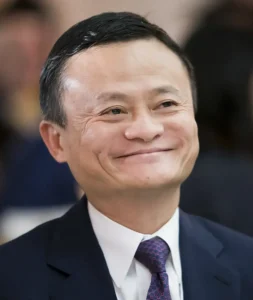
Jack Ma founded Alibaba in his apartment in Hangzhou in 1999, turning it into one of the largest e-commerce companies in the world. He was a former English teacher who failed his college entrance exams twice before getting into Hangzhou Normal University. Under his leadership, Alibaba went public in 2014 in what was then the largest IPO in history. Ma stepped down as chairman in 2019.

Learn more about the founder on Wikipedia

*post may include affiliate links, view our Disclaimer for more info.

Share:

Jack Ma Reading List:

FREE Notion Book Tracker

+9 recommended books for founders inside

by Unseen Founder

Notion Book Tracker helps you organize what you read, save key insights, and build your personal founder library. It also includes carefully selected books recommended for founders.

Get FREE Now
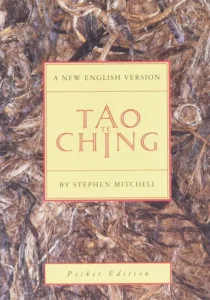
Tao Te Ching

Tao Te Ching

Book by Lao Tzu

Written over 2,500 years ago in 81 short chapters, the Tao Te Ching covers leadership, power, simplicity, and the paradox that the most effective action often looks like non-action. The text is short enough to read in an hour and deep enough to study for a lifetime.

View on Amazon
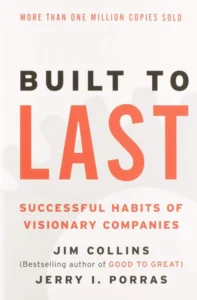
Built to Last

Built to Last

Successful Habits of Visionary Companies

Book by Jim Collins and Jerry I. Porras

Collins and Porras studied 18 companies that maintained top performance over decades and compared them to similar companies that did not endure. The research identified patterns, including having a core ideology, pursuing big audacious goals, and building a culture that outlasts any single leader.

View on Amazon
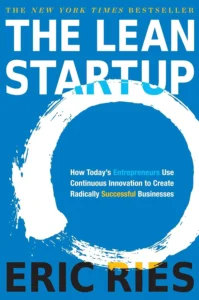
The Lean Startup

The Lean Startup

How Today's Entrepreneurs Use Continuous Innovation to Create Radically Successful Businesses

Book by Eric Ries

Ries introduces a method for building startups based on rapid experimentation, validated learning, and short feedback loops. Instead of spending months on a product nobody wants, the book advocates shipping a minimum viable product early and iterating based on real customer data.

View on Amazon
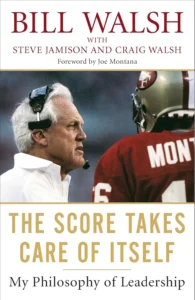
The Score Takes Care of Itself

The Score Takes Care of Itself

My Philosophy of Leadership

Book by Bill Walsh with Steve Jamison and Craig Walsh

Legendary NFL coach Bill Walsh explains how he turned the San Francisco 49ers from the worst team in football into a dynasty. His approach: stop focusing on winning and instead obsess over the standard of performance. If the standard is high enough, the score takes care of itself.

View on Amazon
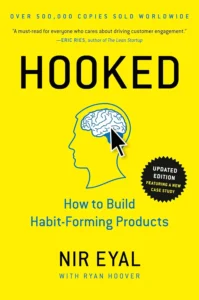
Hooked

Hooked

How to Build Habit-Forming Products

Book by Nir Eyal

Eyal presents the Hook Model, a four-step cycle that successful products use to create habits: trigger, action, variable reward, and investment. The book explains why some products become part of daily routine while others are used once and forgotten.

View on Amazon
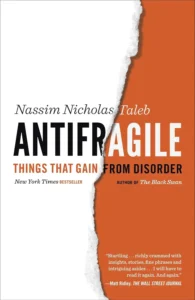
Antifragile

Antifragile

Things That Gain from Disorder

Book by Nassim Nicholas Taleb

Taleb introduces a concept that goes beyond resilience: things that actually get stronger when exposed to stress, volatility, and disorder. The book applies this idea across medicine, economics, politics, and personal decision-making, arguing that most modern systems are built wrong because they try to eliminate randomness instead of benefiting from it.

View on Amazon
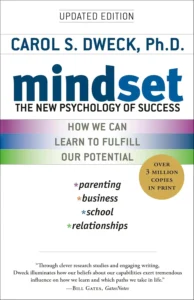
Mindset

Mindset

The New Psychology of Success

Book by Carol Dweck

Stanford psychologist Carol Dweck distinguishes between a fixed mindset (believing your abilities are set in stone) and a growth mindset (believing abilities can be developed through effort). The research shows that which mindset you hold predicts how you respond to failure, feedback, and challenges.

View on Amazon
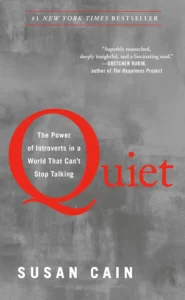
Quiet

Quiet

The Power of Introverts in a World That Can't Stop Talking

Book by Susan Cain

Cain argues that Western culture, especially American business culture, is biased toward extroversion in ways that waste the strengths of the one-third to one-half of the population that is introverted. The book draws on neuroscience, psychology, and case studies to make the case for quiet leadership.

View on Amazon
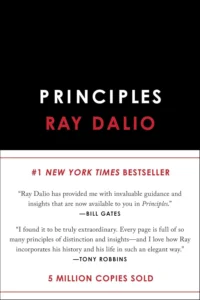
Principles

Principles

Life and Work

Book by Ray Dalio

Ray Dalio, founder of the world's largest hedge fund, shares the decision-making rules he developed over 40 years of running Bridgewater Associates. Part memoir, part management manual, the book breaks down how radical transparency and systematic thinking can improve both personal and professional outcomes.

View on Amazon
Meditations

Meditations

Book by Marcus Aurelius

Written nearly 2,000 years ago by a Roman emperor, Meditations is a private journal of Stoic philosophy that was never intended for publication. The entries deal with self-discipline, managing emotions, and staying grounded when everything around you is unstable.

View on Amazon
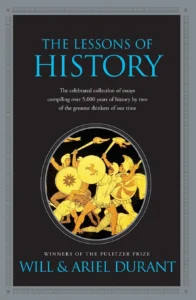
The Lessons of History

The Lessons of History

Book by Will Durant and Ariel Durant

Will and Ariel Durant condensed their 11-volume history of civilization into a 100-page essay on the patterns that repeat across cultures, centuries, and political systems. The book covers themes like inequality, war, religion, morals, and economics with the perspective that only 5,000 years of recorded history can provide.

View on Amazon
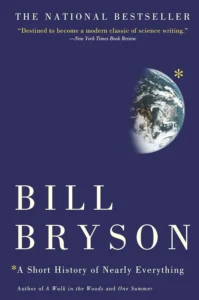
A Short History of Nearly Everything

A Short History of Nearly Everything

Book by Bill Bryson

Bryson set out to understand how we know what we know about the physical world, from the Big Bang to the emergence of civilization. The book covers physics, chemistry, geology, biology, and paleontology, told through the stories of the scientists who figured things out, often by accident.

View on Amazon
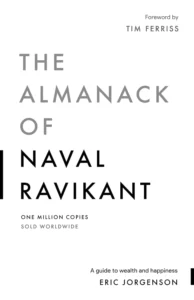
The Almanack of Naval Ravikant

The Almanack of Naval Ravikant

A Guide to Wealth and Happiness

Book by Eric Jorgenson

Eric Jorgenson compiled Naval Ravikant's best ideas on wealth, leverage, judgment, and happiness from podcasts, tweets, and interviews into an organized reference. The book covers how to build wealth without getting lucky, how to use specific knowledge and leverage, and Naval's philosophy on finding peace.

View on Amazon
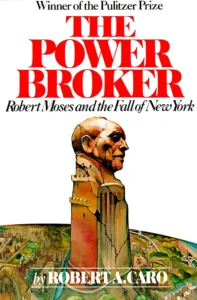
The Power Broker

The Power Broker

Robert Moses and the Fall of New York

Book by Robert A. Caro

Robert Caro's 1,300-page biography of Robert Moses, the man who shaped modern New York City through decades of public works projects, is the definitive study of how power is accumulated, used, and abused. The book covers highways, parks, housing projects, and the human cost of building on a massive scale.

View on Amazon
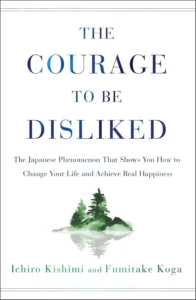
The Courage to Be Disliked

The Courage to Be Disliked

The Japanese Phenomenon That Shows You How to Change Your Life and Achieve Real Happiness

Book by Ichiro Kishimi and Fumitake Koga

Written as a Socratic dialogue between a philosopher and a young man, the book presents the psychology of Alfred Adler as an alternative to Freud. The core argument: your past does not determine your present, other people's opinions are not your problem, and you are free to change at any time.

View on Amazon
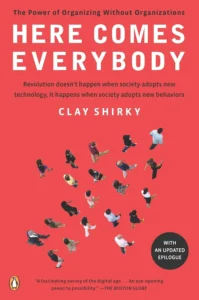
Here Comes Everybody

Here Comes Everybody

The Power of Organizing Without Organizations

Book by Clay Shirky

Clay Shirky, an NYU professor who studies the internet's effects on society, wrote this 2008 book about what happens when the cost of organizing groups drops to nearly zero. The tools are not new anymore, but the framework for understanding why Wikipedia works and why flash mobs happen still holds up.

View on Amazon
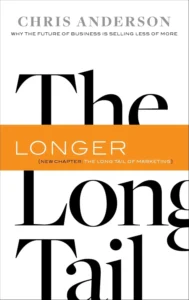
The Long Tail

The Long Tail

Why the Future of Business Is Selling Less of More

Book by Chris Anderson

Chris Anderson, then the editor of Wired magazine, noticed that 98% of the albums on a digital jukebox got played at least once a quarter. Walmart's shelves could never carry that much variety. The resulting book argues that the internet shifts markets from blockbusters to an endless array of niches.

View on Amazon
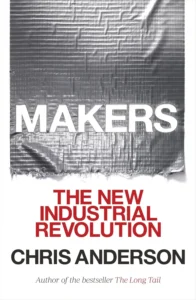
Makers

Makers

The New Industrial Revolution

Book by Chris Anderson

Chris Anderson, who wrote The Long Tail while editing Wired, left the magazine to start a drone company. Makers is the book he wrote on the way out, arguing that 3D printing, CNC machines, and open-source hardware are doing for physical goods what the internet did for digital ones.

View on Amazon
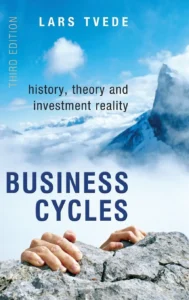
Business Cycles

Business Cycles

History, Theory and Investment Reality

Book by Lars Tvede

Lars Tvede, a Danish serial entrepreneur and former derivatives trader, traces 300 years of economic boom-and-bust theory through the lives of the economists who tried to explain it. The book doubles as an investment guide, showing how different asset classes behave across inventory cycles, capital spending cycles, and property cycles.

View on Amazon
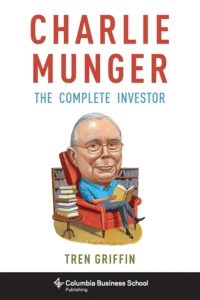
Charlie Munger

Charlie Munger

The Complete Investor

Book by Tren Griffin

Tren Griffin distills the investing philosophy and mental models of Charlie Munger, Warren Buffett's longtime partner at Berkshire Hathaway. The book organizes Munger's decades of speeches, interviews, and shareholder letters into a coherent system of thinking about business, value, and decision-making.

View on Amazon
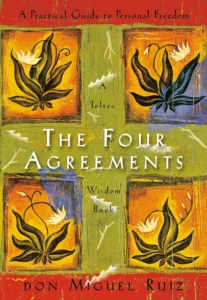
The Four Agreements

The Four Agreements

A Practical Guide to Personal Freedom

Book by Don Miguel Ruiz

Don Miguel Ruiz distills Toltec wisdom into four deceptively simple rules: be impeccable with your word, don't take anything personally, don't make assumptions, and always do your best. The book has sold over fifteen million copies and spent nearly a decade on the New York Times bestseller list.

View on Amazon
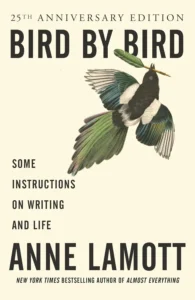
Bird by Bird

Bird by Bird

Some Instructions on Writing and Life

Book by Anne Lamott

Anne Lamott's writing guide is really a book about the emotional experience of making things. She covers shitty first drafts, perfectionism, jealousy, and the slow process of sitting down every day to do work that might be terrible. It has sold over a million copies and remains one of the most recommended books on creative work.

View on Amazon
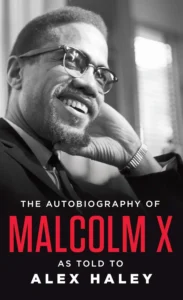
The Autobiography of Malcolm X

The Autobiography of Malcolm X

As Told to Alex Haley

Book by Malcolm X & Alex Haley

Told to journalist Alex Haley over two years of interviews, this autobiography traces Malcolm X's life from childhood poverty in Lansing, Michigan, through street hustling in Harlem, prison, religious conversion, and his emergence as one of the most influential voices in American history. Time named it one of the ten most important nonfiction books of the twentieth century.

View on Amazon
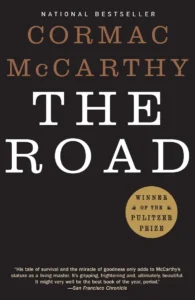
The Road

The Road

Book by Cormac McCarthy

A father and his young son walk through a destroyed America, pushing a shopping cart of scavenged food toward the coast. Cormac McCarthy's Pulitzer Prize-winning novel strips everything down to the bare essentials of survival, love, and what it means to keep going when there is no obvious reason to.

View on Amazon

What Jack Ma’s book recommendations tell you about Alibaba’s founder

The founder of one of the largest technology companies in the world never wrote a line of code. He never made a single sale to a customer before starting Alibaba. He did not touch a computer until he was thirty-three. His degree is in English, earned from a teachers’ college he got into on his third try after failing the entrance exam twice. He was rejected from every job he applied for after graduation, including KFC, which hired twenty-three of twenty-four applicants from his group. He was the one they turned down.

Jack Ma’s reading list makes a lot more sense once you understand that his success came entirely from skills that most people in tech do not value highly enough: communication, philosophy, patience, and the ability to find and trust people smarter than him in every technical domain. His bookshelf is not a tech founder’s bookshelf. It is a teacher’s bookshelf, a philosopher’s bookshelf, a storyteller’s bookshelf. That is not a weakness. It is the reason Alibaba exists.

Jack Ma’s philosophy books and why the Tao Te Ching comes first

The Tao Te Ching by Lao Tzu is at the top of this list, and it belongs there. Ma has referenced Taoist philosophy throughout his career, and he practices Tai Chi, which is rooted in the same tradition. The Tao Te Ching is a text about leading without force, about the power of yielding rather than pushing, about water wearing down rock not through strength but through persistence. Ma built Alibaba by helping small businesses in China connect with each other and with the world. He did not try to compete directly with eBay when they entered China. He built Taobao as a free alternative, let it grow organically while eBay charged fees, and waited. eBay eventually left the Chinese market. Water over rock.

Ma has said that Western business philosophy is about competition and winning. Eastern philosophy, the kind he grew up with, is about balance and patience. Whether that framing is oversimplified or not, it clearly shaped how he operated. He was not the fastest mover in Chinese tech. He was the one who lasted.

Meditations by Marcus Aurelius comes from a completely different tradition, Roman Stoicism, but lands in a similar place. Marcus wrote about controlling your response to events rather than trying to control the events themselves. Ma’s career is full of moments where that discipline was tested: the thirty job rejections before Alibaba, the competition with eBay, the complex relationship with the Chinese government that eventually led to Ant Group’s IPO being pulled in 2020, and his own disappearance from public life for months afterward. A man who has been knocked down that many times and keeps showing up has internalized something like what Marcus was writing about, whether he got it from the book or the book confirmed what he already knew.

The Courage to Be Disliked presents Alfred Adler’s psychology through a Socratic dialogue. Adler argues that seeking approval from others is the source of most unhappiness, and that freedom means accepting that some people will not like you. Ma has said publicly that his early failures gave him “thick skin.” Getting rejected from KFC, from the police force, from every job he applied for taught him to stop calibrating his choices around what other people thought. He has also said that he told his team in Alibaba’s early days that the highest they could reach was manager level, and that executives would be hired from outside, which he later called the biggest mistake of his career. A book about the courage to be disliked is also, by implication, a book about the courage to be wrong and to say so.

Jack Ma’s recommended books on business and strategy

Built to Last by Jim Collins and Jerry Porras studied companies that survived for decades and tried to identify what made them endure. The answer was not a single visionary leader. It was having a core ideology combined with a willingness to change everything else. Ma planned Alibaba’s leadership succession for ten years before stepping down in 2019. In his farewell letter to shareholders, he wrote that a sustainable company cannot rely solely on its founders. Collins and Porras would have approved.

Antifragile by Nassim Nicholas Taleb argues that some systems do not just survive stress, they get stronger from it. Alibaba’s early history is a case study in antifragility. Every crisis, the dot-com bust, eBay’s entry into China, the SARS epidemic that forced more Chinese businesses online, made the company more resilient. Ma has talked about how problems create opportunities, and that solving big problems is how you build big companies. Taleb gave that intuition a theoretical framework.

The Power Broker by Robert Caro is the biography of Robert Moses, the man who shaped modern New York through sheer institutional power without ever holding elected office. It is a 1,200-page study of how power actually works: how it is accumulated, how it is wielded, and how it corrupts. Ma built Alibaba inside a political system where the relationship between private enterprise and government is complicated, shifting, and occasionally dangerous. Understanding how power works at an institutional level is not optional for someone operating at that scale in China. Caro’s book is the most thorough examination of that subject ever written.

The Lessons of History by Will and Ariel Durant distills the authors’ eleven-volume Story of Civilization into a hundred pages of patterns. Wars repeat. Economies cycle. Inequality grows until it is corrected by legislation or revolution. Ma grew up during the tail end of China’s Cultural Revolution and built a company during the country’s fastest period of economic growth. A book about the patterns of history reads differently when your own lifetime contains that much range.

Books on technology and the internet Jack Ma recommends

Here Comes Everybody by Clay Shirky, published in 2008, is about what happens when the cost of organizing groups drops to near zero because of the internet. Shirky’s argument is that institutions exist partly because coordination is expensive. When technology makes coordination cheap, new forms of organization emerge that do not need traditional structures. Alibaba is exactly this kind of organization. It does not make products. It does not hold inventory. It provides the platform that lets millions of small businesses organize themselves. Shirky described the theory. Ma built the practice.

The Long Tail by Chris Anderson argues that the internet shifts economics from a focus on blockbuster hits to a much larger market of niche products. When distribution costs drop, the aggregate demand for millions of obscure items can exceed the demand for the few bestsellers. Alibaba and especially Taobao are long-tail platforms. They do not depend on a few big sellers. They depend on millions of small ones, each serving a narrow market. Anderson’s book explains why that model works economically.

Makers by Chris Anderson (same author) is about the democratization of manufacturing. When 3D printers, CNC machines, and online marketplaces make it possible for individuals to design and sell physical products without a factory, the entire structure of manufacturing changes. Ma’s later investments and Alibaba’s expansion into manufacturing services and supply chain tools follow this trajectory. The internet connected buyers and sellers. The next step, which Makers describes, is connecting designers and manufacturers.

The unexpected books on Jack Ma’s reading list

The Autobiography of Malcolm X is about a man who reinvented himself multiple times: from street hustler to prison inmate to religious leader to global advocate for human rights. Malcolm X educated himself in prison by reading the dictionary cover to cover. Ma educated himself by befriending foreign tourists in Hangzhou as a teenager so he could practice English, riding his bicycle to the hotel district every morning for years. Both men used education as the vehicle for transformation, and both came from backgrounds where that transformation was not expected or encouraged.

Bird by Bird by Anne Lamott is a book about writing that is really about the process of creating anything. Lamott’s advice is to stop thinking about the finished product and focus on the next small piece. The title comes from her father telling her brother, overwhelmed by a school report on birds, to take it bird by bird. Ma started Alibaba in his apartment with seventeen friends and no outside investment. The company grew not through a grand plan but through a series of small steps, each one solving the next immediate problem. Lamott’s philosophy of “just do the next small thing” maps directly onto how Ma actually built the business.

The Road by Cormac McCarthy is a novel about a father and son walking through a destroyed world, trying to survive and stay decent when everything around them has collapsed. It is the bleakest book on this list by far. Ma’s childhood during the Cultural Revolution, his years of rejection, and his more recent experience of being pulled back from public life by regulatory pressure in China have given him a relationship with uncertainty that most Western tech founders cannot imagine. A book about maintaining your humanity when the world turns hostile is not an abstract choice for someone who has lived through multiple versions of that scenario.

How Jack Ma’s reading list connects to his career at Alibaba

The pattern in these twenty-four books is clear once you see it. The philosophy books, Lao Tzu and Marcus Aurelius and Adler, are about patience, self-control, and freedom from other people’s opinions. The business books are about building organizations that outlast their founders. The technology books are about platforms that empower small actors rather than concentrating power at the top. And the personal narratives, Malcolm X and McCarthy and Lamott, are about surviving when the odds are against you and doing the next small thing anyway.

Ma is not a technologist. He has never pretended to be one. He is a teacher who learned to organize people and build systems of trust. His reading list reflects that identity. There are no books about algorithms or engineering on this list. There are books about human nature, historical patterns, and the slow accumulation of strength through persistence. That is the curriculum of a man who failed his way to the top and understood, better than most people who succeeded early, that the only advantage that matters in the long run is the willingness to keep going.