






What Ben Silbermann’s book recommendations tell you about Pinterest’s founder
Ben Silbermann collected insects as a kid. Not casually. Maniacally, by his own description. Stamps too, and leaves, and whatever else he could organize into categories and display. He grew up in Des Moines, Iowa, the son of two ophthalmologists, played cello in the youth symphony, competed on the debate team, and attended a summer science program at MIT when he was sixteen. He went to Yale planning to become a doctor, switched to political science, graduated, worked in consulting in D.C., and then moved to California with his girlfriend because he felt like something big was happening on the internet and he needed to be near it.
He got a job at Google in customer support and online ads. He liked the culture. He liked that people there did not dismiss big ideas as unrealistic. But he also knew that without an engineering degree, his ceiling was limited. He left Google, teamed up with a Yale friend named Paul Sciarra, and built an iPhone shopping app called Tote. It failed. Nobody was buying things on mobile apps yet. But Silbermann noticed something: some users were using Tote not to shop but to save images of products to themselves. They were collecting things. That observation, filtered through a childhood of stamp albums and insect displays, became Pinterest.
Pinterest launched in March 2010 and grew slowly. After nine months it had fewer than 10,000 users. Silbermann personally emailed the first 5,000. He hosted small meetups in coffee shops with early users to understand what they liked. He built around the small group of people who cared rather than chasing viral growth. The platform eventually reached hundreds of millions of users, went public in 2019 at a valuation of $12.7 billion, and became the place where people plan weddings, renovate kitchens, and organize their aspirations into visual boards. Silbermann stepped down as CEO in 2022 and remains executive chairman.
His reading list reflects the same qualities that built Pinterest: curiosity without urgency, a preference for depth over speed, and an interest in understanding why people do what they do rather than just measuring it.
Ben Silbermann’s books on human nature and why people collect things
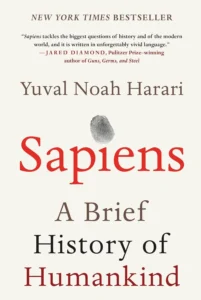
Sapiens by Yuval Noah Harari is a history of the human species that argues our dominance comes from our ability to believe in shared fictions: religions, nations, money, corporations. Pinterest is, in Harari’s framework, a shared fiction about the value of organized inspiration. It exists because millions of people agree that saving images of kitchens they will never build and recipes they will never cook is somehow meaningful. Harari would say that this impulse to collect and categorize is deeply human, older than the internet by tens of thousands of years. Silbermann would agree. He built a company on it.
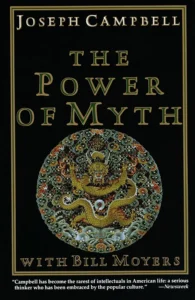
The Power of Myth by Joseph Campbell is about the stories that cultures tell to make sense of existence. Campbell argued that myths are not lies. They are the narratives that give shape to human experience: the hero’s journey, the descent into the underworld, the return with knowledge. Pinterest users are not just saving images. They are constructing narratives about the lives they want to live. A wedding board is a myth about a future marriage. A home renovation board is a myth about the home you will build. Campbell’s framework explains why Pinterest feels different from other social platforms. It is not about what happened. It is about what might happen.
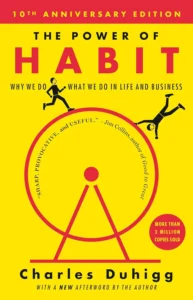
The Power of Habit by Charles Duhigg explains the cue-routine-reward loop that drives habitual behavior. Pinterest’s design exploits this loop almost perfectly. The cue is a moment of aspiration or boredom. The routine is scrolling and pinning. The reward is the feeling of organizing your future self. Silbermann did not design Pinterest to be addictive in the way social media feeds are addictive. He designed it to be useful in a way that becomes habitual, which is a subtler and more durable form of engagement.
The Gene by Siddhartha Mukherjee is a history of genetics that traces how our understanding of heredity has shaped medicine, politics, and identity. It is also about how invisible systems, genes you cannot see, create visible patterns in the world. Silbermann noticed an invisible pattern in how Tote users saved images, and that observation led to Pinterest. Mukherjee’s book is about the skill of seeing what is happening beneath the surface, which is the same skill that turned a failed shopping app into a company worth billions.
Books on leadership and personal growth Ben Silbermann recommends
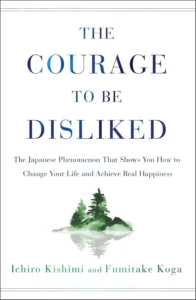
The Courage to Be Disliked presents Alfred Adler’s psychology as a dialogue about freedom, purpose, and the trap of seeking approval. Silbermann built Pinterest in a period when every tech company was trying to be a social network. Pinterest was not a social network. It was a catalog of ideas. That distinction made it hard to categorize and easy to dismiss. Investors were skeptical. The tech press was confused. Building something that does not fit existing categories requires the kind of independence Adler describes: the willingness to define your own purpose and stop worrying about whether other people understand it.
Extreme Ownership by Jocko Willink and Leif Babin argues that leaders are responsible for everything that happens on their watch, no exceptions. Silbermann personally emailed the first 5,000 users. He hosted meetups. He collected feedback by hand. That is extreme ownership applied to customer relationships. Most founders delegate user research as soon as they can. Silbermann held onto it because he believed understanding his users was the most important thing the CEO could do.
The Talent Code by Daniel Coyle argues that talent is not innate but built through a specific kind of deep practice. Silbermann was not an engineer. He was not a designer. He was a political science major who had worked in consulting and customer support. He became a successful tech founder by doing the work, learning what he did not know, and iterating relentlessly. Coyle’s framework for how skill develops under the right conditions describes Silbermann’s own path more accurately than any origin myth about natural genius.
When Things Fall Apart by Pema Chödrön is a Buddhist teacher’s guide to sitting with uncertainty, pain, and groundlessness rather than running from them. Pinterest nearly died in its first year. Silbermann has talked about the loneliness of building a product nobody used yet, of wondering whether the whole thing was a mistake. Chödrön’s book is not about fixing problems. It is about staying present when everything feels wrong and trusting that clarity will come if you do not panic. For a founder who waited nine months to reach 10,000 users in an industry that worships overnight hockey-stick growth, that kind of patience is not theoretical.
Ben Silbermann’s books on science and the bigger picture
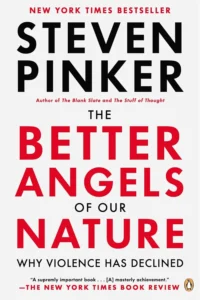
The Better Angels of Our Nature by Steven Pinker argues that violence has declined throughout human history, even though it does not feel that way. Pinker’s case is built on data: per-capita rates of death by violence have dropped in virtually every category over centuries. For a founder who built a platform explicitly focused on inspiration and aspiration rather than outrage and conflict, a book arguing that humanity is trending toward less violence is philosophically compatible. Pinterest was always designed to be a positive-sum platform. Pinker’s book suggests the broader culture might eventually catch up.
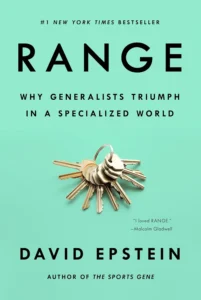
Range by David Epstein argues that generalists who sample widely before committing outperform early specialists in complex, unpredictable environments. Silbermann studied political science, worked in consulting, worked at Google in ads and customer support, built a failed shopping app, and then built Pinterest. Nothing about that path looks optimized from the outside. It looks like someone trying different things until something clicked. Epstein’s book reframes that kind of winding path not as wasted time but as the process of building the breadth of experience that makes creative breakthroughs possible.
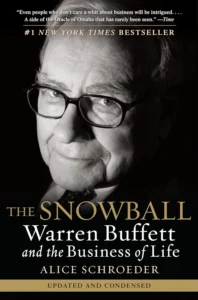
The Snowball by Alice Schroeder is the biography of Warren Buffett, and it is less about investing than about patience. Buffett’s strategy is to find great companies, buy them at a fair price, and hold them for decades. He does not chase trends. He does not react to short-term volatility. He waits. Silbermann grew Pinterest the same way: slowly, patiently, one user at a time, resisting the pressure to grow faster than the product could support. The Snowball is about what happens when you let compound growth work over long periods without interfering. Pinterest’s trajectory followed that same curve.
The unexpected picks on Ben Silbermann’s reading list
Salt, Fat, Acid, Heat by Samin Nosrat is a cooking book, and it is the most Pinterest book on this list. Nosrat argues that all good cooking comes down to mastering four elements, and once you understand them, you do not need recipes. You just need ingredients and intuition. Pinterest is full of recipes, meal plans, and cooking inspiration. But beyond the surface connection, Nosrat’s philosophy mirrors Silbermann’s approach to product design: understand the fundamental elements, get those right, and the details take care of themselves.
Little Women by Louisa May Alcott is a novel about four sisters growing up during the Civil War, navigating ambition, domesticity, art, and love. It is one of the most pinned books in Pinterest’s history, which makes its appearance on the founder’s reading list feel almost inevitable. But it is also a book about people building the lives they want within the constraints they have been given, which is what Pinterest boards are: aspirational blueprints made from whatever materials are available.
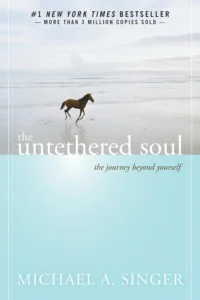
The Untethered Soul by Michael Singer is about letting go of the mental habits that keep you stuck. Silbermann stepped down as CEO in 2022, after twelve years of leading the company he built. Choosing to let go of the role that defined you is harder than taking it on in the first place. Singer’s book is about releasing attachment to identity, which is precisely what stepping down from a company called Pinterest, a company whose entire purpose is helping people curate their identities, requires.
How Ben Silbermann’s reading list connects to how he built Pinterest
The thread through these twenty-two books is the same thread that runs through Pinterest itself: the human need to collect, organize, and make meaning out of scattered pieces. Harari and Campbell explain why that need exists. Duhigg and Mukherjee explain how it manifests. Pinker and Epstein put it in a broader context. And the personal books, Chödrön and Singer and Adler, are about maintaining your own clarity while building something that millions of other people use to organize theirs.
Silbermann is the quietest founder on any of these lists. He does not give fiery keynotes. He does not tweet provocatively. He emailed his first users personally and hosted meetups in coffee shops. His reading list has the same quality: thoughtful, wide-ranging, unhurried, and more interested in understanding people than in optimizing them. He built a platform for collectors, and his bookshelf is itself a collection, carefully chosen, personally meaningful, and organized in a way that only makes full sense to the person who assembled it.
