

Your most persuasive affiliates are already in your database. They are the customers who have bought your product, experienced its value, and can speak about it with genuine authority. No amount of professional marketing polish can replicate the credibility of someone saying “I use this every day and it changed how I work.”
Customer-affiliates convert at higher rates than traditional affiliates because their recommendations carry personal conviction. They are not promoting a product they reviewed once. They are recommending something they depend on. This guide covers how to identify the right customers, how to invite them into your program, and how to structure the experience so they stay active long after the initial excitement fades.
Why Customers Make Exceptional Affiliates
Before diving into the how, it is worth understanding why this channel is so powerful compared to recruiting strangers.
Authenticity Is Built In
Customers speak from lived experience. Their recommendations feel personal and trustworthy because they are. An audience can tell the difference between someone who genuinely uses a product and someone reading from a briefing document. That authenticity translates directly into higher click-through and conversion rates.
Zero Recruitment Cost
You already have their contact information, their purchase history, and their trust. There is no cold outreach required, no marketplace listing needed, and no agency fee. Activating existing customers as affiliates is the most cost-efficient recruitment channel available to any business.
Product Knowledge Is Free
Traditional affiliates need onboarding materials to understand your product. Customers already know how it works, what problems it solves, and who it is best for. They can answer their audience’s questions with the confidence of someone who has used the product themselves, not from reading a spec sheet.
Higher Retention
Customer-affiliates tend to stay active longer than recruited strangers because their motivation is partly emotional. They are not just chasing commissions. They genuinely like your product and feel good about recommending it. That emotional connection sustains promotional activity even during slower periods.
It is worth noting that customer-affiliates and referral programs are related but not the same thing. A referral program typically rewards customers with discounts or credits for sharing with friends. An affiliate program pays commissions for driving sales through tracked links. Some customers fit one model better, and some fit both. Our comparison of affiliate marketing vs referral programs breaks down the differences in detail.
Step 1: Identify Your Best Candidates
Not every customer is a good affiliate candidate. The most effective customer-affiliates share a few traits: they are vocal about products they love, they have some kind of platform or audience (even a small one), and they are engaged with your brand beyond a single transaction.
Look for these signals in your customer data:
→ Repeat buyers. Anyone who has purchased more than once has demonstrated loyalty and satisfaction. They buy again because the product delivers value, and that conviction makes their recommendations credible.
→ Customers who left positive reviews. If someone took the time to write a five-star review, they are already advocating for your product publicly. Inviting them to formalize that advocacy through an affiliate link is a natural extension.
→ Social media taggers. Customers who tag your brand on Instagram, TikTok, or Twitter are broadcasting their satisfaction to their followers. They already have an audience and they are already promoting you for free. Adding an affiliate link gives them a financial incentive to do it more.
→ Support interactions with enthusiasm. Customers who email your support team to say how much they love the product or to suggest features are deeply engaged. These are your potential brand champions.
→ High lifetime value customers. Customers with the highest total spend are the most committed to your brand. Their depth of experience with your product range makes them especially credible when recommending specific items.
Step 2: Invite Them at the Right Moment
Timing matters enormously. The best moments to invite a customer to become an affiliate are when their satisfaction and engagement are at their peak.
High-Conversion Moments
→ Immediately after purchase. The order confirmation page and post-purchase email are prime real estate. The customer just demonstrated commitment with their wallet. A simple “Love what you bought? Earn commissions by sharing it” prompt captures attention at the moment of highest enthusiasm.
→ After a positive review. When a customer leaves a five-star review, trigger an automated email thanking them and inviting them to join the affiliate program. The logic is intuitive: you clearly love the product, so why not earn money sharing it?
→ After a repeat purchase. A second or third purchase confirms lasting satisfaction. This is an ideal trigger for a personalized email invitation that acknowledges their loyalty and presents the affiliate opportunity.
→ After a support interaction that ended well. If a customer had an issue that your team resolved quickly and effectively, their trust in your brand is actually higher than before the problem occurred. This counterintuitive moment can be a strong time to introduce the program.
→ During a product milestone. For SaaS products, invite customers after they hit a meaningful usage milestone (100th project created, one year anniversary, feature adoption threshold). For physical products, the equivalent might be after their third order or after they have tried multiple product lines.
Step 3: Make the Invitation Simple and Appealing
Most customers are not affiliate marketing professionals. They do not know what a “cookie duration” is or how tracking works. Your invitation needs to communicate the opportunity in plain language and make joining feel effortless.
Focus on three things in your invitation message: what they earn (the commission in simple terms), how it works (share a link, earn a commission when someone buys), and how to get started (one click to join). Skip the jargon entirely. Instead of “earn 15% commission per attributed conversion with a 30-day cookie window,” say “earn 15% every time someone you refer makes a purchase within 30 days.”
Provide a direct link to your signup page, and make sure the signup process itself is quick. If a customer has to fill out a ten-field application form designed for professional publishers, you will lose them. Consider creating a simplified signup flow for customer-affiliates, or auto-approve customers who meet your criteria so they can start sharing immediately.
Should Customer-Affiliates Get a Different Commission?
Some programs offer customer-affiliates a lower commission than professional affiliates, reasoning that customers are less experienced promoters. This is usually a mistake. A competitive commission is what makes the program feel worthwhile to someone who is sharing casually rather than running a business around it. If your standard rate is 15%, offer the same to customers. The incremental cost per sale is identical, and the customer who earns a meaningful commission is far more likely to keep sharing than one earning 5%.
You can also offer a hybrid incentive: commission on sales they generate plus a personal discount on their own future purchases. This dual structure rewards both their advocacy and their loyalty, reinforcing both behaviors simultaneously.
Step 4: Equip Them to Share Effectively
Customer-affiliates need even more hand-holding than professional partners because most have never promoted a product with a tracking link before. Reduce every point of friction by providing ready-made sharing tools.
→ Pre-written social posts they can copy and paste directly to Instagram, Facebook, X, or LinkedIn. Include the affiliate link already embedded so they do not need to figure out link insertion.
→ A unique discount code they can share with friends and followers. Coupon codes are easier to share verbally (in conversations, on podcasts, on video) than URLs, and they feel more personal to the customer-affiliate’s audience.
→ Shareable product images optimized for social media. Not everyone knows how to download product photos from a website and create posts. Provide images in the right dimensions for Instagram Stories, feed posts, and Facebook shares.
→ A simple tutorial explaining how to share their link. A 60-second video or a three-step guide (“1. Copy your link. 2. Share it on social media. 3. Earn when your friends buy.”) removes the learning curve entirely.
Step 5: Keep Them Engaged Over Time
The biggest challenge with customer-affiliates is not getting them to join. It is keeping them active. Most will share their link a few times in the first week and then forget about it. The programs that sustain customer-affiliate activity over months and years do so through consistent, low-effort engagement.
Send monthly performance updates. Even if a customer-affiliate has earned zero commissions, a friendly email showing their link clicks and reminding them of the earning opportunity keeps the program top of mind. Include a fresh social post they can share to make re-engagement effortless.
Celebrate their wins. When a customer-affiliate earns their first commission, send them a congratulatory message. This small gesture reinforces the behavior and motivates continued promotion. People repeat actions that are acknowledged and rewarded.
Give them early access. Let customer-affiliates preview new products before the general public. This makes them feel valued and gives them exclusive content to share with their network, which drives both engagement and conversions.
Run seasonal challenges. A simple challenge (“Share your link this month and earn a bonus $25 on your first referral sale”) creates urgency and reactivates dormant customer-affiliates without requiring ongoing management effort.
Create a community. A private Facebook group, Slack channel, or Discord server for your customer-affiliates gives them a sense of belonging and a place to share tips, ask questions, and celebrate wins together. Community creates accountability: people who see others succeeding are motivated to put in effort themselves. It also gives you a direct communication channel for announcements, new product launches, and promotional campaigns.
Feature their content. When a customer-affiliate creates a social post, video, or review featuring your product, share it on your own channels (with their permission). This recognition validates their effort, exposes their content to a larger audience, and signals to other customers that the affiliate program is active and appreciated.
Your Customers Are Your Most Underused Growth Channel
Every business has customers who love the product enough to tell their friends about it. An affiliate program gives those customers a structured way to share, a financial incentive to do it consistently, and tracking that lets you measure the impact. The combination of authentic advocacy and performance-based compensation is what makes customer-affiliate programs so effective.
Start by identifying your top customers today. Send your first batch of invitations this week. Even if only a handful convert to active affiliates, the revenue they generate is incremental and the cost to activate them is nearly zero.
Customer-to-affiliate conversion is one channel within a broader recruitment strategy. For the complete approach that includes professional affiliates, content creators, and community-based sourcing, our guide on how to recruit affiliates covers every channel. And for the strategic framework that ties recruitment into the full program lifecycle, our affiliate marketing for business guide provides the high-level perspective.
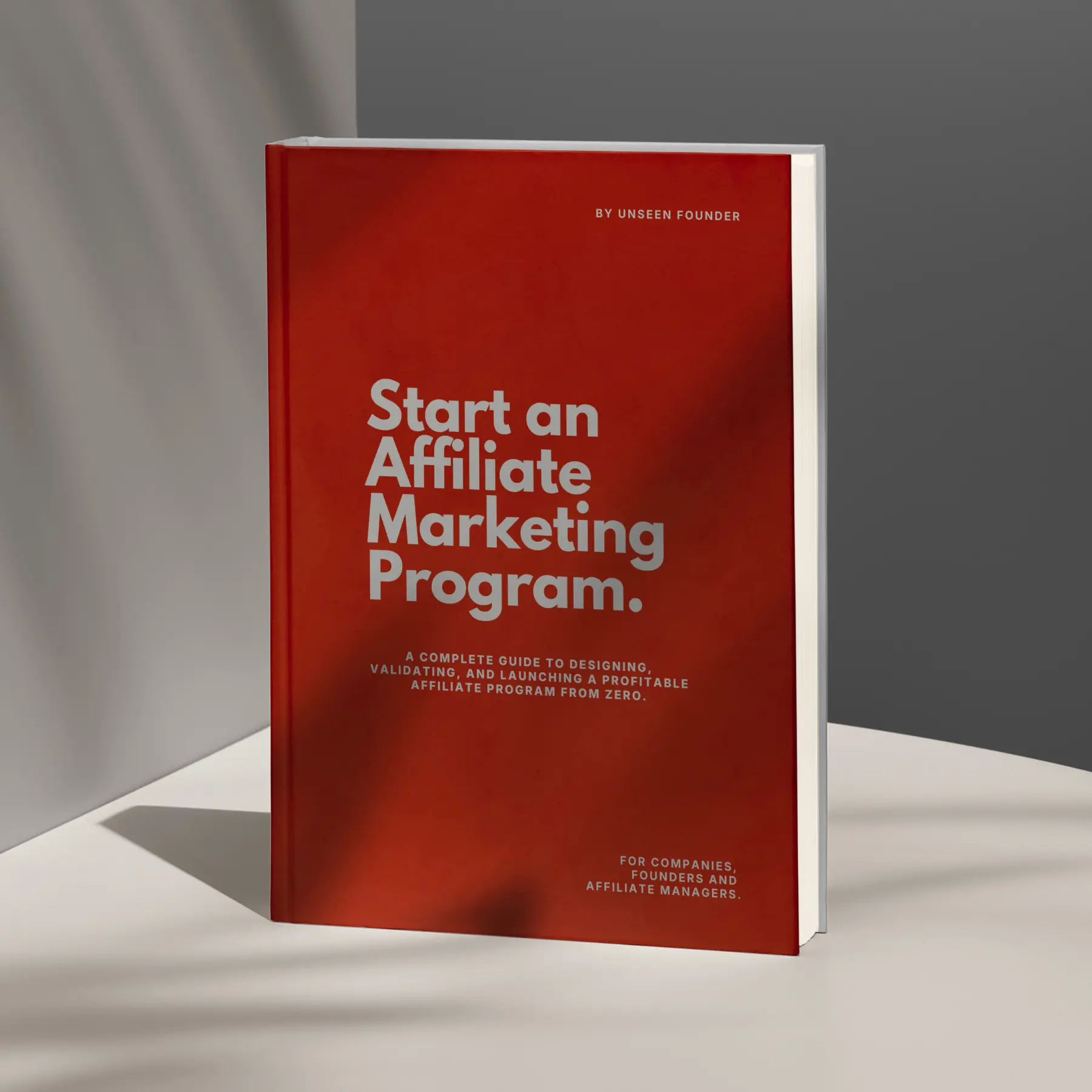
How To Start Affiliate Marketing Program
The Complete Launch Framework
eBook by Unseen Founder
How to Start an Affiliate Marketing Program is a structured, no-fluff framework for companies that want to design, validate, and launch a profitable affiliate program from scratch. It is not a collection of tips.
It is a complete operational blueprint built for founders, marketing leaders, and affiliate managers to launch a profitable affiliate program from zero.
