

Content creators are the highest-value affiliates most businesses can recruit. A single well-written blog post, an honest YouTube review, or a thoughtful Instagram carousel can generate traffic and sales for months or years after publication. Unlike paid ads that stop working the moment you stop spending, content-driven affiliate promotion compounds over time as the content gains search rankings, social shares, and backlinks.
But content creators are also the hardest affiliates to recruit. They receive partnership pitches constantly, they are protective of their audience’s trust, and they are selective about which products they associate with their personal brand. Winning them over requires a different approach than recruiting coupon sites or deal publishers.
This guide covers how to find, approach, and win content creators for your affiliate program, from bloggers and YouTubers to podcast hosts and newsletter writers.
What Content Creators Actually Want From an Affiliate Program
The biggest mistake businesses make when approaching creators is assuming that commission rate is the only thing that matters. For professional content creators, the commission is important but it is far from the only consideration. Understanding what they value helps you position your program as genuinely attractive rather than just another pitch in their inbox.
→ A product worth recommending. Creators stake their reputation on every recommendation. They will not promote something they do not genuinely believe in, regardless of commission. They want to try the product first, understand its strengths and limitations, and feel confident that their audience will benefit from it.
→ Strong conversion rates. Experienced creators evaluate programs by EPC (earnings per click), not commission percentage. A 10% commission on a product that converts 5% of visitors is far more profitable than 25% on a product that converts 0.5%. If your website and checkout process convert well, say so.
→ A long cookie duration. Content creators drive traffic that often requires multiple visits before converting, especially for higher-priced products. A 7-day cookie penalizes their effort. A 60 to 90-day cookie gives them a fair attribution window and signals that you value the long sales cycle their content supports.
→ Creative freedom. Creators want to write in their own voice, shoot in their own style, and present your product in a way that feels authentic to their audience. Programs that require script approval or mandate specific talking points feel restrictive and drive away the best talent.
→ Reliable payouts and responsive communication. Nothing erodes a creator partnership faster than late payments or unanswered emails. Creators talk to each other. A reputation for unreliable payouts will follow you across the entire creator community in your niche.
Understanding these priorities shapes how you pitch, what you emphasize, and how you structure the partnership. It also clarifies the difference between affiliate partnerships and influencer marketing. Affiliate deals are performance-based (the creator earns when their audience buys), while influencer deals typically involve upfront payment for content creation. Many partnerships blend both models. Our comparison of affiliate marketing vs influencer marketing explores these differences in depth.
Where to Find Content Creators in Your Niche
Different types of content creators live on different platforms. Matching your search to the right platform for your product category increases the relevance and quality of the creators you find.
Bloggers and SEO Writers
Search Google for “best [product category],” “[product] review,” and “[competitor] alternative.” The sites ranking on page one are professional content creators with established audiences and SEO authority. Their content drives organic traffic for years, making them the highest-ROI affiliates for long-term programs.
YouTubers
Video reviews and tutorials carry enormous persuasive power because viewers see the product in action. Search YouTube for your product category and competitor names. Focus on channels with 2,000 to 100,000 subscribers. Check video descriptions for existing affiliate links to confirm they are open to partnerships.
Podcast Hosts
Podcast listeners develop deep trust in their favorite hosts. A genuine endorsement on a niche podcast converts at remarkably high rates. Search Apple Podcasts and Spotify for shows in your industry. Hosts who already mention tools or products they use are prime candidates for affiliate partnerships.
Newsletter Writers
Email subscribers are the most engaged audience online. Newsletter writers in your niche have a direct, trusted line to exactly the readers you want to reach. Browse Substack, Beehiiv, and niche newsletter directories. Writers who already include product recommendations or tool roundups are natural affiliate partners.
Instagram and TikTok Creators
Visual product categories (fashion, beauty, home, fitness, food) perform exceptionally well with social media creators. Micro-influencers with 5,000 to 50,000 engaged followers often deliver better affiliate ROI than larger accounts because their recommendation feels personal rather than sponsored. Search niche hashtags and product tags to discover them.
Course Creators and Educators
People who teach skills related to your product category naturally recommend tools as part of their curriculum. A course on photography might recommend specific cameras and editing software. A course on e-commerce might recommend specific platforms and tools. These recommendations are embedded in premium content that students trust deeply.
How to Approach Creators Without Getting Ignored
Content creators are flooded with partnership requests. Standing out requires genuine personalization, respect for their time, and a clear value proposition. Here is the approach that works:
Engage before you pitch. Follow their work for a week or two before reaching out. Comment on their content, share their posts, and demonstrate that you are genuinely familiar with what they create. When your outreach arrives, your name is already familiar, and the message feels like the continuation of an existing connection rather than a cold pitch from a stranger.
Lead with the product, not the commission. Creators care about what they will recommend to their audience first, and what they will earn second. Open your outreach by explaining why your product is relevant to their specific audience and what makes it worth their editorial attention. Then present the affiliate details as a bonus on top of the editorial opportunity.
Offer the product for free. This is one of the highest-leverage investments you can make. Sending a free product (or granting a free account for software) lets the creator experience what they will be promoting firsthand. This removes the biggest objection (“I have not tried it”) and gives them the material they need to create genuine, detailed content. The cost of one free product is trivial compared to the value of the content and traffic a creator generates over time.
Respect their creative process. Do not send a script, a list of required talking points, or a set of exact phrases they must include. The best creator content is authentic, and authenticity requires creative freedom. Share your key selling points and product information as a resource they can draw from, not a mandate they must follow.
Keep the initial ask small. Instead of asking a creator to commit to an ongoing partnership, start with a single piece of content. “Would you be open to trying the product and sharing your honest thoughts?” is a much lower barrier than “Join our affiliate program and commit to monthly content.” Once the first piece performs well, the ongoing relationship builds naturally.
Mistakes That Cost You Creator Partnerships
Some businesses sabotage their own creator recruitment without realizing it. These are the most damaging mistakes and how to avoid them:
Sending mass emails with no personalization. Creators can spot a template from the first sentence. If your outreach does not reference their specific content, their specific audience, or a specific reason you chose them, it gets deleted instantly. The five minutes you spend personalizing each message is the difference between a 2% response rate and a 15% response rate.
Offering only commission with no product access. Asking a creator to promote something they have never used is asking them to risk their credibility for a few dollars. Always offer the product first. For physical products, ship them a sample. For software, give them a full account. For services, provide a complimentary session. This small investment signals that you believe in your product enough to give it away and trust that the creator’s honest opinion will be positive.
Demanding specific content formats or language. When you dictate exactly what a creator must say, you strip away the authenticity that makes creator content effective in the first place. Provide product information, key benefits, and brand guidelines, then let the creator do what they do best. The content will perform better because it sounds like them, not like a corporate advertisement.
Disappearing after the first piece of content. Many businesses recruit a creator, celebrate the first blog post or video, and then go silent. The relationship dies from neglect. Creators who do not hear from you assume you are not invested in the partnership. Schedule regular touchpoints: share performance data, send product updates, and check in periodically to ask if they need anything.
Treating all creators the same. A blogger with 500,000 monthly readers has different needs and expectations than a micro-influencer with 8,000 Instagram followers. Tailor your approach, your offer, and your communication frequency to the size, platform, and style of each creator. What works for a YouTube tech reviewer will not work for a lifestyle newsletter writer.
Structuring Creator Partnerships for Long-Term Success
Getting a creator to publish one piece of content is a win. Getting them to create content consistently over months and years is where the real compounding value lives. The programs that retain creators long-term do several things well.
Provide ongoing content support. Send creators product updates, new feature announcements, seasonal promotions, and fresh creative assets regularly. Every update is a potential content hook. A creator who receives a quarterly “here’s what’s new” email with ready-to-use data points is far more likely to create additional content than one who has to check your website for updates themselves.
Share performance data with them. Creators want to see how their content is performing. If their blog post generated 500 clicks and 23 sales last month, tell them. Performance data validates their effort and helps them understand which content formats and topics drive the best results, which in turn improves the quality and effectiveness of future content.
Offer escalating incentives. Reward creators who consistently perform well with higher commission rates, exclusive offers they can share with their audience, early access to new products, or featured placement on your website. These perks deepen the relationship and make switching to a competitor’s program less attractive.
Treat them as partners, not vendors. The best creator relationships feel collaborative. Ask for their input on product improvements, invite them to test new features before launch, and credit them publicly when their content drives significant results. Creators who feel valued as partners invest more effort and produce better work than creators who feel like interchangeable promotional channels.
Hybrid Compensation: Combining Affiliate and Flat-Fee Models
For high-value creators, a pure commission model may not be enough to close the partnership. Established bloggers and YouTubers with large audiences often expect some upfront compensation for the time and effort required to create quality content, especially video production which can take days of work.
A hybrid model works well here: a modest flat fee for content creation (covering their production costs) plus ongoing affiliate commissions for every sale the content generates. This structure respects the creator’s time investment while keeping the partnership performance-based at its core. The flat fee gets them to create the content; the commission keeps them invested in optimizing it for conversions over time.
Not every creator requires a hybrid deal. Many bloggers and newsletter writers are happy with a pure commission arrangement because their content creation costs are lower than video production. Save the hybrid offers for creators whose audience reach and content quality justify the upfront investment. The key is being flexible enough to structure deals that work for both sides rather than applying a rigid one-size-fits-all model.
Measuring Creator ROI
Track creator partnerships with the same rigor you apply to any marketing channel. For each creator, monitor clicks generated, conversion rate, total revenue driven, and commission paid. Calculate their effective cost per acquisition (total commissions and any flat fees divided by total customers acquired) and compare it against your other acquisition channels.
The unique advantage of creator content is that its ROI improves over time. A blog post that generates $200 in affiliate sales in its first month might generate $150 per month for the next two years as it accumulates search rankings. Factor in this long-tail value when evaluating whether a creator partnership is performing. Short-term ROI calculations significantly undervalue content-driven affiliate partnerships because they ignore the compounding nature of evergreen content.
Content Creators Are a Long-Term Investment
Creator partnerships take more time and effort to establish than other recruitment channels, but the return is disproportionately high. A blog post that ranks on Google generates affiliate sales for years. A YouTube video continues converting viewers into customers long after publication. A newsletter mention reaches an opted-in audience that trusts the sender implicitly.
Invest the time to build these relationships properly. Engage before you pitch, offer the product first, respect their creative independence, and support them with data and resources after they join. The creators you recruit today can become your most productive and loyal affiliates for years to come.
Creator recruitment is one piece of a comprehensive affiliate strategy. For the full recruitment playbook covering all partner types and channels, our guide on how to recruit affiliates provides the complete framework.
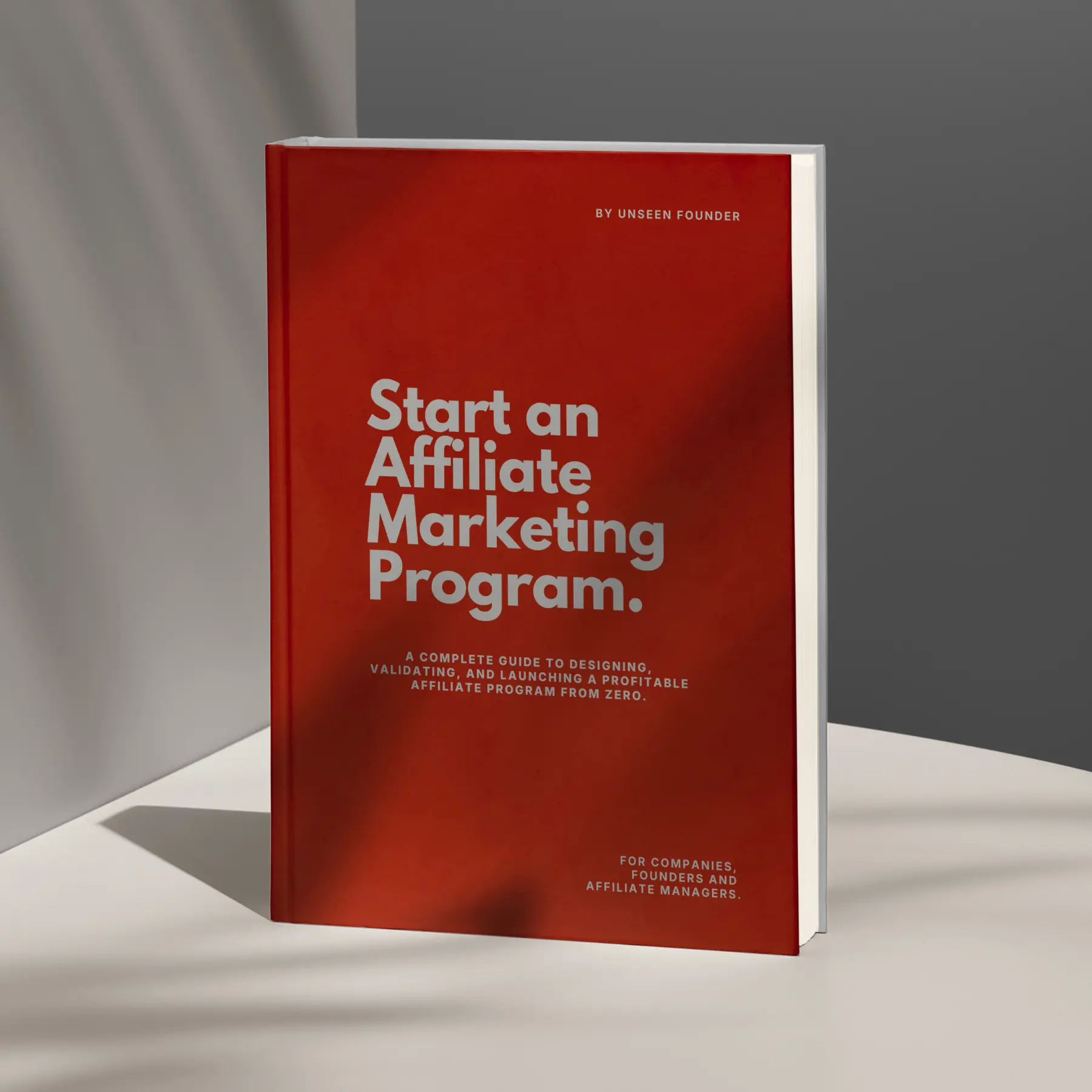
How To Start Affiliate Marketing Program
The Complete Launch Framework
eBook by Unseen Founder
How to Start an Affiliate Marketing Program is a structured, no-fluff framework for companies that want to design, validate, and launch a profitable affiliate program from scratch. It is not a collection of tips.
It is a complete operational blueprint built for founders, marketing leaders, and affiliate managers to launch a profitable affiliate program from zero.
