
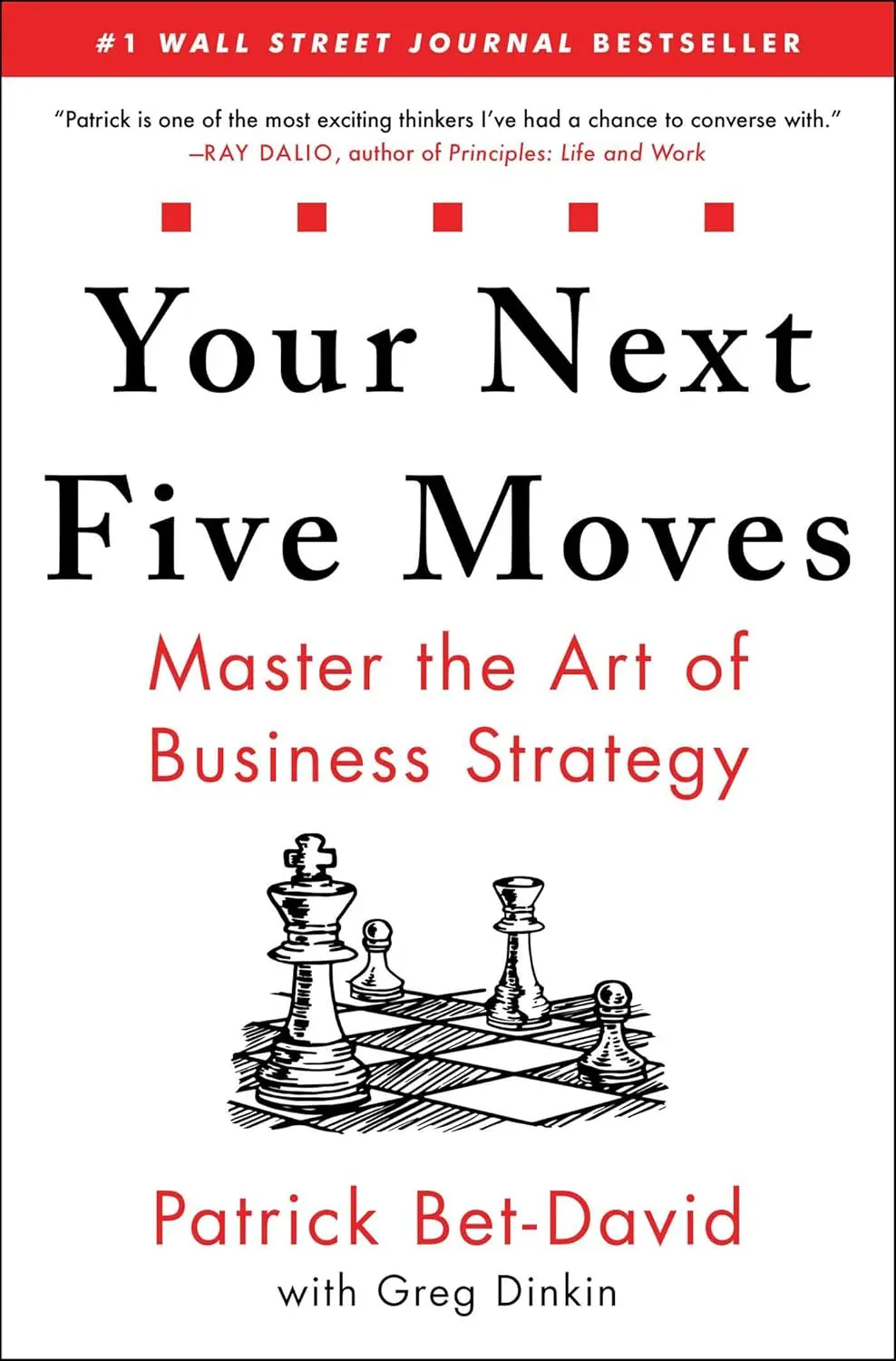
Your Next Five Moves is Patrick Bet-David’s business strategy book, structured around the idea that effective leaders think multiple moves ahead rather than reacting to whatever is in front of them. Bet-David, who built PHP Agency into a billion-dollar insurance and financial services company, uses chess as his organizing metaphor: in chess, as in business, the best players are the ones who can see the consequences of their choices several turns into the future.
The book is organized into five “moves.” The first is knowing yourself: what you actually want, what your strengths and weaknesses are, and what kind of business you’re suited to build. The second is mastering the ability to reason through problems strategically, including how to process multiple scenarios and make decisions under uncertainty. The third is building a team, with specific advice on recruiting, retaining, and managing people. The fourth is scaling the business with tactics for growth, negotiation, and competitive positioning. The fifth is what Bet-David calls “power plays,” the high-leverage moves that can change the trajectory of a business in a single stroke.
Bet-David writes from personal experience as an Iranian immigrant who arrived in the U.S. as a child, served in the military, and built his company from scratch. The personal stories add texture to the strategic advice, and his willingness to be specific about his own mistakes (bad partnerships, poor hiring decisions, strategic miscalculations) gives the book more credibility than it would have if it were purely prescriptive.
For founders, the self-assessment sections in the first move are the most underrated part. Bet-David’s argument is that most strategic mistakes come from founders who don’t understand their own motivations clearly enough, who are building a company that doesn’t match who they actually are or what they actually want.
The writing is direct and energetic. Bet-David has a strong online presence and the book reads like an extended version of his content: fast-paced, confident, and heavy on actionable advice. Some readers will find the intensity motivating; others may find it a bit much. The strategy sections are strongest when Bet-David sticks to specific examples from his own career and weaker when they move toward general principles.
